Many companies, factories, restaurants, warehouses, hotels, healthcare facilities, and commercial establishments rely on an annual pest control contract because it provides continuous protection instead of waiting for infestations to appear before seeking emergency treatment. However, many business owners sign annual agreements without fully understanding the services they will actually receive, the number of scheduled visits included, the inspection procedures, the reporting system, or the specific coverage provided by the contract. Understanding these details before signing allows organizations to compare proposals accurately and choose the program that truly matches their operational needs. Based on extensive practical experience managing long-term pest management programs throughout Kuwait, a professional annual contract extends far beyond routine spraying. It represents a comprehensive preventive system that begins with detailed inspections and continues through scheduled monitoring, documented reporting, preventive treatments, and continuous technical support throughout the contract period.
Company Pest Control Contract Details
The Company Pest Control Contract Details vary according to the type of business, facility size, operational risks, environmental conditions, and the specific pest species likely to threaten the property. Nevertheless, professionally designed contracts generally share several essential elements that guarantee continuous protection throughout the agreement. The process usually begins with a comprehensive site inspection before the contract is finalized. During this evaluation, specialists assess business activities, identify high-risk areas, locate potential pest entry points, evaluate sanitation conditions, and design a customized pest management strategy instead of applying identical programs to every client.
Professional contracts also clearly define the responsibilities of both parties. The pest control provider specifies visit schedules, service coverage, treatment methods, monitoring procedures, and emergency response policies, while the client agrees to maintain suitable sanitation standards, provide property access during scheduled inspections, and implement preventive recommendations whenever necessary. Practical field experience consistently demonstrates that clearly defined contract details significantly reduce misunderstandings while improving the overall effectiveness of the annual pest management program.
• Every contract begins with a comprehensive property inspection.
• Pest management programs are customized for each business.
• Responsibilities are clearly assigned to both parties.
• Service coverage is precisely documented.
• Contracts focus on long-term prevention rather than temporary treatment.
Number of Annual Service Visits
The Number of Annual Service Visits represents one of the most important contract elements because many clients focus primarily on pricing while overlooking the actual level of ongoing protection included throughout the year. There is no universal number of visits suitable for every company because visit frequency depends upon business activities, facility size, operational risks, previous infestation history, sanitation requirements, and regulatory expectations governing the industry.
Restaurants, food production facilities, healthcare environments, and pharmaceutical operations usually require considerably more frequent inspections than administrative offices or commercial buildings. Warehouses also require schedules different from factories or retail facilities. Professional pest management companies therefore establish visit frequency only after conducting detailed site evaluations rather than offering identical schedules to every client. Extensive practical experience consistently demonstrates that scheduled inspections allow technicians to detect early pest activity before it develops into major infestations requiring costly corrective treatment.
• Visit frequency depends upon business operations.
• Food facilities require more frequent inspections.
• Facility size influences service schedules.
• Inspection frequency may change according to risk levels.
• Regular monitoring prevents large infestations.
Company Maintenance Contract Services
Company Maintenance Contract Services include a wide range of preventive and technical procedures designed to maintain pest-free business environments throughout the contract period rather than simply performing routine pesticide applications. Professional annual agreements typically include scheduled inspections, pest monitoring, preventive treatments, performance evaluations, environmental assessments, and practical recommendations designed to eliminate conditions encouraging pest activity before infestations develop.
Service content also varies according to facility type. Restaurants require different management procedures than warehouses, hotels, manufacturing plants, hospitals, office buildings, or shopping centers. Professional companies therefore customize every maintenance program according to operational activities and environmental conditions unique to each property. Practical field experience consistently demonstrates that contracts emphasizing continuous monitoring and preventive management achieve significantly more stable long-term results than agreements relying solely upon spraying whenever pests appear.
• Scheduled inspections are performed throughout the year.
• Pest activity is continuously monitored.
• Preventive treatments are applied whenever necessary.
• Environmental improvement recommendations are provided.
• Program performance is evaluated continuously.
Pest Management Contracts for Facilities
A Pest Management Contract for Facilities differs substantially from emergency pest control services because it emphasizes continuous prevention and proactive risk management rather than responding only after pests become visible. Professional companies begin by studying the facility's operational activities, whether the property functions as a factory, restaurant, hospital, hotel, warehouse, shopping center, office complex, or industrial site. They then develop customized management programs reflecting building size, operational complexity, stored materials, sanitation requirements, and regulatory obligations.
Professional contracts also identify treatment priorities, define high-risk locations requiring additional monitoring, establish emergency response procedures, and periodically review management strategies whenever operational conditions change. Extensive practical experience consistently demonstrates that customized facility contracts deliver significantly better long-term protection than standardized service agreements applied uniformly across different industries.
• Every facility receives a customized management program.
• High-risk areas are clearly identified.
• Management plans are reviewed periodically.
• Rapid response procedures are established.
• Programs evolve alongside operational changes.
Scheduled Pest Control Program
A Scheduled Pest Control Program operates according to preventive principles by providing regularly planned inspections even when no visible pest activity exists because the objective involves preventing infestations before they disrupt operations or damage business reputation. During every scheduled visit, technicians inspect critical locations, evaluate monitoring devices, assess environmental conditions, perform preventive treatments when necessary, and document findings for future comparison.
Professional programs extend far beyond pesticide application by examining moisture conditions, waste handling procedures, structural openings, sanitation standards, storage practices, and every environmental factor capable of encouraging pest activity. Extensive practical experience consistently demonstrates that preventive inspection programs substantially reduce unexpected infestations while supporting consistent operational continuity.
• Scheduled visits occur throughout the year.
• High-risk locations receive continuous monitoring.
• Preventive treatments are performed proactively.
• Environmental conditions are evaluated regularly.
• Unexpected infestations become significantly less likely.
Pest Control Services for Restaurants and Factories
Pest Control Services for Restaurants and Factories require particularly high technical standards because they directly influence food safety, product quality, regulatory compliance, and business reputation. Professional companies therefore implement management programs specifically designed for these sensitive environments rather than applying the same procedures used for residential or office buildings. Treatment materials, scheduling, documentation, and safety procedures are carefully selected to comply with operational requirements while avoiding unnecessary interruptions.
These specialized services include monitoring production lines, food preparation areas, storage facilities, waste collection points, loading zones, and processing environments because these locations present the highest pest risks. Extensive practical experience consistently demonstrates that combining preventive pest management with continuous employee awareness significantly strengthens long-term facility protection.
• Specialized programs are developed for restaurants and factories.
• Production and storage areas receive continuous protection.
• Strict safety standards remain fully implemented.
• Service schedules avoid disrupting operations.
• Preventive guidance supports long-term success.
Periodic Inspection Reports

Periodic Inspection Reports represent one of the most valuable components of an annual contract because they document every inspection, treatment, observation, environmental assessment, corrective action, and recommendation performed during each scheduled visit. These reports enable business managers to monitor program performance while satisfying auditing, regulatory, food safety, and quality management requirements frequently imposed upon commercial organizations.
Inspection reports also provide management with measurable information regarding program progress, environmental improvements, recurring concerns, and areas requiring additional maintenance or operational changes. Extensive practical experience consistently demonstrates that systematic documentation helps organizations identify developing problems early while supporting informed management decisions before significant infestations occur.
• Every service activity is documented.
• Inspection findings are recorded after each visit.
• Corrective recommendations accompany every report.
• Documentation supports quality assurance programs.
• Management can monitor long-term performance.
Pest Control Contract Warranty
The Pest Control Contract Warranty represents one of the most important sections clients should review before signing an agreement because many organizations mistakenly believe warranty coverage simply means repeating pesticide applications. Professional warranties provide considerably broader protection by committing the service provider to respond whenever unusual pest activity appears between scheduled visits, evaluate the situation, and implement corrective measures according to the agreed contract conditions.
Warranty terms naturally vary according to business activities, facility characteristics, environmental risks, and target pest species. Professional companies therefore explain every warranty condition clearly before services begin, ensuring clients understand exactly what is included. Extensive practical experience consistently demonstrates that companies offering comprehensive warranties generally maintain greater confidence in the effectiveness of their preventive management programs.
• Emergency responses are clearly defined.
• Warranty coverage is precisely documented.
• Unexpected pest activity receives professional evaluation.
• Corrective treatments are provided when necessary.
• Continuous protection remains the primary objective.
Annual Maintenance Contract Conditions
The Annual Maintenance Contract Conditions establish the operational framework governing cooperation between the service provider and the client throughout the contract period. These conditions typically define contract duration, inspection schedules, service procedures, safety requirements, emergency response protocols, documentation methods, payment arrangements, and the responsibilities assigned to each party.
Professional contracts also specify operational practices supporting successful preventive management, including sanitation responsibilities, structural maintenance, access requirements, and cooperation during inspections. Practical experience consistently demonstrates that clearly written contract conditions substantially reduce operational misunderstandings while improving program efficiency and long-term performance.
• Contract duration and inspection schedules are defined.
• Responsibilities are assigned to every party.
• Service procedures are clearly organized.
• Emergency protocols are documented.
• Cooperative management strengthens program success.
Pest Control Contract Clauses
The Pest Control Contract Clauses contain detailed technical and administrative provisions defining the exact level of service customers receive throughout the contract period. These clauses normally specify service coverage, target pest species, scheduled inspections, reporting procedures, emergency responses, warranty coverage, monitoring systems, and any additional services available during the agreement.
Professional companies carefully prepare contract clauses using clear language that protects both parties while eliminating misunderstandings regarding expectations and responsibilities. Extensive practical experience consistently demonstrates that contracts containing comprehensive and transparent provisions experience fewer disputes while supporting better performance evaluation throughout the agreement.
• Service coverage is clearly defined.
• Target pest species are specifically listed.
• Monitoring and emergency procedures are documented.
• Inspection reports form part of the agreement.
• Rights and responsibilities remain fully organized.
Why Al Reyada Pest Control Is the Best Choice
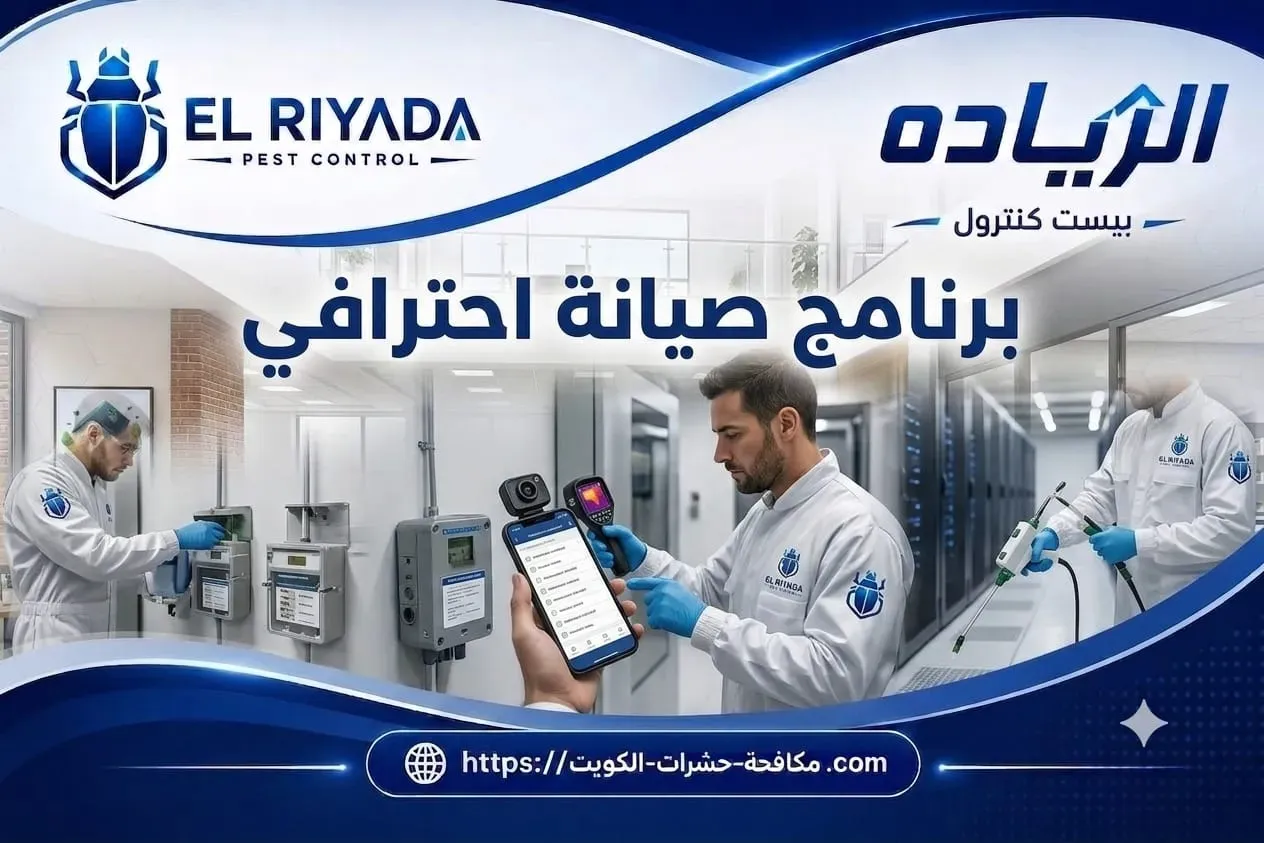
Al Reyada Pest Control has established itself as one of Kuwait's leading providers of annual commercial pest management programs because the company never offers standardized contracts to every client. Instead, each agreement begins with comprehensive property inspections, operational risk analysis, business activity evaluation, regulatory requirement assessment, and customized preventive planning specifically designed for each facility.
The company employs highly experienced technicians managing pest control programs for restaurants, factories, warehouses, hotels, shopping centers, healthcare facilities, and commercial buildings while utilizing approved professional products, advanced monitoring technologies, detailed inspection reports, structured follow-up procedures, and rapid response systems whenever required. Accurate documentation, transparent contract explanations, strict adherence to scheduled inspections, and continuous technical support have made Al Reyada Pest Control one of Kuwait's most trusted partners for long-term commercial pest management.
• Customized contracts are prepared for every facility.
• Professional inspections precede every agreement.
• Approved materials and modern technologies are utilized.
• Detailed inspection reports accompany scheduled visits.
• Rapid response and continuous monitoring maintain long-term protection.
Conclusion
Understanding What an Annual Pest Control Contract Includes enables business owners to evaluate proposals according to service quality rather than price alone. Professionally designed agreements provide complete preventive management systems including scheduled inspections, routine service visits, preventive treatments, technical reporting, continuous monitoring, and ongoing support that protect facilities while maintaining compliance with quality and health standards. Carefully reviewing contract details before signing therefore remains one of the most important steps toward obtaining maximum value together with reliable year-round protection.
Frequently Asked Questions
What does an annual pest control contract for companies usually include?
Professional contracts generally include initial inspections, scheduled service visits, preventive treatments, monitoring programs, technical reports, follow-up support, and emergency responses according to the agreed contract terms.
Is the number of annual visits always the same?
No. Visit frequency depends upon business activities, facility size, operational risks, regulatory requirements, and previous infestation history.
Are inspection reports included after every visit?
Yes. Professional annual contracts normally provide detailed reports documenting inspections, treatments performed, observations, recommendations, and corrective actions after every scheduled service.
Why do restaurants and factories require specialized programs?
These facilities operate under strict food safety and regulatory requirements while presenting unique pest risks, making continuous monitoring and specialized preventive management essential.
Why do companies choose Al Reyada Pest Control?
Businesses choose Al Reyada Pest Control because the company provides customized annual contracts, professional inspections, detailed reporting, experienced technicians, preventive management programs, rapid response services, and reliable long-term commercial pest protection throughout Kuwait.