Wasp Control
Professional Wasp Control service in Kuwait using the latest approved pesticides.
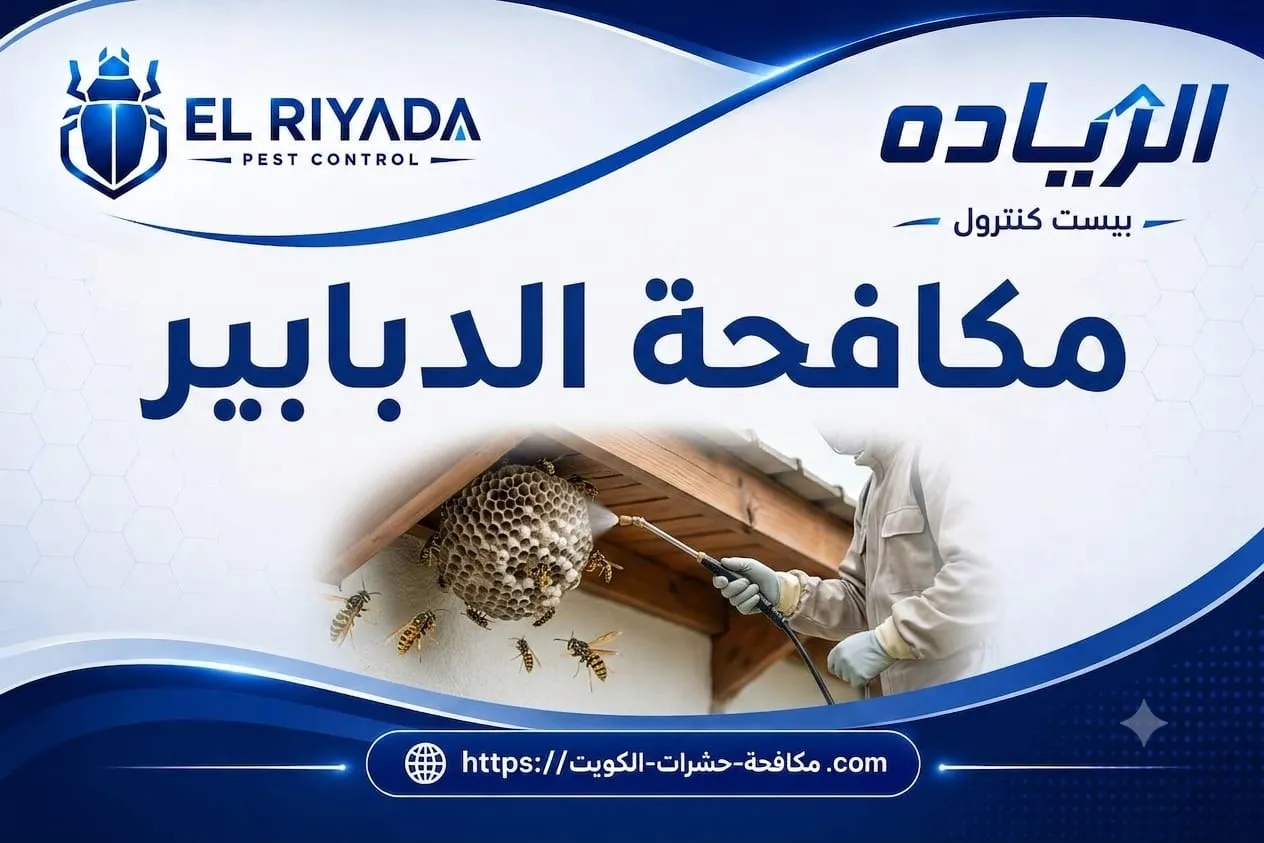
Wasp Control in Kuwait is a specialized pest management service that requires professional handling and a rapid response because wasps are not simply annoying flying insects. They can become a serious safety hazard when they build nests close to homes, schools, gardens, commercial facilities, warehouses, or public gathering areas. The risk increases significantly whenever a wasp colony feels threatened because wasps may become highly aggressive and attack in large numbers, making any attempt to remove the nest without professional experience extremely dangerous. Based on extensive field experience throughout Kuwait, successful wasp control depends on accurately locating the nest, identifying the wasp species, selecting the safest and most effective treatment method, and implementing preventive measures that reduce the possibility of future nest construction in the same location.
Wasp Control in Kuwait
Wasp Control in Kuwait begins with a complete assessment of the risk before any treatment is carried out because every wasp nest differs in size, colony population, accessibility, and location inside or outside the building. Practical field experience has consistently shown that attempting to deal with wasp nests without proper planning often provokes defensive attacks that expose residents, workers, and visitors to multiple painful stings, especially when nests are located near entrances, windows, balconies, gardens, children's play areas, or frequently used walkways. Professional technicians therefore conduct a thorough site inspection to determine the nest's exact location, evaluate wasp flight patterns, assess the overall safety risk, and choose the most suitable removal strategy. After the nest has been eliminated, surrounding areas are also treated to reduce the likelihood of future wasp activity and new nest construction.
• Conduct a comprehensive inspection before beginning any treatment.
• Evaluate the level of risk according to colony activity.
• Select treatment methods based on wasp species and nest location.
• Treat surrounding areas after removing the nest.
• Provide preventive recommendations that reduce future nesting activity.
Wasp Nest Removal
Wasp Nest Removal should always be performed by trained professionals because approaching or attempting to remove a nest using household methods can easily trigger a defensive swarm attack. Field experience has shown that many nests remain hidden inside suspended ceilings, behind outdoor air conditioning units, inside wall cavities, beneath roof structures, or deep within trees and dense vegetation, making them far more difficult to locate than they initially appear. Professional removal therefore begins by accurately identifying the nest's location, selecting the safest timing for intervention, and using specialized protective equipment together with professional removal techniques that eliminate the entire nest without placing nearby occupants at unnecessary risk. The remaining nest material is also removed to prevent the location from attracting future colonies.
• Locate the nest precisely before beginning removal.
• Use professional equipment that minimizes operational risks.
• Remove the entire nest instead of eliminating only visible sections.
• Safely access hidden nests inside structures.
• Dispose of remaining nest material to discourage future activity.
Eliminating Wasps
Eliminating Wasps involves much more than simply removing the visible nest because successful long-term control requires addressing the environmental conditions that attracted the colony in the first place. Practical experience has demonstrated that wasps prefer quiet, elevated, and sheltered locations including rooftops, building eaves, storage structures, dense trees, garages, and partially enclosed outdoor spaces where nests remain protected from weather conditions. Once the nest has been removed, technicians inspect the entire property, identify potential nesting locations, seal structural openings when necessary, and recommend preventive improvements that significantly reduce the possibility of new colonies becoming established during future nesting seasons.
• Treat the surrounding property immediately after nest removal.
• Inspect all locations suitable for future nest construction.
• Seal structural openings that may encourage wasp activity.
• Reduce environmental conditions attractive to wasps.
• Implement preventive solutions that preserve long-term results.
Wasp Spraying
Wasp Spraying depends far more on selecting the proper timing and application technique than simply choosing an insecticide because wasps remain highly active throughout daylight hours while becoming less aggressive during specific periods that allow treatment to be performed more safely and effectively. Extensive field experience has shown that professional spraying should never be limited to the visible nest alone. Instead, technicians treat surrounding flight paths, frequently visited areas, and the immediate environment around the colony to ensure that the entire wasp population is addressed. Approved professional products specifically formulated for wasp control are applied while following strict safety procedures that protect occupants, surrounding property, and the environment while significantly reducing the likelihood of future nesting activity.
• Select the most effective treatment time for maximum control.
• Treat both the nest and surrounding activity zones together.
• Use approved professional insecticides specifically designed for wasp control.
• Follow comprehensive safety procedures throughout every treatment stage.
• Reduce the possibility of future nest construction after treatment.
Removing Wasp Colonies
Removing Wasp Colonies differs from simply killing individual flying insects because the colony itself represents the central structure that supports the entire wasp population. Leaving the colony in place may encourage renewed activity or allow remaining wasps to continue occupying the location. Professional treatment therefore focuses on reaching the colony regardless of whether it is located inside ceilings, trees, wall cavities, rooftops, or concealed structural spaces before safely removing it completely. The surrounding area is then thoroughly cleaned and carefully inspected to verify that no secondary colonies remain hidden nearby.
• Remove the complete colony without leaving any remaining sections.
• Reach colonies located in difficult or concealed areas.
• Clean the nesting location after colony removal.
• Inspect nearby areas for additional hidden colonies.
• Reduce opportunities for future colony establishment.
Hornet Control
Hornet Control includes managing different species of large wasps that vary in size, behavior, aggression, and nesting habits. Practical field experience has shown that certain hornet species display significantly more defensive behavior than others, making accurate species identification an essential part of successful treatment. Professional technicians begin by identifying the hornet species, evaluating nest location, determining its proximity to occupied areas, and selecting the safest removal strategy capable of eliminating the entire colony. Preventive recommendations are then provided to reduce the likelihood of new hornet nests developing during future seasons.
• Identify the hornet species before selecting treatment methods.
• Evaluate risk according to nest location.
• Apply control methods appropriate for each hornet species.
• Eliminate the entire colony using professional techniques.
• Recommend preventive measures that reduce future infestations.
Safe Wasp Nest Removal
Safe Wasp Nest Removal requires carefully planned procedures that minimize the possibility of provoking aggressive wasp behavior while protecting everyone present on the property. Household attempts involving water, fire, smoke, sticks, or improvised tools should never be used because these methods frequently trigger mass defensive attacks that are extremely difficult to control. Professional technicians instead rely on specialized protective equipment, advanced removal tools, and carefully organized work procedures that begin by securing the surrounding area before treating and completely removing the nest. The site is then thoroughly inspected to confirm that all wasp activity has ended before the location is safely returned to normal use.
• Secure the surrounding area before beginning nest removal.
• Wear specialized personal protective equipment throughout the operation.
• Remove nests using techniques that minimize defensive reactions.
• Verify that all wasp activity has ended before leaving the site.
• Conduct a final inspection after completing the treatment.
Best Wasp Control Company
Choosing the Best Wasp Control Company should depend on professional expertise rather than simply fast response times or low prices because effective wasp management requires eliminating both the existing nest and the environmental conditions that allowed it to develop. Practical field experience consistently demonstrates that removing a nest without addressing surrounding risk factors often results in a new colony appearing in the same location within a relatively short period. Professional companies therefore begin with detailed property inspections, identify active nesting locations, evaluate contributing environmental factors, remove existing colonies, treat surrounding areas, and implement long-term preventive solutions. Experienced technicians use specialized protective equipment together with approved professional products that provide highly effective treatment while maintaining maximum safety.
• Perform detailed inspections before beginning treatment.
• Develop customized treatment plans for every property.
• Use specialized equipment for elevated and difficult-to-access nests.
• Apply approved professional products according to safety standards.
• Provide preventive solutions that discourage future nesting.
Wasp Control Service
Our Wasp Control Service is designed to protect homes, villas, farms, schools, factories, warehouses, and commercial facilities experiencing active wasp nests or repeated wasp activity. The service extends far beyond removing visible nests because technicians inspect the entire property, identify locations suitable for future nesting, and treat areas that may encourage recurring activity. Practical experience has shown that early intervention significantly reduces colony size, simplifies treatment, and lowers operational risks. Property owners are therefore encouraged to request professional assistance as soon as increased wasp activity or early nest construction is noticed near occupied buildings.
• Provide professional services for residential and commercial properties.
• Conduct complete inspections before treatment begins.
• Remove active nests while treating surrounding activity areas.
• Reduce opportunities for future nest construction.
• Perform every service according to professional safety procedures.
Wasp Control Prices
Wasp Control Prices vary according to several important factors including nest size, the number of active nests, their height above ground, ease of accessibility, building type, and the preventive treatment required following removal. A small garden nest requires a different treatment approach than multiple nests located on rooftops, inside structural cavities, or throughout large industrial facilities. Professional pricing is therefore determined only after a thorough property inspection so customers receive services that accurately match the actual scope of the problem without paying unnecessary additional costs. When comparing service providers, customers should prioritize treatment quality, technician experience, complete nest removal, and long-term prevention rather than focusing solely on the lowest price.
• Determine pricing according to nest size and property conditions.
• Consider the number of active nests throughout the property.
• Evaluate accessibility and treatment complexity.
• Clearly explain all service details before beginning work.
• Offer customized solutions suitable for different property types.
Why Choose Our Wasp Control Services
Our Wasp Control in Kuwait combines rapid response, professional safety procedures, and long-term prevention within one comprehensive service. Every project begins with a detailed inspection that identifies the wasp species, nest location, surrounding risks, and the safest removal strategy before treatment begins. Our experienced technicians use specialized equipment capable of safely reaching elevated, concealed, and difficult locations while applying approved professional products that reduce future wasp activity. We also provide practical preventive guidance that helps homeowners and business owners keep their properties free from recurring nests for years to come.
• Extensive practical experience removing different types of wasp nests.
• Specialized professional equipment for difficult and elevated locations.
• Long-term preventive programs that discourage future nesting.
• Strict compliance with professional safety standards.
• Customized solutions for residential agricultural and commercial properties.
Conclusion
Wasp Control in Kuwait provides the safest and most reliable solution for eliminating dangerous wasp nests before they become a serious threat to families, employees, visitors, or surrounding communities. Practical field experience has repeatedly demonstrated that rapid intervention, accurate inspection, professional nest removal, and comprehensive treatment of surrounding areas are the essential elements of successful long-term wasp control. When experienced specialists equipped with professional tools and approved treatment methods handle the work, wasp colonies can be eliminated safely and effectively while protecting both people and property throughout the year.
Frequently Asked Questions
Can a wasp nest be removed without professional equipment?
No. Attempting to approach or remove a wasp nest without specialized protective equipment or professional experience may provoke a defensive swarm attack and expose people to multiple painful stings.
When is the best time to remove a wasp nest?
The most appropriate timing depends on a professional site assessment because technicians select treatment periods that provide maximum effectiveness while minimizing operational risks according to wasp activity patterns.
Will wasps return to the same location after the nest is removed?
They may return if the environmental conditions that attracted them remain unchanged. Professional treatment therefore includes both complete nest removal and preventive measures that significantly reduce the likelihood of future nesting.
Do all hornet and wasp species require the same treatment method?
No. Different species display different nesting behaviors and aggression levels, so professional technicians identify the species first before selecting the most appropriate control strategy.
How can I tell if there is a wasp nest inside my building?
One of the clearest signs is repeatedly observing wasps entering and leaving the same opening, cavity, roof edge, wall space, or elevated section of the building. This usually indicates an active colony that should be professionally inspected before it continues to expand.