
Finding bed bugs in your child’s bedroom is stressful for any parent. Children sleep long hours on the same mattress, cuddle soft toys and press their faces into pillows, which makes them the most exposed person in the house. Unfortunately, the first reaction in many homes is to buy a supermarket spray and apply it directly to the bed, and that is exactly what a child’s room does not need.
This guide explains how to confirm that you are really dealing with bed bugs, where they hide in a child’s room, how professional bed bug control in children’s rooms in Kuwait protects both the mattress and the child, and when your child can safely sleep there again. Al Reyada Pest Control handles these cases every week in areas such as Rawda, Jabriya, Sabah Al Salem, Mishref and Bayan, and this article condenses that field experience into practical steps.
Are bites enough to diagnose an infestation?
The most common mistake is relying on bites alone. Bed bug bites often appear as small red spots in a line or a cluster of three, usually on skin exposed during sleep such as arms, neck, face and legs. But the same pattern can be caused by mosquitoes, fleas, eczema, allergic reactions and even common childhood viral rashes. Some people also show no reaction at all, even when bed bugs are feeding on them.
That is why we look for physical evidence:
-
The insect itself: adults are roughly the size of an apple seed (4–7 mm), reddish-brown, flat when hungry and swollen after feeding.
-
Cast skins: translucent, honey-coloured shells, because nymphs moult five times before becoming adults.
-
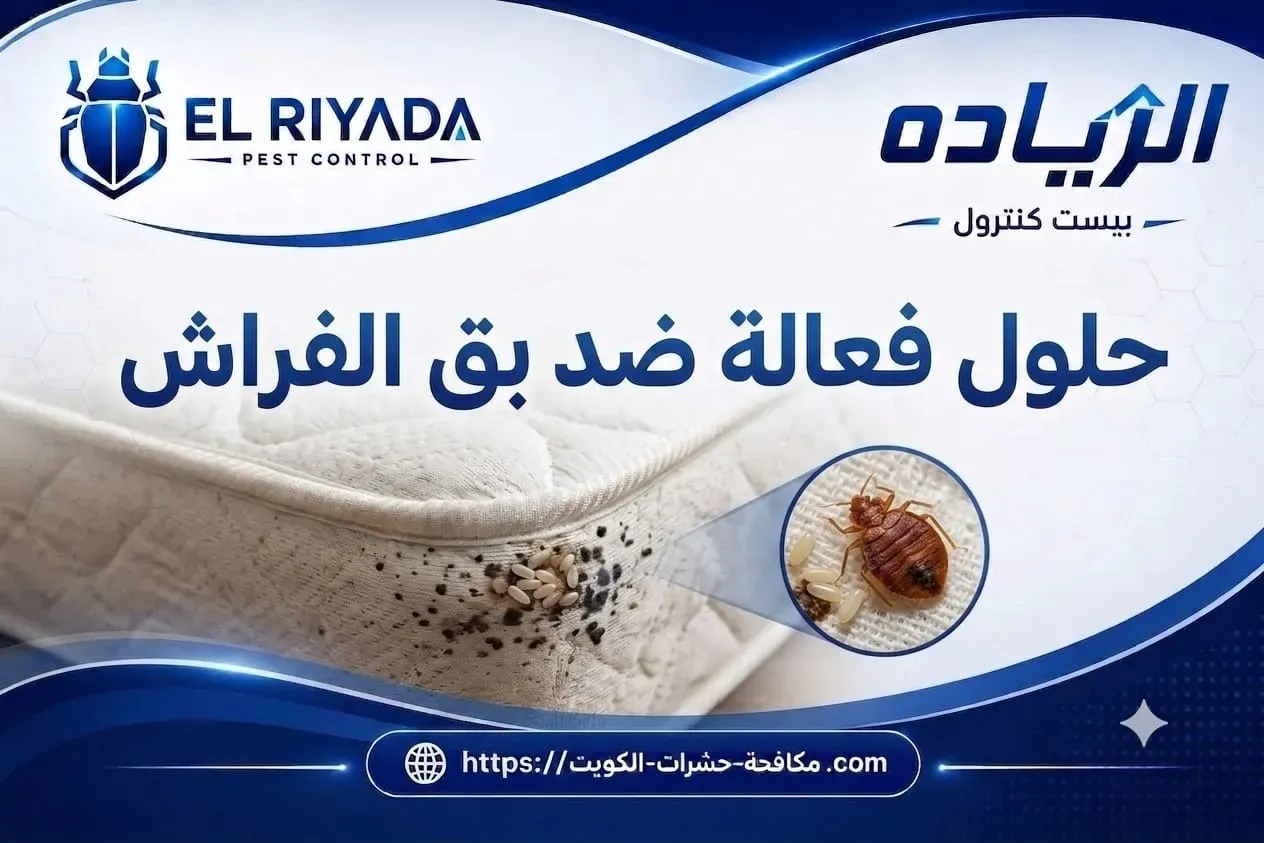
Dark spots: tiny black dots that look like marker ink on mattress seams or bed frames. These are bed bug droppings.
-
Eggs: pearly white specks about the size of a pinhead, glued into corners and crevices.
-
Small blood spots on sheets or pillowcases in the morning.
If you find any of these, photograph it in good light and note where and when you found it. These photos save the technician a great deal of time and help locate the source before anything is disturbed.
Why a child’s room needs a different approach
A child’s bedroom is not the same as an adult’s. It has a mattress used for 10 to 14 hours a day, soft toys that sometimes end up in the child’s mouth, a floor where the child plays and crawls, and sometimes a wooden crib full of joints and gaps. All of this makes random spraying a poor choice and means the plan should start with one question: what is the least chemical intervention that will actually solve the problem?
For children’s rooms, Al Reyada follows an integrated pest management approach. We combine careful inspection, steam and heat treatment, mattress encasements and targeted crack-and-crevice treatment with licensed products in places away from sleeping surfaces, always following the product label.
Inspecting mattress seams without spreading bugs
Bed bugs do not live deep inside the mattress, as many people believe. They hide close to their food source in narrow, dark places. A correct inspection is carried out with the mattress in place, because carrying it through the hallway or into another room drops insects and eggs along the way.
We inspect in this order:
-
The piping and seams around the top and bottom edges of the mattress, the most common hiding spot.
-
The manufacturer’s label and the folds beneath it.
-
The box spring or bed base, including the fabric underneath and the staples that hold it.
-
The headboard and the gap between it and the wall.
-
Joints of wooden bed frames and screw holes.
-
The bedside table and its drawers, nearby electrical sockets and carpet edges.
We use a strong torch and a thin card to run along the seams. Every cover we remove goes directly into a sealed bag instead of being shaken out in the room.
The child’s bed and soft toys
Soft toys worry parents more than almost anything else, yet they are among the easiest items to treat correctly:
-
Bag the toys in sealed plastic bags inside the room itself.
-
Wash washable toys at the highest temperature allowed on the care label, then tumble-dry on high heat for at least 30 minutes. High heat kills bed bugs and their eggs.
-
Toys that cannot be washed can often go into the dryer alone on high heat, or be sealed in a bag and frozen for several days, as advised by the technician.
-
Never spray any insecticide on toys, pillows or blankets, even if the product claims to be “safe”.
A crib is inspected completely, and its joints and gaps are treated with dry, high-temperature steam that reaches places hands cannot, without leaving chemical residue on wood a child might chew.
Sibling bedrooms and shared sleeping
If children share a room or sometimes sleep in each other’s beds, inspecting only the reported bed is not enough. Bed bugs travel easily in blankets, clothes and school bags. On the other hand, finding one infested bed does not justify treating the entire house.
The correct approach is to inspect every bed in the room, then adjoining bedrooms, then the living-room sofa if the children nap there. The treatment boundary is set by what we actually find. This saves you the cost of treating clean areas while making sure no hidden source is left to restart the problem a few weeks later.
What parents should prepare
Some families empty wardrobes into the corridor before the visit, thinking it will help. Usually it spreads the infestation. Correct preparation is simpler:
-
Do not move the mattress or furniture.
-
Bag sheets, covers and pillowcases and wash them at a high temperature.
-
Bag clothes left on chairs or the floor inside the room.
-
Lift toys off the floor and treat them as described above.
-
Prepare your photos and notes: when the first bites appeared, how many beds are in the room, and whether anyone has travelled recently or used furniture has entered the home.
-
Tell us the children’s ages, any known asthma or skin sensitivity, and whether there are pets or aquariums.
This information decides the right treatment and the safe re-entry time.
Choosing a sleep-surface-safe approach

No single method suits every child’s room. The technician chooses based on the size of the infestation and the type of mattress. The methods we rely on most are:
|
Method |
Where it is used |
Why it helps |
|---|---|---|
|
Dry high-temperature steam |
Mattress seams, bed joints, carpet edges |
Kills bugs and eggs on contact with no chemical residue |
|
Bed bug-proof encasements |
Mattress and box spring |
Traps any remaining bugs, blocks new ones and makes later checks easy |
|
Hot washing and drying |
Bedding, clothes, toys |
Completely safe, inexpensive and effective |
|
Interceptor monitors under bed legs |
Bed legs |
Reveal any remaining activity after treatment |
|
Targeted treatment with a licensed product |
Cracks and gaps away from sleeping surfaces |
Targets hiding places without exposing the child |
A proper encasement is one of the best investments for a child’s room, provided it has a secure zip, is designed for bed bugs and stays on for about a year, because adult bed bugs can survive many months without feeding.
Avoid foggers and aerosol “bug bombs” in a child’s room completely. They do not reach where bed bugs hide, they push the insects into neighbouring rooms and they leave residue on every surface.
When children can safely return
The question we hear most is, “When can my child sleep in their room again?” The honest answer is that there is no fixed hour for every case. If treatment relies only on steam, hot laundering and encasements, the room can usually be used the same day once surfaces are dry. If a targeted chemical treatment was used, re-entry depends on the product’s label, drying time and good ventilation.
Before your child returns we confirm that:
-
All treated surfaces are completely dry.
-
The room has been ventilated by opening windows and, if available, running the air conditioner on fresh-air mode.
-
Clean encasements and washed pillows are in place.
-
The play floor has been wiped if the technician recommends it.
The technician tells you the re-entry time clearly before leaving, so you never have to guess.
Why moving the mattress backfires
When parents discover bed bugs, the instinct is to drag the mattress to the roof, the yard or the guest room. It is understandable, but it is one of the mistakes that most complicates treatment. During the move, insects and eggs drop onto carpets and corridors, turning a one-room problem into a multi-room one. Moving the child to sleep in another room before treatment can also lead the bugs to follow, because bed bugs are attracted to the carbon dioxide and body heat of a sleeping person.
It is better to leave the mattress where it is. If you must throw it away, wrap it in a large plastic sheet and label it so nobody takes it from beside the bin. In many cases there is no need to discard the mattress at all, because treatment and an encasement are enough.
Monitoring the bed after treatment
Bed bug eggs hatch in roughly one to two weeks, and some eggs deep in a crack may survive the first visit. That is why we schedule a follow-up visit after 10 to 14 days, checking the same points and comparing them with the original photos.
We measure success by:
-
No live bugs or fresh cast skins in mattress seams or bed joints.
-
Empty interceptor monitors under the bed legs.
-
No new bites for two to three weeks.
Do not judge results from a single bite after treatment, as skin marks can last for days. What matters is the physical evidence in the bed.
Preventing bed bugs from coming back
-
Inspect suitcases after travel before taking them into bedrooms, and wash travel clothes on a hot cycle.
-
Never bring used furniture or mattresses into a child’s room without inspecting them first.
-
Check the mattress seams every month when you change the sheets.
-
Reduce clutter under the bed, which gives bed bugs extra hiding places.
-
Keep encasements intact and free of tears.
Booking Al Reyada for a child’s room

When you call, have this information ready so we can give you an accurate estimate: the children’s ages, the number of beds, the mattress type, any known sensitivities, when the problem started and your area. We will then explain the scope of work, whether you need one visit or a programme with follow-up, and what you should do before and after treatment.
Conclusion
Bed bug control in children’s rooms does not mean random spraying. It means a correct inspection and a method that protects both your child and the mattress. Al Reyada Pest Control covers every governorate in Kuwait and uses heat and steam, proper encasements and targeted licensed treatments, followed by a monitoring visit.
To book or ask a question, call or WhatsApp us. Send a photo of what you found on the mattress and we will reply with an initial assessment and arrange a suitable appointment.
Frequently Asked Questions
Is bed bug treatment safe in a child’s room?
Yes, when it relies on steam, hot laundering and encasements, and when any chemical treatment is limited to cracks and gaps away from sleeping surfaces, uses licensed products and respects the re-entry time set by the technician.
Do I need to throw away my child’s mattress?
In most cases, no. Steam treatment followed by a secure bed bug encasement usually solves the problem. Replacement is only needed if the mattress is torn or badly damaged.
How many visits does a child’s room need?
Usually one treatment visit and one follow-up visit 10 to 14 days later, because hidden eggs can hatch after the first visit. Heavy infestations may need a third visit.
Can children react badly to bed bug bites?
Some children develop strong itching or swelling. Ask your paediatrician about the bites themselves and leave the source of the problem in the bed to us.
How did bed bugs get into my child’s room?
Most often through luggage, used furniture or mattresses, visiting guests or clothing from an infested place. Bed bugs are not a sign of poor hygiene and can appear in the cleanest homes.