An annual pest control contract for investment apartment buildings helps property owners and building management companies in Kuwait organize insect and rodent control throughout the year instead of handling each complaint separately. An effective program depends on inspecting the building, identifying sources of pest activity, establishing a suitable schedule for shared facilities, monitoring results, and documenting observations.
This service becomes particularly important in buildings containing numerous apartments, corridors, elevators, ventilation shafts, and utility rooms because pests can move between different areas, making isolated treatments insufficient. Property owners can contact Al Reyada Pest Control at to inquire about a pest control contract suited to their building's size and usage.
Pest Control Contracts for Investment Apartment Buildings: Why Do Owners Need an Annual Program?
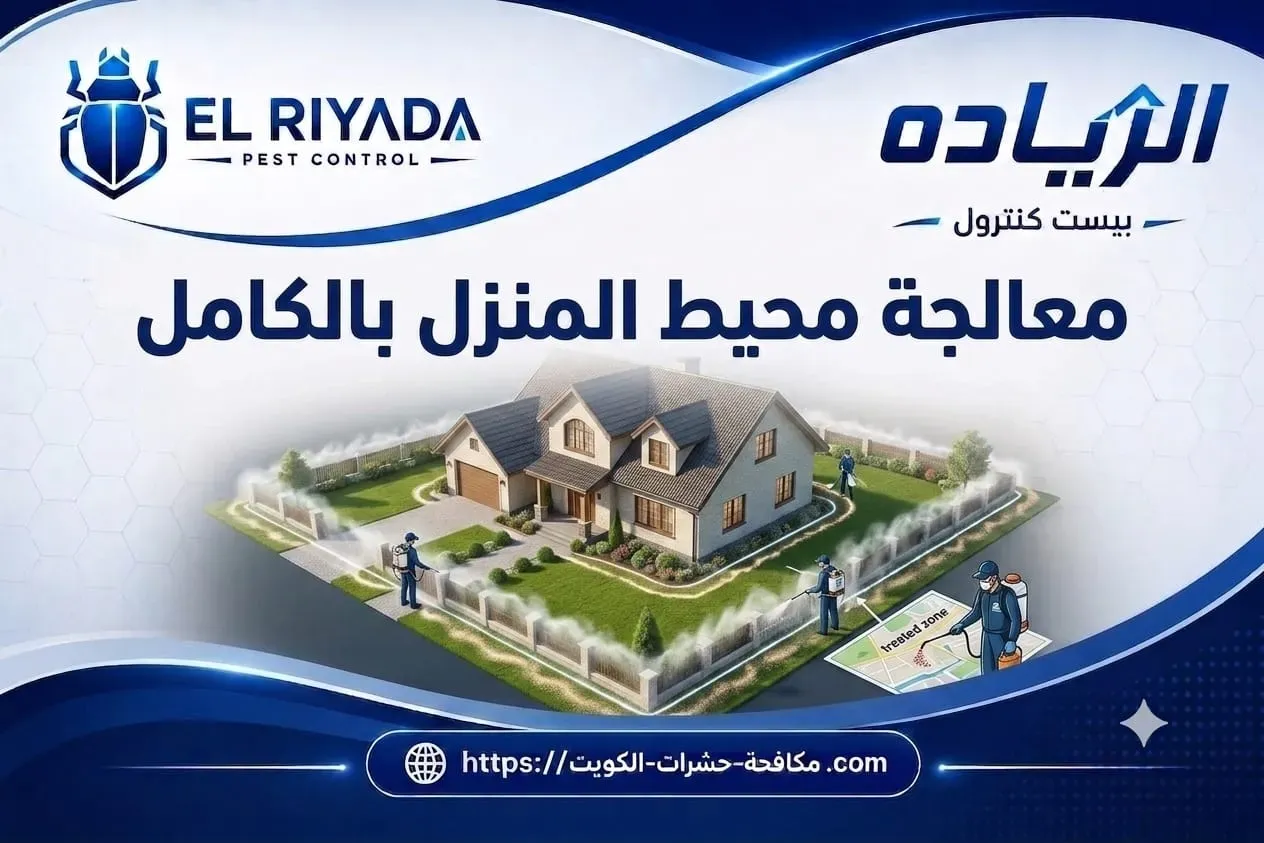
Managing an investment apartment building involves more than collecting rent and repairing faults. Maintaining the property's condition also requires monitoring problems that may affect tenants' comfort or lead to repeated maintenance complaints.
These problems include cockroaches appearing in utility rooms, ants in corridors, or rodents near waste collection areas. An infestation may begin in a limited location before complaints emerge from other parts of the building if the source of the activity is not identified.
An annual contract differs from requesting a single visit when insects appear. It establishes a clear framework for inspection, pest control, and follow-up throughout an agreed period, with the possibility of adjusting visit priorities according to the results observed during implementation.
What Are the Practical Benefits for Property Owners?
-
Reducing dependence on unexpected complaints: A scheduled monitoring program can help identify some signs of pest activity in shared facilities before they develop into repeated complaints from several apartments, without assuming that the program will prevent every infestation.
-
Organizing pest control expenses: A written contract helps clarify which services are included, how many visits are scheduled, and how additional requests will be handled instead of requiring a new financial decision whenever insects appear.
-
Monitoring areas residents may not notice: These include pump rooms, ventilation shafts, areas surrounding drains, parking facilities, and waste collection points, which may require inspection even when no direct complaint has been submitted.
-
Clarifying responsibilities between different parties: The contract specifies what falls within the pest control company's responsibilities and what requires intervention from the cleaning company, plumber, or property management, such as repairing leaks and sealing utility openings.
-
Maintaining records of observations and procedures: Visit reports help compare the building's condition over time and determine whether problems repeatedly occur in a particular location or are associated with an unresolved maintenance issue.
Is an Annual Contract Suitable for Every Apartment Building?
It may be suitable for multi-unit buildings that require regular monitoring, but the number and scope of visits should depend on the property's condition and pest risks.
A building containing restaurants or food businesses on the ground floor may require a different program from a residential property without commercial activities.
It is also important to distinguish between a preventive contract and the treatment of a widespread active infestation, as some situations require additional initial measures before a regular monitoring program can begin.
Pest Control Contracts for Apartment Building Owners: What Services Should Be Included?
When requesting a pest control contract for apartment building owners, asking only about the number of spraying visits is insufficient. A suitable contract should identify the target pests, covered areas, and procedures for responding when a new problem appears.
Pests requiring monitoring may include cockroaches, ants, rodents, and certain insects associated with moisture or waste, depending on the findings of the building inspection.
Bed bug infestations inside individual apartments or subterranean termite activity affecting wooden components may require separate assessments and treatment plans, depending on the contract's scope.
Essential Elements of the Service Scope
-
Inspection of shared facilities: This includes assessing corridors, stairways, elevator entrances, utility rooms, parking areas, and the surroundings of the building according to the property's needs.
-
Identification of pest species: The control method must be selected according to the target insect or rodent because cockroach treatment differs from rat monitoring or ant control.
-
Identification of application locations: The contract should clarify where baits, traps, or targeted treatments may be used instead of assuming that spraying every surface is the most effective solution.
-
Safety procedures: These include considering residents, children, pets, and frequently used areas while complying with product instructions and site-specific requirements.
-
Reports and recommendations: The service scope should ideally include documenting observations and identifying corrective measures that building management needs to carry out.
-
Complaint-handling procedures: The contract should explain how complaints are submitted and whether additional visits are included or require a separate agreement.
Does the Contract Cover Rented Apartments?
Not necessarily.
A pest control contract may cover only shared facilities, while treatment inside individual apartments requires coordination with tenants, permission to enter, and identification of the infestation.
The service boundaries should therefore be clearly documented before signing, especially when the owner expects all residential units to be included.
Regular Pest Control for Apartment Buildings in Kuwait: How Are Visits Scheduled?
Regular pest control for apartment buildings in Kuwait helps monitor pest activity systematically. However, setting the same schedule for every building without an inspection may result in more or fewer visits than the property actually requires.
Visit frequency depends on the building's size, number of units, facility types, pest species, and previous infestation history.
A building showing repeated rodent activity may require more frequent monitoring during the initial control phase, while another building may be suitable for a less intensive preventive schedule after assessment.
Factors Affecting the Number of Visits
Number of residential units: As the number of apartments and shared facilities increases, organizing inspections and coordinating access to different areas becomes more important.
Location of waste collection areas: Waste storage locations require particular attention when food sources or openings that allow insects and rodents to enter are present.
Presence of commercial activities: Restaurants or food shops within a building may affect the types of pests likely to occur and the priorities of the monitoring program.
Plumbing and drainage conditions: Persistent leaks and drainage problems create conditions that require repair and monitoring. Pesticides alone cannot correct these issues.
Results of previous visits: If activity decreases in one location but continues elsewhere, the inspection plan should be adjusted rather than repeating the same procedures without reviewing the results.
Are Monthly Visits Better Than Quarterly Visits?
There is no single answer suitable for every building.
Monthly visits may be appropriate for certain properties depending on their risk levels, while other buildings may require a different schedule. The decision should follow an assessment and review of monitoring results.
Property owners can contact Al Reyada Pest Control at to inquire about determining an appropriate visit schedule for their apartment building.
Pest Control Contracts for Rental Buildings: How Should Tenant Complaints Be Managed?
A pest control contract for rental buildings differs from pest control in a house occupied by one owner because property management must coordinate with several parties, including residents, building supervisors, cleaning companies, and maintenance technicians.
One tenant may send a photograph of an insect in the kitchen, while another reports noises above a suspended ceiling or cockroaches near an elevator.
These complaints do not necessarily originate from the same source. Information should therefore be collected before deciding on the appropriate action.
A Systematic Method for Managing Complaints
-
Record the complaint: Identify the apartment number or shared area, the insect species if possible, and the date the activity was observed.
-
Collect evidence: Use photographs and descriptions of the activity location without relying on assumptions or identifying the insect before proper examination.
-
Determine the extent of the problem: Establish whether the infestation is confined to one residential unit or is also present in shared facilities.
-
Coordinate the inspection: Arrange access to the necessary locations while respecting tenants' privacy and schedules.
-
Select the appropriate procedure: This may involve targeted treatment, traps, or recommendations for sealing openings or repairing leaks.
-
Monitor the results: Check whether activity continues or appears in other locations after the procedure has been implemented.
Who Is Responsible for Pest Control Inside a Rented Apartment?
Responsibility depends on the tenancy agreement, the specific circumstances, and the relevant legal obligations.
The problem may be associated with a shared facility or building defect, or it may arise from conditions inside the residential unit. Neither the owner nor the tenant should automatically be held responsible without establishing the cause and reviewing the applicable agreements.
The pest control contract should explain how treatment inside apartments can be requested while distinguishing the pest control company's responsibilities from those of other parties.
Pest Control Plans for Apartment Buildings: From Initial Inspection to Follow-Up
A pest control plan for an apartment building begins with a comprehensive property assessment rather than selecting one pesticide for every location.
Apartment buildings contain different environments, including dry areas, damp locations, equipment rooms, open corridors, and waste storage areas.
The building should therefore be divided into clearly defined inspection zones, with appropriate procedures selected for each area according to the pest species and level of activity.
Stage One: Building Assessment
The assessment includes reviewing locations associated with previous complaints, inspecting shared facilities, and identifying openings or conditions that may allow pests to enter or remain active.
It is also important to determine whether upcoming maintenance work could affect the pest control plan.
Stage Two: Setting Priorities
Not every observation carries the same importance.
Clear evidence of rodent activity near a waste room may require a faster response than a single ant observed in an outdoor corridor.
Priorities should be based on the pest species, its location, and the likelihood of residents being exposed to it.
Stage Three: Implementing Control Measures
The plan may include baits, traps, targeted treatments, or exclusion methods, depending on the situation.
Only appropriate procedures should be implemented, with safety instructions followed and materials kept out of locations where residents could access them without adequate protection.
Stage Four: Monitoring Results
After implementation, signs of activity, complaint locations, and findings from traps or monitoring devices are reviewed.
If the problem persists, the underlying cause should be reassessed instead of automatically repeating the same treatment.
Stage Five: Providing Maintenance Recommendations
Building management may need to seal utility openings, repair pipes, or improve waste storage arrangements.
These measures do not replace pest control when treatment is necessary, but they may be essential for reducing recurring problems.
Rodent Control in Investment Apartment Buildings: Protecting Utility Rooms and Waste Areas

Rodent control in investment apartment buildings requires a plan separate from insect spraying because mice and rats differ in behavior, movement routes, and monitoring methods.
Rodents may take advantage of openings around utility lines, poorly sealed doors, or waste storage areas, particularly when food, water, and shelter are available.
Observing one rodent does not necessarily indicate a widespread infestation, but it is a sign that deserves investigation to identify entry points and the extent of activity.
Where Should Rodent Inspections Begin?
-
Waste collection rooms: Waste bag storage, container closure, and disposal schedules should be reviewed because food leftovers can attract rodents.
-
Parking facilities: Corners, storage areas, and openings around utility installations should be inspected without assuming that every noise or mark indicates the presence of rats or mice.
-
Pump and equipment rooms: These may contain utility openings or difficult-to-access areas and should be inspected while protecting equipment and maintaining operational safety.
-
Shared storage rooms: The arrangement of stored materials and the presence of cardboard boxes or waste that could provide hiding places should be examined.
-
The building's exterior perimeter: Doors, openings, and utility entry points should be checked, with necessary repairs identified to prevent rodents from entering.
Why Is Placing Rat Poison Alone Insufficient?
Because baiting alone may not address the source of the problem if rodents continue entering through open gaps or accessing food.
Placing toxic substances in corridors or areas accessible to residents without suitable protective measures also creates unacceptable risks.
Traps, secured bait stations, and exclusion measures may form part of the control plan, depending on the specialist's assessment.
How Can You Tell Whether Rodent Control Is Making Progress?
Indicators may include fewer new sightings, changes in activity at monitoring locations, and the absence of fresh signs in previously active areas.
However, a short period without visible rodents is not sufficient to prove that the problem has ended, which is why continued monitoring remains important.
Pest Control Visits for Residential Buildings: What Happens During Each Visit?
Pest control visits for residential buildings should have a clear purpose rather than simply involving a technician spraying corridors and leaving.
A useful visit begins by reviewing new complaints and the results of the previous visit, followed by inspecting designated areas, implementing necessary measures, and documenting observations.
Before the Visit
Building management should ideally collect recent complaints and identify areas requiring special access, such as pump rooms or shared storage facilities.
Residents should also be informed when planned procedures require notification according to safety instructions and the service scope.
During the Visit
The specialist examines priority locations and determines whether there are new signs of pest activity or maintenance issues affecting pest control.
Procedures may differ between locations. Spraying every corridor during every visit is not necessary if there is no technical reason to do so.
After the Visit
Management should ideally receive a summary identifying the inspected areas, completed procedures, and observations requiring follow-up.
If openings or leaks remain unrepaired, these should be clearly documented so that the owner does not assume repeated spraying alone will prevent the problem from returning.
What Makes Pest Control Reports Useful?
A good report answers practical questions:
-
Which areas were inspected?
-
Which pest species were observed or not observed?
-
What procedures were carried out?
-
Are there maintenance issues requiring repair?
-
Has the level of activity changed since the previous visit?
-
What should be reviewed during the next visit?
This information supports more accurate maintenance and pest control decisions without relying on general impressions.
Pest Control Contracts for Property Owners: Choosing a Provider for Multiple Buildings
If you own more than one apartment building, you may need a pest control contract for property owners that recognizes the differences between properties rather than applying the same schedule to every building.
One building may be older and contain exposed utility lines, while another may be newly constructed with fewer shared facilities or different service systems.
The number of residents, building usage, and presence of commercial premises also influence monitoring requirements.
Criteria for Choosing a Service Provider
|
Criterion |
Why It Matters to Property Owners |
|
Individual building assessment |
Prevents assuming every building requires identical procedures |
|
Defined service scope |
Clarifies which facilities and pests are covered |
|
Visit schedule |
Helps organize monitoring and coordinate with building supervisors |
|
Service reports |
Allows activity and procedures to be reviewed over time |
|
Complaint handling |
Explains how intervention can be requested when problems arise |
|
Safety procedures |
Take residents' use of shared facilities into consideration |
|
Transparent pricing |
Makes it easier to compare service costs across properties |
|
Contract conditions |
Clarify duration, renewal, cancellation, and additional visits |
Is One Contract Better for Several Apartment Buildings?
It may be administratively convenient if the contract clearly identifies the scope, cost, and visit schedule for each property.
However, combining several buildings into one agreement does not mean their technical requirements are identical.
Each building's plan should continue to reflect its inspection findings and actual problems.
Why Consider Al Reyada Pest Control?
Property owners can contact Al Reyada Pest Control to discuss the requirements of pest control contracts for investment apartment buildings in Kuwait.
When comparing any service providers, it is advisable to verify the proposed scope of work, monitoring procedures, suitable treatment products, and written agreement conditions.
The real value of a contract is not determined by marketing statements alone but by the clarity of its obligations and the suitability of its procedures for the property.
To inquire about pest control contracts for one building or several properties,
Pest Control in Shared Apartment Building Areas: Which Locations Need Attention?
Pest control in shared apartment building areas involves managing locations used collectively by residents or workers. However, spraying is not necessarily the appropriate procedure in every area.
Some locations may require inspection, monitoring, sealing openings, or targeted treatment, while others may not need pesticide application if no relevant signs are present.
Entrances and Corridors
Insects may appear near doors, joints, or lighting fixtures. Their species and source should therefore be identified before selecting treatment.
Resident movement must also be considered, and materials should not be unnecessarily applied to frequently touched surfaces or used contrary to product instructions.
Waste Rooms
These areas deserve attention regarding cleanliness, properly closed containers, and regular waste disposal.
Suitable pest control may be required when insects or rodents are active, but addressing food sources remains an important part of the solution.
Pump and Utility Rooms
Leaks or poorly sealed openings may create favorable conditions for certain pests.
These rooms should be inspected in coordination with the person responsible for the equipment, while avoiding exposure of electrical connections or machinery to unsuitable materials.
Parking Areas and Basements
These areas may contain small storage spaces, utility openings, or corners that are difficult to clean.
The required procedures depend on inspection findings rather than assuming that every basement contains rodents or cockroaches.
Ventilation Shafts and Drainage Areas
These locations may require monitoring for accumulated waste, moisture, and utility openings.
If insects associated with drains appear, the species and cause should be identified before treatment because correcting the underlying problem may be necessary.
Should Elevators and Staircases Be Sprayed Regularly?
Repeated spraying inside elevators or on door handles and handrails should not be treated as a general preventive measure.
These are frequently touched surfaces, and unnecessary applications should be avoided while complying with product instructions and resident safety precautions.
Cost of Pest Control Contracts for Apartment Buildings: How Is Annual Pricing Calculated?
The cost of pest control contracts for apartment buildings in Kuwait varies according to property size, service scope, number of visits, and the types of pests requiring management.
A single annual price cannot be established for every building without knowing its details because the number of apartments alone does not always reflect the amount of work involved.
A smaller building with recurring problems in utility rooms may require more intensive monitoring than a larger property with well-maintained facilities and no signs of persistent activity.
Main Factors Affecting the Price
Number of floors and residential units: This influences property size and coordination requirements, especially if the contract includes inspections inside apartments.
Size of shared facilities: This includes corridors, parking areas, storage rooms, utility rooms, and covered outdoor locations.
Number of agreed visits: A contract with closely spaced visits may cost differently from one with a less intensive schedule, depending on what each visit includes.
Pest species: Rodent monitoring may have different requirements from cockroach or ant control, and certain infestations may need a separate treatment plan.
Building condition: Existing problems, openings, leaks, and previous infestation history may affect the estimated work required.
Additional services: The agreement should clarify whether treatment inside apartments, emergency complaints, or unscheduled visits are included in the price.
Annual Contracts Compared With Individual Visits
|
Comparison |
Annual Contract |
Individual Visit |
|
Purpose |
Monitoring program over an agreed period |
Addressing a specific request or problem |
|
Scheduling |
Prearranged according to the contract |
Arranged when needed |
|
Documentation |
Regular reports can be agreed upon |
Related to the requested visit |
|
Cost |
Contract price based on a defined scope |
Separate charge for each request |
|
Suitability |
Properties requiring continuous monitoring |
May suit limited pest problems |
|
Complaint handling |
According to contract conditions |
Requires a new service request |
Is an Annual Contract More Economical Than Individual Visits?
A contract may help organize expenses and reduce repeated unplanned service requests, but it is not necessarily less expensive in every situation.
The comparison depends on the actual number of visits, the types of problems, and the services included in the agreement.
The total annual cost should therefore be compared against the scope of work rather than focusing only on the quoted price.
What Should Be Included in the Quotation?
-
The property name or address and the building covered by the service.
-
Areas that will be inspected or treated.
-
Target pest species.
-
Contract duration and number of visits.
-
Procedures for handling additional complaints.
-
Work excluded from the quoted price.
-
Payment, renewal, and cancellation conditions.
-
Any follow-up or warranty conditions, if actually offered.
To inquire about the cost of pest control contracts for apartment buildings in Kuwait, contact Al Reyada Pest Controland provide the number of floors and units, the nature of the shared facilities, and any existing pest problems.
Why Choose Al Reyada Pest Control to Discuss an Annual Contract for Your Building?

An investment apartment building owner looks for a service that helps manage insect and rodent problems without having to personally oversee every complaint.
However, the success of any program depends on a clear agreement and cooperation between the pest control company, building management, cleaning company, and maintenance technicians.
Property owners can contact Al Reyada Pest Control to inquire about preparing a pest control contract suited to their investment apartment building in Kuwait.
Points to Discuss Before Signing
-
A property-specific plan: The service should reflect the building's size, existing facilities, and pest species requiring monitoring.
-
A clearly defined scope for shared areas: This helps prevent disagreements about whether parking facilities, ventilation shafts, waste rooms, and other areas are included.
-
Appropriate procedures for each pest: Cockroaches, rodents, and ants should not be managed identically because each requires different monitoring and control methods.
-
Coordination with building management: This allows visits to be scheduled and access to rooms and areas requiring permission or unlocking to be organized.
-
Monitoring of observations: Recording activity locations and recommendations helps review recurring problems and identify necessary repairs.
-
Clear financial terms: These allow owners to understand the program's cost and determine whether additional requests involve extra charges.
No company can conclusively be described as the best for every property without independent comparisons and documented results. However, these criteria help owners choose a service that meets their actual needs.
Conclusion: An Annual Pest Control Contract Helps You Manage Your Building More Efficiently
Choosing a pest control contract for investment apartment buildings is not simply about spraying insects. It involves organizing monitoring, reducing recurring problems in shared facilities as far as possible, identifying the causes of pest activity, and addressing them appropriately.
A clear plan for controlling cockroaches, ants, and rodents helps improve complaint management and coordination between cleaning and maintenance services, particularly in apartment buildings occupied by large numbers of tenants.
Before signing a contract, make sure you understand the covered areas, number of visits, complaint-handling procedures, reporting requirements, and additional costs. Clarity on these points is what makes the agreement more valuable to property owners.
If you own an investment apartment building or manage several residential properties in Kuwait, contact Al Reyada Pest Control to inquire about an annual pest control contract tailored to your property's needs.
Frequently Asked Questions About Pest Control Contracts for Investment Apartment Buildings
1. Is an Annual Pest Control Contract Suitable for Every Investment Apartment Building?
It may be suitable for buildings requiring regular monitoring of shared facilities, but the number of visits and scope of work should be determined after assessing the building and its pest activity.
2. Does an Apartment Building Pest Control Contract Cover All Rented Apartments?
Not automatically. The contract may cover only shared facilities, while treatment inside apartments requires a clear agreement and coordination with tenants according to the service scope.
3. How Many Pest Control Visits Does an Apartment Building Need Each Year?
The number varies according to the building's size, pest species, activity levels, and complaint history. No single schedule is suitable for every property without an inspection.
4. Does a Pest Control Contract Include Eliminating Rats and Mice?
Rodent control can be included if the contract specifically covers it, with inspection areas, monitoring and control methods, follow-up procedures, and preventive measures clearly defined.
5. How Can I Find Out the Cost of a Pest Control Contract for an Apartment Building in Kuwait?
The price depends on the number of floors, shared facilities, pest species, number of visits, and service scope. You can contact Al Reyada Pest Control to inquire about a suitable quotation.