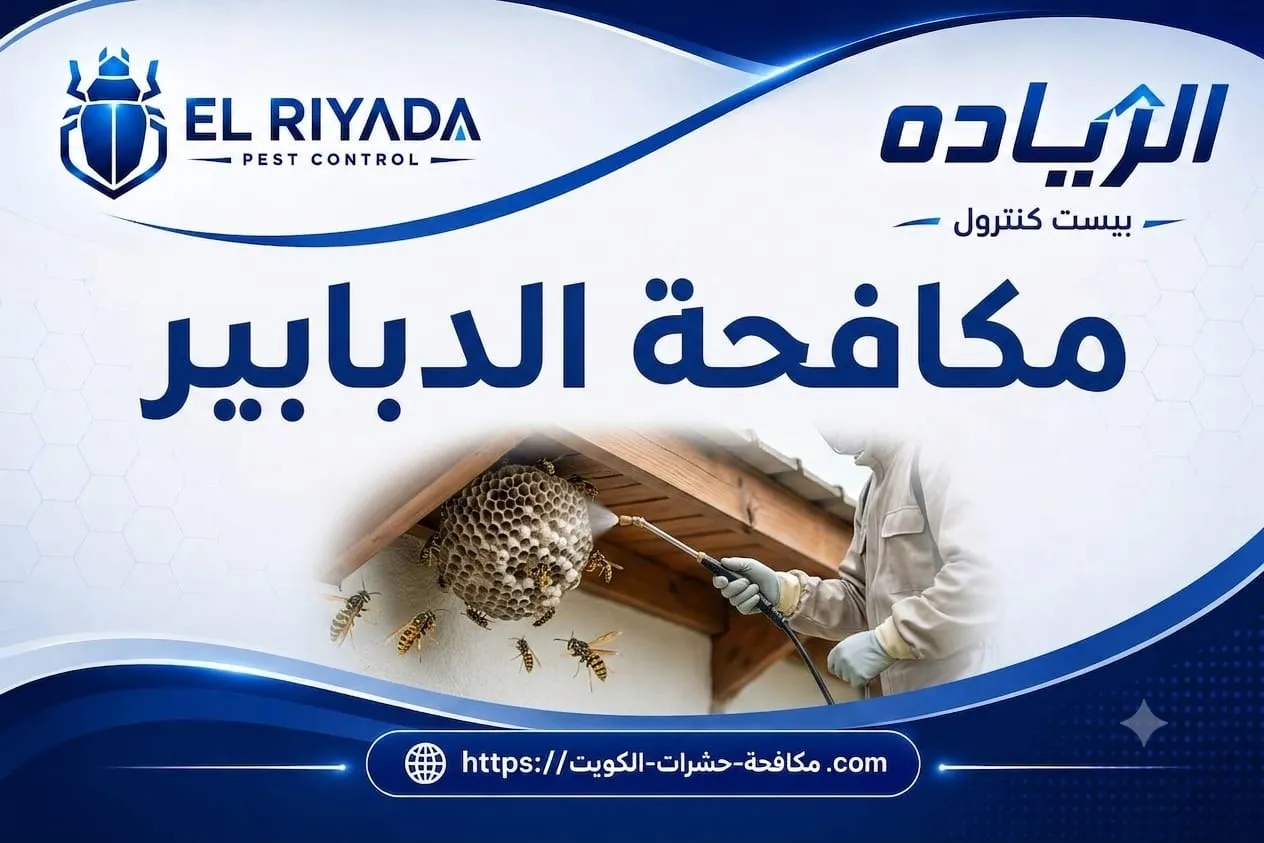
Wasp control for restaurants and commercial facilities requires a different approach from pests that primarily live inside kitchens and storage areas. The problem may begin with a nest on the building facade, rooftop, outdoor canopy, or another sheltered structure and then develop into a safety concern around customer seating areas or facility entrances. The important goal is not simply to kill the wasps flying in front of you. It is to identify their flight path, locate the nest, and assess how close the activity is to people before selecting the appropriate response. In food establishments, customer and employee safety becomes a priority, while random approaches to active nests should be avoided. Professional service therefore depends on inspection, risk assessment, safe treatment, follow-up, and measures that reduce the likelihood of the problem returning.
Wasp Control for Commercial Facilities in Kuwait
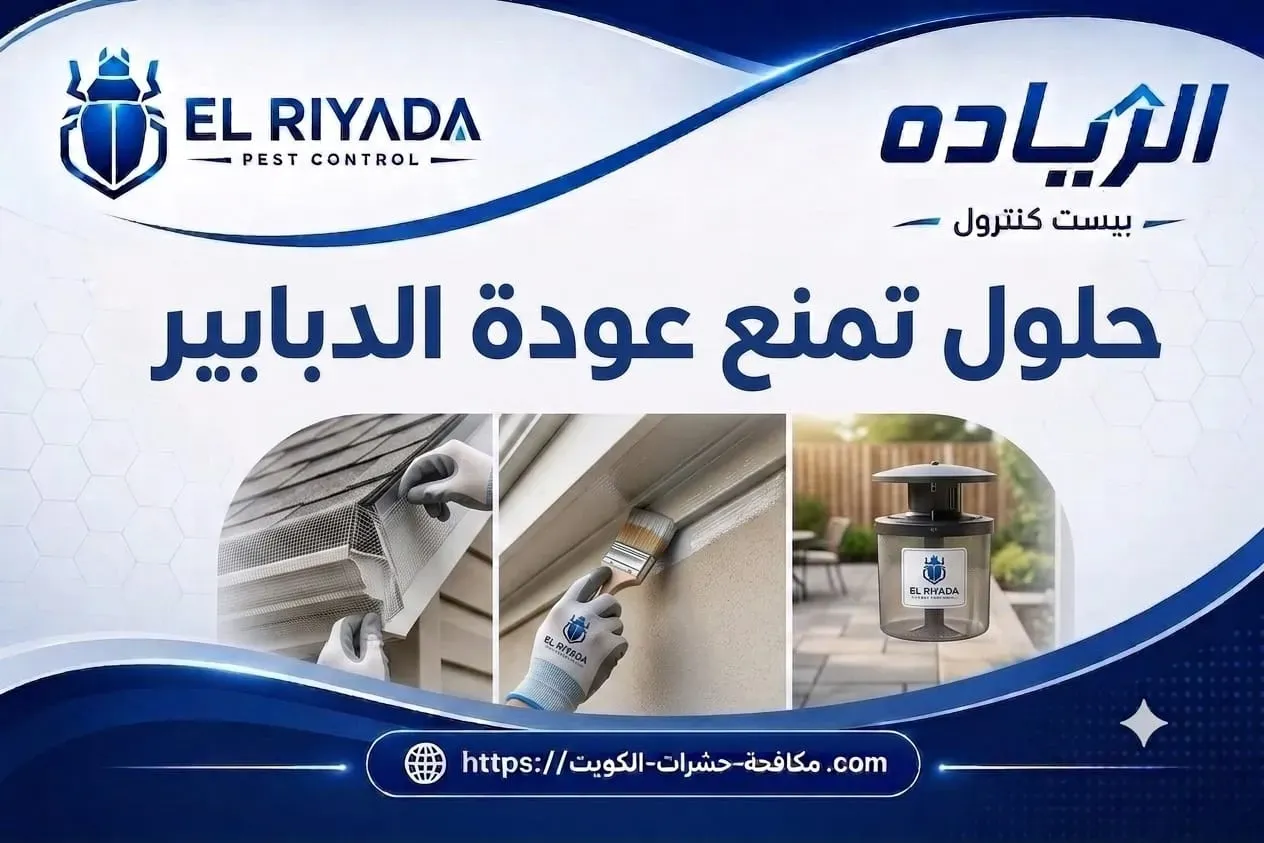
Effective wasp control for commercial facilities in Kuwait begins with a question that differs from the usual approach used for many common pests: are these simply individual wasps passing through the site, or is there consistent activity leading to a nearby nest? Seeing one wasp in an outdoor area does not prove that a nest exists within the building. However, repeated wasp movement in a particular direction or insects repeatedly entering and leaving the same point makes a detailed inspection much more important. This consistent movement can provide practical evidence that helps a specialist narrow the search area instead of chasing individual flying insects one after another.
In a realistic situation, restaurant employees may notice several wasps around an outdoor seating area and assume that food is the only reason they are present. Careful observation, however, may reveal that the insects repeatedly fly toward an elevated section of a canopy or disappear into an opening in the building facade. At that point, the situation changes from wasps simply visiting an attractive food source to a possible nesting problem that requires professional assessment. This distinction matters because dealing only with the individual wasps around the seating area will not stop the activity if an active nest continues producing new movement.
The priority of intervention also depends on where the activity occurs. A nest located away from regular human movement does not necessarily represent the same level of immediate risk as a nest positioned above a heavily used entrance or close to an employee waiting area. For this reason, the assessment should consider the suspected nest location, the intensity of wasp movement, the proximity of people, and whether the area can be accessed safely.
When comparing service prices, the facility should determine whether the quotation includes inspection, nest identification, removal or treatment, and follow-up, or whether it covers only a quick treatment of visible wasps. The lowest price does not necessarily provide the best value if the source of the activity remains untreated.
• Recording the repeated direction of wasp flight gives the specialist more useful information than simply counting how many wasps were visible at one moment because consistent movement toward a specific point may help identify the possible nest location.
• Classifying risk according to the proximity of activity to entrances, seating areas, and employee walkways helps prioritize locations where people are more likely to encounter wasps before addressing less sensitive areas.
• Distinguishing an isolated passing wasp from repeated activity prevents every individual sighting from being exaggerated while also ensuring that a pattern suggesting a nearby nest is not ignored.
• Comparing pest control companies according to nest identification, treatment method, accessibility, and follow-up provides a more accurate picture of service value than comparing only the price of treating visible wasps.
Wasp Nest Removal for Restaurants
Professional wasp nest removal for restaurants requires an assessment before anyone attempts to approach the nest because disturbing an active colony can trigger defensive behavior and increase the risk of stings. Restaurant employees and cleaning staff should therefore not attempt to hit, knock down, or randomly spray a nest, particularly when it is close to an entrance, customer seating area, or located at a height that cannot be reached safely.
The first step is to confirm the location of the nest as accurately as possible. A nest may be clearly visible beneath a canopy or on an exposed part of the building, while in other situations wasps may be entering an opening or structural void where the nest itself cannot be seen directly. This distinction affects the treatment strategy. Dealing with an exposed nest that can be safely accessed is very different from managing wasp activity inside a concealed cavity. Randomly sealing an active opening before it has been properly assessed may cause the insects to search for another route, so openings should not simply be closed while activity is continuing.
The timing of the service and the restaurant's normal operation should also be considered. A seating area or entrance may need to be temporarily isolated during the procedure according to the specialist's risk assessment so customers do not pass close to the work area. If the nest can only be reached by working at height, suitable and safe access equipment should be used instead of improvised methods.
The service does not always end simply because the nest is no longer visible. The location should be monitored after treatment to confirm that activity has stopped and to determine whether the site requires repair or another preventive measure to reduce the likelihood that the same location will be used for nesting again.
• Preventing employees from attempting to knock down the nest themselves reduces the risk of provoking wasps in a crowded environment and helps prevent a manageable problem from suddenly exposing workers and customers to multiple stings.
• Determining whether the nest is exposed or concealed inside a structural void changes the service plan because reaching a visible nest is fundamentally different from managing insects that are using an opening leading to a hidden space.
• Managing customer movement around the work area is part of successful nest removal in a restaurant because a technically correct procedure can still be unsuitable if customers are allowed to pass directly beside active wasp activity during treatment.
• Inspecting the former nest location after activity has stopped helps determine whether repair or preventive modification is needed instead of simply removing the current problem while leaving the same conditions available for another nest.
Wasps Around Food Establishments
The presence of wasps around food establishments does not automatically mean that a nest is located inside the restaurant. Wasps may travel from a nearby location and become attracted to elements in the outdoor environment, or they may simply pass through the establishment while searching for food or water. Diagnosis should therefore begin by observing their behavior. Are the wasps repeatedly moving in one direction? Are they gathering around a particular attractant? Or is there clear and consistent movement into and out of a specific part of the building?
At establishments with outdoor seating, wasps may be seen more frequently around exposed foods, drinks, or waste-handling areas. Managing these conditions can reduce attraction, but it does not necessarily remove the source of the activity when a nearby nest is present. This is where the distinction between managing what attracts wasps to the restaurant and dealing with the colony responsible for producing the activity becomes especially important.
Loading areas, rooftops, canopies, building facades, nearby trees, and other surrounding features may also require inspection depending on the observed flight pattern. There is little value in randomly spraying the entire outdoor area if wasps are consistently using one particular point. A few minutes of careful observation in the right location can provide more useful diagnostic information than carrying out a broad treatment that does not target the source.
Any pest control product used around a food establishment should be applied according to its label directions and permitted uses while protecting food and food-contact surfaces. Wasp control does not justify random spraying over seating or food preparation areas simply because flying insects have been observed outside.
• Observing whether wasps visit the establishment for attractive food or water sources and then leave or repeatedly travel toward one specific point helps distinguish an attraction problem from the possibility of a nest associated with the building.
• Managing exposed food, beverages, and waste in outdoor spaces reduces factors that attract foraging wasps but should not replace investigation of a nest when a consistent and repeated flight path is observed.
• Directing inspection toward rooftops, canopies, facades, and surrounding features according to wasp movement makes the search more precise than applying general treatment throughout the outdoor area without evidence of the actual source.
• Protecting food and sensitive surfaces when selecting any control method preserves the safe operation of the establishment and reinforces that solving a wasp problem should not create another problem within a food environment.
Protecting Customers from Wasps
Effective protection of customers from wasps begins by reducing the chances of contact between people and wasp activity rather than waiting for someone to be stung before searching for the nest. In restaurants and cafés with outdoor seating, particular attention should be paid to locations where wasp movement repeatedly occurs, including entrances, waiting areas, outdoor tables, beverage service points, and nearby waste containers. Repeated activity in an area regularly used by customers increases the priority for inspection even when the nest itself has not yet been located.
When obvious activity develops close to customers, managing the affected area becomes an important immediate measure. Seating may need to be moved temporarily away from a specific location, or access beneath a suspected nesting point may need to be restricted until the area has been properly assessed. Employees should not attempt to kill wasps randomly in front of customers or provoke them near tables because the insects may respond defensively, particularly when the activity is associated with a nearby nest.
Employees should also understand that people do not all respond to wasp stings in the same way. Some individuals can experience a severe allergic reaction that requires urgent medical attention. The establishment should therefore respond to serious symptoms after a sting according to its emergency procedures and seek appropriate medical assistance rather than attempting to diagnose the person's condition inside the restaurant.
Effective prevention combines activity monitoring, management of attractants, inspection of potential nesting locations, and professional handling of confirmed nests. The objective is not to make every outdoor space completely free from all flying insects. Instead, the practical goal is to reduce the level of risk in areas occupied by customers and to respond appropriately when activity becomes concentrated or persistent.
• Prioritizing flight paths that cross entrances or customer seating areas connects prevention measures directly with the likelihood of human exposure rather than arranging the work only according to which nest is easiest to reach.
• Temporarily closing a limited section of outdoor seating when significant activity is nearby may be more responsible than continuing to use the area during inspection or treatment, especially when the suspected nest is directly above customer movement.
• Training employees not to provoke wasps and ensuring they understand how to request appropriate assistance when someone develops a severe reaction after a sting adds an important operational safety layer that nest treatment alone cannot provide.
• Reviewing attractants around outdoor seating reduces repeated visits from foraging wasps and makes it easier to distinguish activity caused by food or beverage attraction from activity associated with a nearby nest.
Wasp Control at Commercial Sites

Effective wasp control at commercial sites requires a plan that reflects how the building is actually used because a hotel, restaurant, warehouse, and shopping complex differ considerably in customer movement, structural design, and access to rooftops and facades. A nest may be located in a service area rarely approached by customers, above a main entrance, or on an elevated section of the facade that is difficult to reach. Each situation therefore requires a different priority and service approach.
Before treatment begins, it is important to identify activity zones, observe flight paths, locate the nest whenever possible, and then assess how it can be safely reached. A nest accessible from a safe working level is different from one that requires specialized equipment for working at height. In commercial environments, pressure to solve the problem quickly should never lead to unsuitable access methods because the safety of the technician and everyone nearby is part of service quality.
Business continuity also needs to be considered. Some work may be better scheduled during periods of lower customer or employee activity when this is appropriate for the specific situation and treatment method. This does not mean that one particular time is suitable for every wasp nest. Instead, the service should be organized to reduce unnecessary human exposure while still following the requirements of the selected treatment method.
From a pricing perspective, the cost can vary according to the number of active locations, accessibility, nest height, building design, and whether follow-up or subsequent repair is required. Asking a pest control company to explain the scope of its service is therefore more useful than requesting one fixed price for removing any nest regardless of where it is located.
• Connecting the control plan with the way the building is used prevents a procedure suitable for a low-traffic warehouse from being applied without modification to a customer-facing location that requires a different approach to managing the work area.
• Assessing accessibility before treatment allows the appropriate access equipment to be prepared in advance instead of improvising after discovering that the nest is located high above the ground or within a complicated section of the facade.
• Selecting a service time that reduces human exposure when the circumstances allow helps the facility balance business continuity with customer and employee safety during the treatment process.
• Calculating cost according to nest location, height, number of active points, and required follow-up explains why every commercial wasp nest cannot be accurately priced from a brief description over the phone.
Removing Hummingbird Nests from Buildings
The phrase removing hummingbird nests from buildings may sometimes be used inaccurately when people are actually referring to nests of buzzing insects or wasps around buildings. This is where correct identification becomes essential before any removal takes place because birds are completely different from wasps, bees, and other insects in their biology, behavior, and the appropriate methods for handling them. Simply hearing buzzing or seeing fast movement around an opening is not enough to identify what is present.
If the establishment is using this phrase to describe a wasp nest or another type of buzzing insect activity, the type of activity should first be confirmed as accurately as possible. Wasps may be entering an opening in the facade, but the activity could instead involve bees or another organism requiring a different approach. Using an inappropriate service or pest control product because of incorrect identification can fail to solve the problem and may increase the risk to employees working close to the location.
If the structure is confirmed to be an actual bird nest, it should not be treated as a wasp nest or subjected to insect pest control methods. The species should be appropriately identified, applicable local regulations and requirements should be considered, and the relevant qualified professional or authority should be consulted when the situation falls outside the scope of insect pest management.
This distinction is also important from a trust perspective. A responsible pest control provider should not attempt to turn every report of a "nest" into a pesticide treatment. In some cases, the professional answer may be that further identification is required or that the situation should not be managed as an insect pest problem at all.
• Confirming whether the report involves wasps, bees, or birds prevents the service from beginning on the basis of an informal term that a customer may be using to describe several completely different organisms.
• Photographing the activity from a safe distance when practical may help a specialist make an initial assessment without asking an employee to approach the nest and expose themselves to possible stings simply to identify what is present.
• Avoiding insecticides when the structure is confirmed to be an actual bird nest maintains the accuracy and safety of the service and prevents an inappropriate treatment from being applied to a situation that may require different procedures and regulatory considerations.
• Acknowledging that some situations fall outside the scope of wasp control strengthens the credibility of the service provider more than carrying out an unnecessary treatment simply to sell a service without first confirming the identity of the organism involved.
Preventing Wasp Nests from Forming
Effective prevention of wasp nests from forming depends on reducing the conditions that make certain parts of a building suitable for nesting instead of waiting for a nest to become established and then removing it every time. After activity at a previous nest has ended, the location can be inspected to understand why it was suitable in the first place. There may be a corner protected from weather conditions, a structural void, an opening that provides access to a cavity, or a low-traffic area that is rarely noticed during routine building maintenance.
Prevention, however, does not mean immediately sealing every opening where wasps are seen. If there is continuous movement into and out of a particular opening, that activity should be assessed first because randomly closing an active route may not address the nest inside and could cause the insects to search for another way out. Once the activity has been properly resolved, the opening or structural feature that created a suitable nesting location can be evaluated and, where appropriate, corrected in coordination with building maintenance.
Regular visual inspections can also help detect activity at an earlier stage, particularly in locations where nests have previously appeared. A small developing nest or the beginning of repeated movement toward one point may be easier to assess than waiting until activity becomes established close to a busy customer or employee area. Canopies, rooftops, facades, and service areas should therefore be reviewed according to the facility's design and previous activity rather than searched randomly without priorities.
There is no single measure that can prevent every future wasp nest with absolute certainty because wasps respond to the surrounding environment and new nesting opportunities may appear when the building changes or maintenance work is completed. Realistic prevention depends on early detection, correction of suitable nesting conditions, and continued observation of locations that have previously been used.
• Inspecting the location of a previous nest after activity has ended can reveal the structural or environmental condition that made the site suitable and turns prevention from a general assumption into an action based on the facility's own history.
• Delaying the sealing of openings showing clear active movement until the nest has been assessed helps avoid creating another problem inside structural cavities and ensures exclusion work is based on an understood situation rather than a quick reaction.
• Adding previous nesting points to routine inspection rounds increases the chance of identifying new activity early because locations that were suitable before deserve continued attention unless the conditions that supported nesting have been changed.
• Reassessing the building after facade work, canopy installation, or modifications to service areas is important because structural changes can create new sheltered corners and cavities that did not exist when the original prevention plan was prepared.
Inspecting Facility Rooftops for Wasps
Professional inspection of facility rooftops for wasps becomes particularly important when insect movement points toward elevated parts of the building or when the rooftop contains equipment, service installations, and sheltered areas that cannot easily be seen from ground level. However, going onto the roof should not become an automatic step simply because one wasp has been observed around a restaurant. The decision should be supported by indicators such as flight direction, a previous history of nests, or characteristics of the building design.
A professional rooftop inspection is different from randomly searching between pieces of equipment. The inspection should begin by identifying areas that can be accessed safely and then reviewing locations that may be suitable for nesting according to the activity being observed. These may include areas around equipment, canopies, edges, structural voids, and other locations indicated by the wasps' movement. Hands or tools should not be inserted blindly into openings whose contents cannot be seen because doing so could unexpectedly expose the person to defensive activity from an active colony.
Fall safety remains an independent priority from the pest problem itself. If reaching a particular location requires specialized equipment or procedures for working at height, suitable measures should be used rather than turning a pest inspection into a greater hazard than the original wasp problem. Some rooftops may also be restricted operational areas that require coordination with facility management before access is permitted.
After the inspection, the findings should be described accurately. Wasps flying above a rooftop do not automatically confirm that a nest is located there. A reliable report distinguishes between a confirmed nest, suspected activity, and a location requiring further monitoring so that possibilities are not incorrectly presented as confirmed facts.
• Using the direction of wasp flight to identify which part of the rooftop deserves closer inspection reduces unnecessary searching and connects the inspection directly with insect behavior instead of treating a large roof as one equally important area.
• Avoiding the insertion of a hand or tool into an unknown cavity protects the technician from unexpectedly approaching an active colony and ensures concealed spaces are assessed using a method appropriate to the level of risk.
• Treating safe access as part of the service decision prevents elevated inspections from being carried out with improvised methods and confirms that reaching a nest never justifies ignoring appropriate procedures for working safely on rooftops.
• Describing findings as a confirmed nest, suspected activity, or a monitoring point gives facility management a report it can rely on instead of turning every instance of wasps flying above the roof into a confirmed infestation.
Commercial Wasp Removal Service
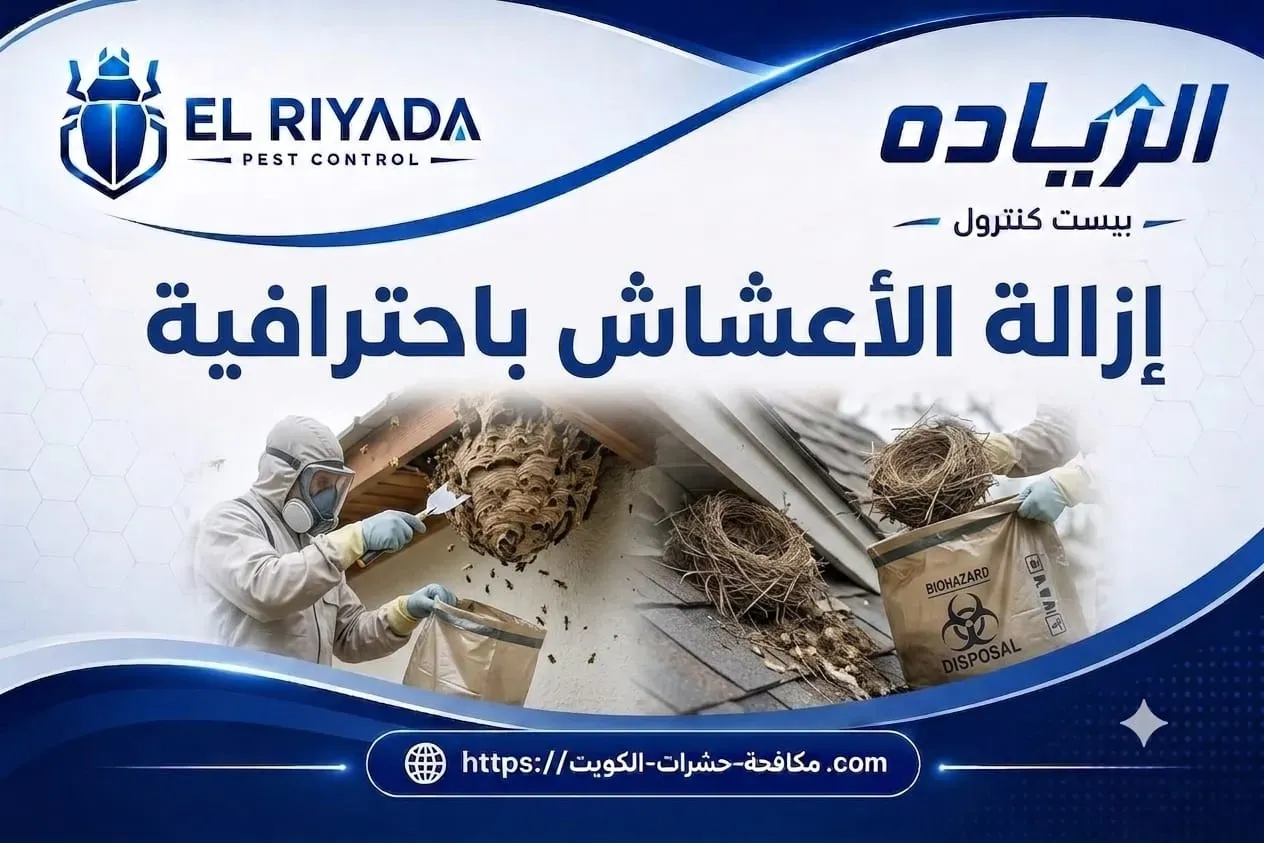
When requesting a commercial wasp removal service, the facility should understand exactly what it is paying for before comparing prices. There is a significant difference between a visit to investigate unidentified wasp activity, a service for a known nest that can be reached safely, and a situation where the nest is located inside a cavity or at a height requiring specialized access equipment. For this reason, providing one fixed price for every report of wasps can be misleading when the actual conditions of the site are unknown.
A specialized service usually begins by collecting details about the sightings, identifying the activity pattern and nest location as accurately as possible, and assessing how close the activity is to customers and employees. The appropriate treatment method can then be selected, together with the required work-area controls and any follow-up needed after treatment. If an opening or structural feature requires subsequent repair, this should be clearly communicated instead of treating the end of current wasp activity as the end of every necessary action.
It is also useful to determine whether the service includes another inspection if activity continues. Seeing a limited number of wasps after an intervention cannot always be interpreted in the same way. The timing of the sighting, the direction of movement, and whether activity is declining or continuing from the same source all need to be considered. Organized follow-up provides a more accurate assessment than declaring success or failure on the basis of a single sighting immediately after the service.
Food establishments also need a provider that understands the sensitivity of the environment and does not treat every outdoor space as an unrestricted spraying area. Any product and application method should be selected according to permitted use and label directions while food and sensitive surfaces are protected and human movement around the work area is properly managed.
• Requesting a clear description of the nest location and difficulty of access before accepting the price reduces unexpected changes because an exposed nest at a low level does not require the same scope of work as a nest inside a high facade or an indirectly accessible structural cavity.
• Confirming whether follow-up is included allows the facility to evaluate the complete service rather than comparing only the cost of the first visit and later discovering that verification of continuing activity requires an additional service.
• Including management of the work area within the removal plan is important for commercial properties because successful treatment cannot be separated from preventing customers and employees from approaching a location where defensive wasp activity may occur during the procedure.
• Clearly identifying maintenance work required after nest activity has ended prevents confusion between the responsibilities of the pest control provider and building management while improving the likelihood that the condition that made the location suitable for nesting will actually be corrected.
Wasp Prevention Program for Commercial Facilities
A wasp prevention program for commercial facilities should not be based only on repeating pesticide applications at fixed intervals. Instead, it should focus on monitoring locations where nests have previously appeared and identifying changes that may make new parts of the building suitable for nesting. If a facility has had one nest removed and wasps later return to a different location, the next step should be to understand what changed in the surrounding environment or building rather than assuming that the answer is simply to use more pesticide or repeat exactly the same procedure.
The program can be built around a simple record showing the date and location of each sighting, the direction of wasp movement, whether a nest was actually found, and what action was taken afterward. Over time, this information becomes useful for identifying patterns. If nests repeatedly appear around specific canopies or on one particular part of the rooftop, those locations deserve greater attention during future inspections instead of distributing inspection time equally across every part of the facility.
The program should also respond to changes made to the property. Maintenance work, the installation of new equipment or canopies, and alterations to building facades can create sheltered cavities or corners that did not previously exist. A prevention plan that has remained unchanged for years may therefore become less useful if the building design or the way outdoor spaces are used has changed.
The frequency of visits should be based on the history of activity, the characteristics of the site, and the level of customer and employee exposure rather than on one standard number that is applied to every facility. Some establishments may require closer monitoring during periods when wasp activity is clearly present, while a risk-based inspection schedule may be more appropriate for a property without a recurring history of nests.
• Maintaining a record of previous nest locations allows every preventive inspection to build on the actual history of the facility and avoids wasting inspection time by giving equal attention to areas with very different histories of wasp activity.
• Comparing the location of a new nest with nests removed in the past helps determine whether the problem is connected to a recurring site condition that has not been corrected or whether activity has moved to a new area requiring a separate assessment.
• Updating the prevention program after changes to canopies, rooftops, facades, and service areas prevents the facility from relying on an outdated risk map that no longer represents the current structure of the building.
• Determining follow-up frequency according to activity history and the proximity of nesting locations to people ensures that program costs reflect actual risk instead of paying for a fixed number of visits that may provide little additional value.
Why Al Reyada Pest Control Is a Strong Choice in Kuwait
When considering why Al Reyada Pest Control can be a strong choice for pest control in Kuwait, it is more useful to examine how the company manages the specific problem rather than relying on a general promotional claim. In wasp control for restaurants and commercial facilities, the value of a service provider becomes clear when it can distinguish between passing wasps, repeated activity, an exposed nest, and a suspected nest inside a concealed cavity, and then determine the level of risk according to how close that activity is to customers and employees.
Experience becomes particularly important when the nest is located at height or inside a section of the building that cannot be handled like an exposed nest. The correct approach in these situations is not to rush into treatment but to evaluate accessibility, secure the work area, and choose an appropriate procedure for the specific conditions. A reliable provider should also be prepared to state that there is not enough evidence to confirm a nest when one has not actually been located rather than turning every wasp sighting into a confirmed diagnosis.
Al Reyada Pest Control can provide greater value when current nest removal is connected with subsequent prevention. If the location requires an opening to be repaired, part of a canopy to be modified, or a previous nesting point to be monitored, that information should be communicated clearly to facility management. These practical recommendations provide more value than ending the service as soon as the number of visible wasps decreases.
In food establishments, trust also depends on respecting the sensitivity of the environment and using pest control methods according to product directions and permitted applications while protecting food and food-contact surfaces. Having a pest control contract or service report does not by itself guarantee that a facility will pass an official inspection because the establishment remains responsible for other applicable requirements involving sanitation, food safety, maintenance, and operations.
• Al Reyada Pest Control can add value to wasp management by identifying the nature of the activity before treatment so that a passing wasp is not treated as evidence of an active nest and the location of a sighting is not automatically assumed to be the source without inspection.
• Explaining the level of risk according to the proximity of the nest or flight path to customers and employees helps facility management prioritize interventions according to actual safety concerns instead of making decisions based only on the apparent size of the nest.
• Providing specific recommendations after activity has ended regarding openings, canopies, or previous nesting locations gives the facility practical preventive actions instead of relying on general advice about stopping wasps from returning.
• Respecting the realistic limitations of the service and avoiding absolute guarantees that no wasp will ever approach the property again strengthens trust because the outdoor environment cannot be completely controlled, while risk factors can be reduced, activity monitored, and appropriate action taken when necessary.
Conclusion
Wasp control services for restaurants and commercial facilities require a diagnostic approach focused on the nest, flight patterns, and the level of human exposure rather than simply killing the insects visible around customers. A good service therefore begins by determining whether sightings are isolated or recurring, then investigates the source of the activity and evaluates whether the nest can be safely accessed before selecting an appropriate treatment method.
In food establishments, protecting customers and employees, managing the work area, and safeguarding food and sensitive surfaces become particularly important. Prevention after nest removal is also just as important as the removal itself because inspecting the former nesting location and reviewing rooftops, canopies, facades, and suitable structural cavities can help reduce the likelihood of the problem returning.
When selecting a wasp control company, price should not be the only comparison factor. The scope of inspection, ability to locate the nest, accessibility strategy, follow-up, and preventive recommendations all influence the real value of the service. This approach turns wasp control from a quick reaction to every flying insect into organized risk management suited to the nature of the commercial facility, customer movement, and operational requirements.
Frequently Asked Questions
Does seeing one wasp around a restaurant mean there is a nest?
No. The wasp may simply be passing through or searching for food or water. However, repeated movement in the same direction or wasps consistently entering and leaving one specific point makes the possibility of a nearby nest more significant and justifies an inspection.
How can I tell if there is a wasp nest near the facility?
Useful indicators include a repeated flight path toward one location or consistent movement into and out of an opening or specific part of the building. However, an inspection is still necessary before confirming whether a nest is present and determining its location.
Can restaurant employees remove a wasp nest?
Employees should not attempt to knock down or strike an active nest, particularly when it is close to customers or located at height. Disturbing wasps can trigger defensive behavior and increase the risk of stings. The area should instead be secured and assessed by qualified personnel.
What should we do if a nest appears near customer seating?
People should be kept away from the location according to the level of risk, and seating or pedestrian movement around the area may need to be temporarily reorganized until the nest can be assessed and handled appropriately.
Does removing the nest prevent wasps from returning?
Not always. After activity has stopped, the location should be inspected to determine whether a cavity, sheltered corner, opening, or structural feature made it suitable for nesting. An appropriate preventive correction can then be considered when practical.
Should an opening used by wasps be sealed immediately?
An actively used opening should not be sealed randomly before it is assessed. A nest may be located inside a concealed cavity, and inappropriate sealing can alter the insects' movement. The activity should first be evaluated before the correct action is selected.
Are food and waste the main reasons wasps appear around restaurants?
Some foods, drinks, and waste can attract foraging wasps, but their presence does not prove that the nest is located at the restaurant. Attraction factors should be managed separately from the investigation of the actual colony location.
Is spraying the entire outdoor area better than locating the nest?
Not necessarily. When there is a consistent flight path, identifying the nest or the specific activity point can provide a more targeted solution than broad spraying that does not address the primary source.
Can the facility rooftop be inspected for wasps?
Yes, when there are indicators that justify it, such as wasps repeatedly flying toward the roof or a previous history of nests in that area. Access should always follow appropriate safety procedures, particularly on elevated or restricted rooftops.
What determines the cost of commercial wasp removal?
The cost can depend on the nest location, height, difficulty of access, number of active locations, building design, inspection scope, and whether follow-up or additional work is required. For this reason, pricing cannot be identical for every situation.
Do several wasps always mean there is more than one nest?
No. Several wasps may be associated with one colony, or the activity may come from more than one source. Observing flight directions and sighting locations helps determine whether the inspection needs to be expanded.
Does every facility need a recurring wasp prevention program?
Not necessarily. The decision depends on the history of nests, the characteristics of the property, its exposure to outdoor activity, and how close potential risk areas are to customers and employees. Facilities with recurring activity may benefit more from a risk-based monitoring program.
Can you guarantee that no wasps will appear after the service?
It is not realistic to guarantee that no wasp will ever approach an outdoor or exposed property again because surrounding environmental conditions can continually change. The professional objective is to address identified activity, reduce nesting opportunities, and monitor new indicators when they appear.
Does a wasp control contract guarantee passing a municipality inspection?
No. Pest control services help the establishment manage one area of operational risk, but they cannot independently guarantee the outcome of an inspection. Compliance may also involve sanitation, food safety, maintenance, operations, and other applicable requirements.
Why choose Al Reyada Pest Control for commercial wasp removal?
Al Reyada Pest Control can be a strong choice when the service focuses on identifying activity patterns and the nest, assessing risk and safe accessibility, applying the appropriate treatment, and providing clear preventive recommendations rather than simply treating the wasps that happen to be visible.