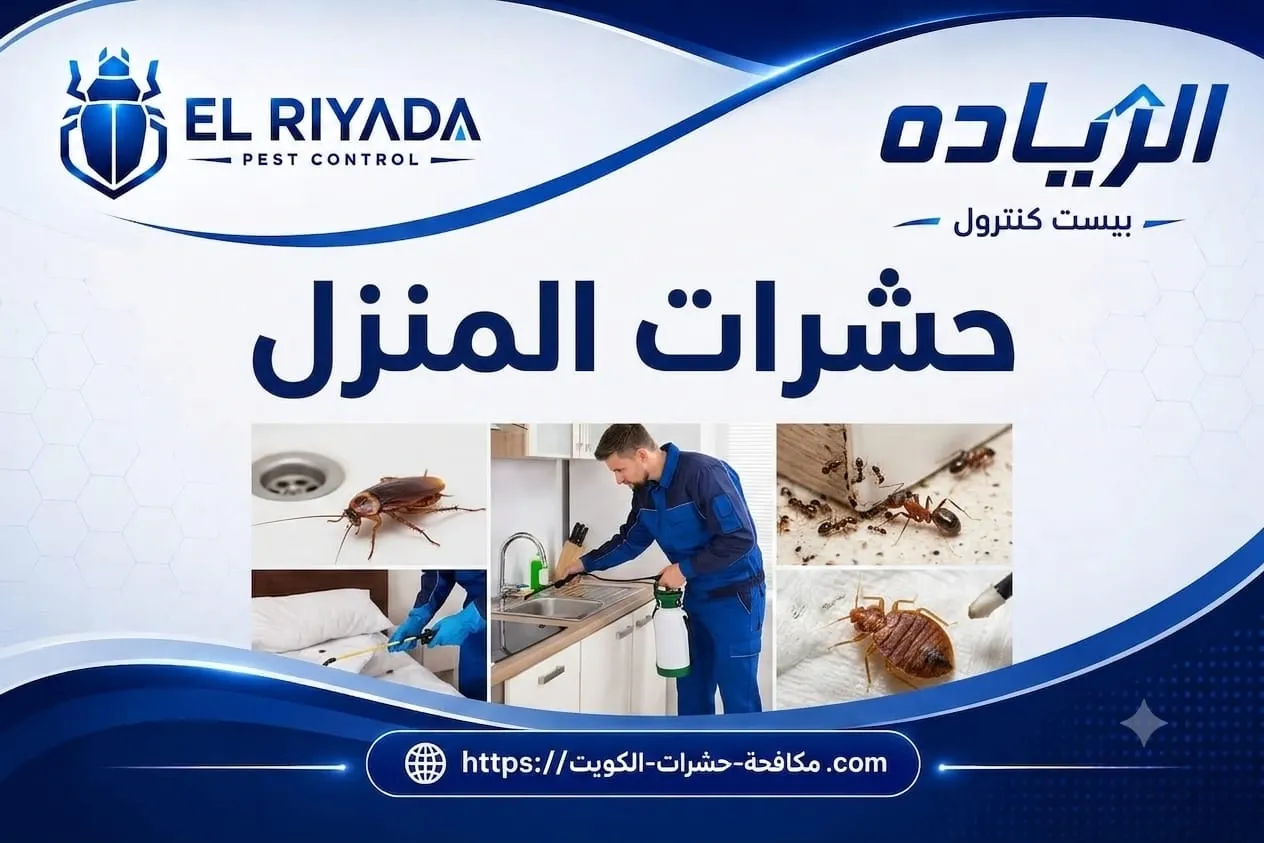
Home Pest Control in Kuwait has become one of the most common concerns for homeowners, apartment residents, and villa owners throughout the year. Pests can suddenly appear even in clean and well-maintained homes due to factors such as humidity, improperly stored food, or small openings that allow insects to enter from outside. The problem goes beyond simple inconvenience because many household pests can contaminate food, affect the health of family members, damage furniture, and create unpleasant living conditions. Based on extensive field experience in treating residential pest infestations across different types of homes in Kuwait, the most effective solution is never random pesticide spraying. Instead, successful pest management begins by accurately identifying the pest species, locating the source of the infestation, understanding why it appeared, and implementing a complete treatment strategy that prevents pests from returning. This professional approach provides homeowners with a cleaner, safer, and healthier living environment for the long term.
Home Pests in Kuwait
Home Pests in Kuwait include many different species that vary in their behavior, preferred hiding places, and the type of damage they cause inside residential properties. Cockroaches are commonly found in kitchens and bathrooms, termites attack wooden structures and furniture, household ants search for food sources, while mosquitoes and flies often become active because of humidity or frequently opened windows. Practical field experience has shown that the first step toward successful pest control is accurate identification because every pest requires a completely different treatment strategy. For this reason, professional inspections begin by examining every room, kitchen, bathroom, storage area, and even the garden when present. Specialists identify nesting locations, breeding sites, pest entry points, and the environmental conditions that encourage infestations, including water leaks, accumulated waste, structural cracks, and hidden moisture. Once the real causes are understood before treatment begins, pest control becomes significantly more effective and the likelihood of future infestations is greatly reduced.
• Inspect every part of the home to identify pest activity.
• Identify the exact pest species before selecting treatment methods.
• Locate all possible pest entry points.
• Evaluate environmental conditions contributing to the infestation.
• Develop a treatment plan designed specifically for the entire home.
Residential Pest Control
Residential Pest Control depends on a comprehensive program that combines direct treatment with preventive measures designed to stop pests from returning because eliminating visible insects alone does not remove eggs or hidden nesting areas. Practical experience consistently demonstrates that successful residential treatments begin by removing conditions that attract pests, including excess moisture, food residue, unsealed openings, and poor sanitation practices before applying appropriate treatment methods for each specific pest. Professional technicians also pay close attention to difficult-to-reach locations such as behind electrical appliances, underneath cabinets, inside drainage systems, and other concealed spaces that frequently serve as ideal hiding places for household pests. After treatment has been completed, homeowners receive practical recommendations that help preserve the effectiveness of the service while significantly reducing the risk of future infestations. This integrated approach provides much more reliable long-term protection than relying solely on temporary pesticide applications.
• Eliminate both visible pests and their breeding sources.
• Reach hidden areas where pests commonly nest.
• Remove environmental conditions that attract household pests.
• Implement preventive measures after treatment is completed.
• Provide practical recommendations for maintaining a pest-free home.
Getting Rid of Household Pests
Getting Rid of Household Pests requires a complete treatment strategy rather than focusing only on the insects that can easily be seen because much of the infestation may remain hidden inside walls, beneath flooring, within storage spaces, or behind household fixtures. Practical experience has shown that recurring infestations are often caused by repeated use of household insecticides without addressing the true source of the problem. Professional pest management begins by identifying all active infestation areas before applying treatments that target every stage of the pest life cycle, including eggs, larvae, and adult insects. Follow-up inspections are then performed to verify that all pest activity has been eliminated, with treatment plans adjusted whenever necessary according to the home's condition and the severity of the infestation. This systematic approach produces far more durable results than temporary solutions that only hide the symptoms without eliminating the underlying causes.
• Target every stage of the pest life cycle.
• Treat hidden nesting locations throughout the home.
• Monitor treatment results after completion.
• Modify treatment plans whenever necessary.
• Reduce the likelihood of future infestations.
Types of Household Pests
Types of Household Pests include a wide variety of insects that differ in their preferred environments, breeding habits, and the level of damage they can cause inside homes. Some pests actively search for food, such as cockroaches and ants, while others thrive in humid environments, including silverfish. Termites attack wooden furniture and structural components, whereas seasonal pests such as mosquitoes and flies become more active during changes in temperature or increased humidity. Practical field experience has shown that one of the most common mistakes homeowners make is treating every pest in the same way, despite the fact that each species requires a specialized control strategy. Professional pest management therefore begins by accurately identifying the pest species, studying its behavior, locating breeding sites, and understanding its movement patterns before selecting the most effective treatment method. Accurate diagnosis significantly improves treatment success while preventing unnecessary pesticide applications that may simply drive pests into other areas of the home.
• Identify the exact pest species before treatment begins.
• Distinguish between seasonal pests and permanent household infestations.
• Study pest behavior before selecting control methods.
• Locate breeding sites and nesting areas.
• Choose treatment plans based on the specific infestation.
Household Pest Spraying
Household Pest Spraying involves much more than simply applying pesticides because successful treatment depends on proper application techniques, correct timing, and reaching the areas where pests actively hide and reproduce. Practical field experience has demonstrated that random pesticide spraying inside homes may eliminate a few visible insects while leaving hidden colonies and eggs completely unaffected, allowing infestations to return shortly afterward. Professional spraying therefore begins by identifying the pest species and mapping the infestation before selecting the most appropriate treatment products and application methods. Special attention is given to sensitive locations including underneath cabinets, behind household appliances, around drainage systems, and inside narrow structural spaces where pests commonly remain concealed. Family safety is also carefully considered throughout the process, with homeowners receiving clear instructions before and after treatment to maximize effectiveness while maintaining a safe residential environment.
• Perform spraying according to a professional inspection rather than randomly.
• Reach concealed pest activity areas.
• Select treatment products suitable for each infestation.
• Follow strict safety procedures before and after treatment.
• Combine spraying with preventive pest management practices.
Indoor Pest Control
Indoor Pest Control means creating a residential environment where insects cannot survive or establish new infestations rather than simply eliminating pests that are currently visible. Practical experience has consistently shown that homes following preventive maintenance programs after treatment remain protected for much longer than homes relying only on emergency pest control services. Professional programs combine direct treatment with environmental improvements such as repairing water leaks, sealing structural openings, organizing food storage, maintaining drainage systems, and improving household sanitation. Areas most vulnerable to infestation, including kitchens, bathrooms, and storage rooms, are regularly monitored so that any new pest activity can be detected during its earliest stages. This preventive strategy greatly reduces the possibility of pests spreading throughout the home while maintaining a cleaner, healthier, and more comfortable living environment for every family member.
• Maintain long-term protection through preventive programs.
• Eliminate the causes of infestations rather than just the symptoms.
• Monitor high-risk household areas continuously.
• Improve indoor conditions that discourage pest activity.
• Reduce pest movement between different rooms.
Best Household Insecticide
When searching for the Best Household Insecticide, many homeowners assume that the strongest product automatically produces the best results. However, practical field experience clearly demonstrates that the most effective insecticide depends entirely on the pest species, infestation severity, treatment location, and overall environmental conditions inside the home. A product designed for cockroaches may not effectively control ants, mosquitoes, or bed bugs, while some infestations require multiple active ingredients combined within a comprehensive treatment program targeting every stage of the pest life cycle. Professional technicians therefore select approved residential treatment products that are appropriate for each situation and apply them according to recommended guidelines rather than relying on excessive pesticide use. Household conditions, including the presence of children, elderly family members, or pets, are also carefully considered to achieve the ideal balance between treatment effectiveness and residential safety.
• Select insecticides according to the pest species rather than product popularity.
• Use approved products suitable for residential environments.
• Consider household conditions before treatment.
• Apply pesticides according to recommended guidelines.
• Combine insecticides with preventive measures for maximum effectiveness.
Kitchen Pests
Kitchen Pests require immediate attention because kitchens contain food sources and water that create ideal environments for cockroaches, ants, fruit flies, and many other household insects. Practical experience has shown that pest activity inside kitchens is not always caused by poor cleanliness because even minor plumbing leaks beneath sinks, unsealed drainage systems, or improperly stored food can attract insects. Professional inspections therefore examine kitchen cabinets, sink areas, refrigerators, ovens, electrical appliances, and hidden storage spaces where pests commonly establish nesting sites. In addition to treatment, homeowners receive practical recommendations covering proper food storage, daily waste disposal, kitchen ventilation, and moisture control because these preventive habits significantly improve long-term treatment results. Treating the kitchen as the home's most sensitive area provides more effective and lasting pest control.
• Inspect kitchen cabinets and hidden spaces around appliances.
• Eliminate moisture sources attracting pests.
• Protect stored food from insect contamination.
• Clean areas where food residue accumulates regularly.
• Apply preventive measures that reduce future infestations.
Bathroom Pests
Bathroom Pests commonly appear in areas where constant moisture creates favorable breeding conditions for cockroaches, silverfish, and insects associated with drainage systems. Practical field experience has shown that the true source of these pests is not always inside the bathroom itself but may originate from plumbing systems, structural gaps surrounding pipes, inadequate ventilation, or drainage networks that allow insects to travel throughout the home. Professional treatment begins by inspecting drainage openings, hidden corners, plumbing fixtures, and moisture-prone locations before implementing a pest management program specifically designed for bathroom environments. Homeowners also receive guidance on reducing humidity, improving ventilation, sealing structural openings, and maintaining dry conditions to discourage future infestations. This comprehensive approach significantly reduces recurring pest activity while maintaining healthier residential conditions.
• Inspect drainage systems and moisture sources.
• Treat hidden pest locations around plumbing fixtures.
• Improve ventilation to reduce favorable breeding conditions.
• Seal structural openings used by pests.
• Perform routine inspections to detect new activity early.
Permanent Household Pest Control
Permanent Household Pest Control depends upon an integrated strategy that combines accurate diagnosis, professional treatment, and continuous prevention because eliminating today's visible pests alone cannot guarantee they will not return if the original causes remain unchanged. Practical experience consistently demonstrates that the most successful long-term results begin with comprehensive property inspections followed by treatment targeting active infestations, eggs, larvae, and adult insects while simultaneously eliminating breeding conditions throughout the home. Homeowners are also educated about proper food storage, repairing plumbing leaks, maintaining storage areas, sealing cracks, and improving household sanitation because these preventive practices play an essential role in maintaining long-term protection. When professional pest management is combined with responsible household maintenance, homes become significantly safer while the possibility of recurring infestations is reduced to the lowest practical level.
• Apply treatments covering every stage of the pest life cycle.
• Treat the entire home rather than only visible infestation areas.
• Implement preventive measures that discourage future infestations.
• Monitor treatment effectiveness after completion.
• Maintain household conditions that reduce future pest activity.
Why Choose Our Home Pest Control Services
Our Home Pest Control Services in Kuwait are built upon understanding that every home experiences different pest challenges, which is why we never rely on standardized treatment programs. Every project begins with a detailed inspection to identify pest species, infestation severity, hidden nesting areas, and the environmental conditions contributing to the problem before developing a customized treatment strategy designed specifically for that property. We use approved residential pest management methods while focusing on long-term prevention rather than temporary pest elimination. After completing the treatment, we provide homeowners with practical guidance that helps preserve treatment results and significantly reduce the likelihood of future infestations.
• Customized pest control programs for every home.
• Accurate inspections before selecting treatment methods.
• Approved residential pest management solutions.
• Follow-up support to verify treatment success.
• Long-term prevention instead of temporary solutions.
Conclusion
Home Pest Control in Kuwait is a challenge that can be effectively managed through a scientific approach beginning with accurate diagnosis and ending with a preventive program designed to stop future infestations. Practical experience has consistently shown that professional pest control delivers longer-lasting results than temporary household treatments because it addresses the root causes rather than simply removing visible insects. By working with experienced residential pest control specialists, homeowners enjoy cleaner, safer, healthier living environments while significantly reducing the likelihood of recurring pest problems for years to come.
Frequently Asked Questions
What are the most common household pests in Kuwait?
The most common household pests include cockroaches, ants, mosquitoes, flies, silverfish, and other insects that thrive because of humidity, food storage conditions, or structural openings that allow them to enter homes.
Is it possible to eliminate household pests permanently?
Long-term results can be achieved through a professional pest control program that addresses the causes of infestation, eliminates every stage of the pest life cycle, and follows preventive practices after treatment has been completed.
Is household pest spraying safe?
When spraying is performed by trained professionals using approved treatment products and proper safety procedures, pest control can be carried out effectively while maintaining the safety of all family members.
Why do pests return after using household insecticides?
Most household insecticides eliminate only visible insects while leaving eggs, hidden nesting areas, breeding sites, and environmental conditions unchanged, allowing infestations to return after a short period.
When should I hire a professional home pest control company?
If pests continue to appear despite repeated use of household insecticides, spread to multiple rooms, or persist for an extended period, it is best to contact experienced pest control specialists who can perform a comprehensive inspection and develop a treatment program specifically designed for your home's condition.
Services in This Category
Choose the service that fits your need
Need Professional Help?
Our team is available 24/7 to answer your questions and book your appointment
Book Your Service Now