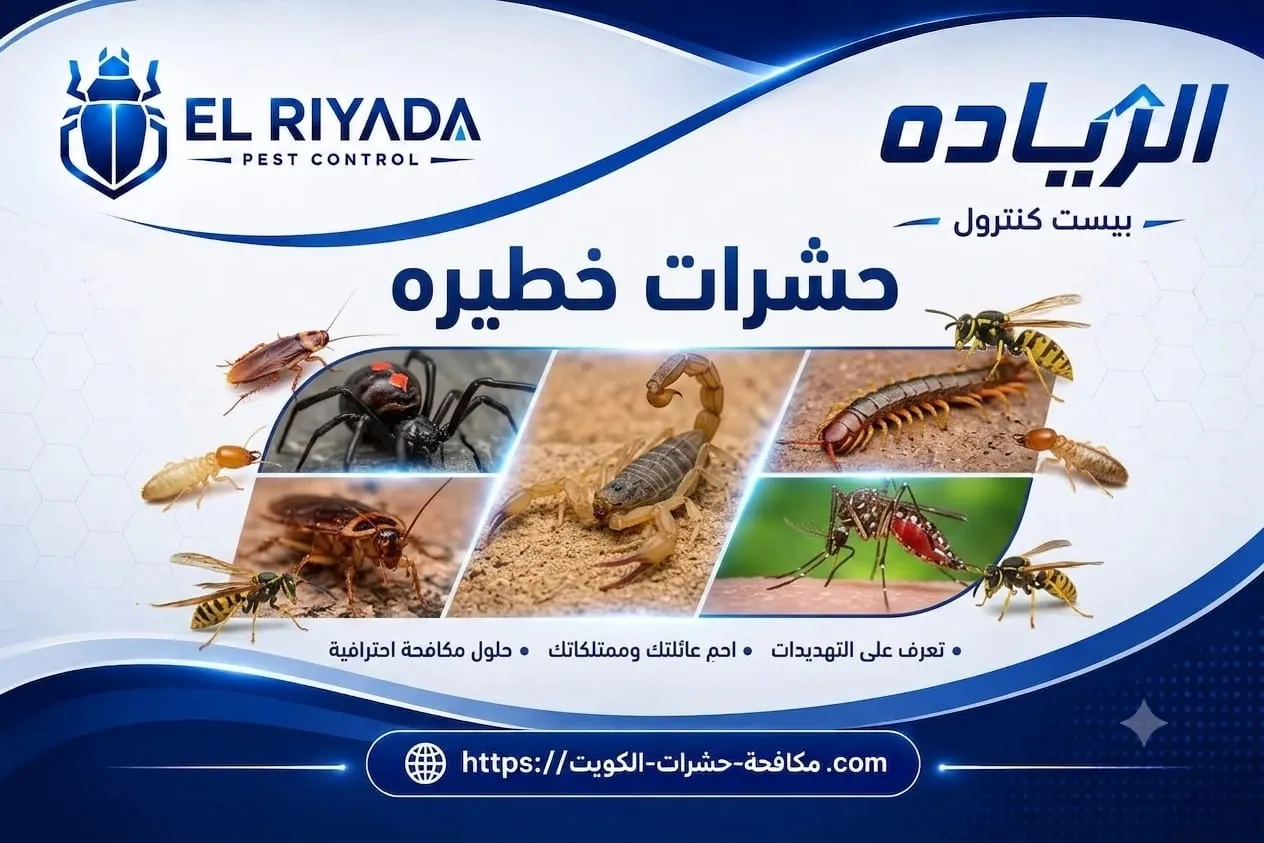
Dangerous Pests in Kuwait are a growing concern for many families, not simply because of their appearance or size, but because some species can pose genuine health risks through painful bites, contamination, allergic reactions, or by carrying harmful microorganisms. Based on extensive field experience in residential and commercial pest control across Kuwait, the real danger does not depend on the number of insects present as much as it depends on their species and the way they are handled. Some pests can be managed easily with the right preventive measures, while others require immediate professional intervention to prevent their spread or reduce the risk of harmful bites and stings. Understanding which insects are truly dangerous, where they are commonly found, and how to deal with them correctly is the first step toward protecting your family and maintaining a safe, healthy, and pest-free living environment.
Dangerous Pests in Kuwait
The term Dangerous Pests in Kuwait does not mean that every insect represents a direct threat to human health. There is a significant difference between nuisance insects that cause discomfort and harmful insects capable of contaminating food, transmitting disease-causing microorganisms, triggering severe allergic reactions, or creating health concerns in sensitive individuals. Practical field inspections have shown that situations requiring immediate attention are often associated with certain pest species such as cockroaches that contaminate food preparation areas or stinging insects that may cause serious reactions in people with allergies. The level of risk also depends on where the insects are found. Their presence inside kitchens, children's rooms, or food storage areas creates a much greater concern than finding them outdoors. For this reason, professional treatment always begins by accurately identifying the insect species and evaluating its actual level of risk before any control measures are implemented because both excessive pesticide use and ignoring the problem can lead to undesirable outcomes.
• Evaluate the actual level of danger before beginning treatment.
• Distinguish between nuisance insects and pests that pose health risks.
• Identify the most sensitive areas of the home where dangerous insects appear.
• Select treatment methods according to the real level of risk.
• Respond quickly when household safety may be affected.
Most Dangerous Household Pests
Most Dangerous Household Pests include insect species that may threaten human health or compromise the safety of the indoor environment when left untreated for extended periods. Their danger is not determined by their size because some very small insects can create far greater problems than larger ones through rapid reproduction, food contamination, or the ability to trigger allergic reactions. Practical field experience has shown that evaluating their level of risk depends on several factors including where they are found, how quickly they reproduce, whether they have access to food storage areas or children's living spaces, and their ability to remain hidden inside walls, furniture, or structural cavities. For this reason, relying solely on online photographs or assumptions to identify insects is not recommended because incorrect identification often results in ineffective treatment methods that allow infestations to continue spreading. A professional inspection remains the most reliable way to determine the actual level of risk and create an effective long-term treatment strategy.
• Assess the impact of the insect on the health of household members.
• Evaluate how rapidly the infestation may spread throughout the property.
• Locate hidden nesting areas that complicate pest control.
• Select treatment methods appropriate for each pest species.
• Prevent the infestation from becoming more difficult to manage.
Poisonous Insects
Many people use the term Poisonous Insects to describe any insect that bites or stings, but in reality there are important differences between insects that produce minor local irritation and those capable of causing more serious medical reactions in certain individuals. Practical experience has shown that the severity of an insect bite or sting depends not only on the species involved but also on the victim's age, general health, and history of allergic reactions. For this reason, the correct response begins by avoiding direct contact with unfamiliar insects and carefully monitoring the affected person for any unusual symptoms that may require medical attention. From a pest management perspective, eliminating the environmental conditions that allow these insects to survive inside or around the home is considerably more effective than reacting only after dangerous insects have already appeared.
• Never handle unfamiliar insects with bare hands.
• Monitor for unusual symptoms following bites or stings.
• Remove hiding places that encourage dangerous insects.
• Seek medical care if severe reactions develop.
• Implement preventive programs that reduce future infestations.
Dangerous Insect Bites
Dangerous Insect Bites vary greatly in severity from one person to another. In some situations they may cause only temporary redness or mild itching, while in others they can produce severe swelling, allergic reactions, or medical emergencies requiring immediate professional care. Practical field experience has shown that one of the most common mistakes people make is underestimating the seriousness of certain bites or relying on inappropriate home remedies before identifying the insect responsible. The affected area should always be monitored carefully during the first several hours after the bite while paying attention to warning signs such as increasing swelling, difficulty breathing, fever, or other unusual symptoms that may indicate the need for medical evaluation. Identifying where the insect originated inside the property is equally important because treating the bite alone will not prevent additional incidents if the source of the infestation remains untreated. Professional pest management therefore combines proper care of the injury with eliminating the insects responsible for it.
• Clean the bite area correctly immediately after the incident.
• Observe symptoms carefully during the following hours.
• Avoid scratching the affected skin to reduce the risk of infection.
• Identify the insect whenever possible to support proper treatment decisions.
• Eliminate the source of the infestation to prevent future bites.
Identifying Harmful Insects
Identifying Harmful Insects is one of the most important steps before any successful pest management program because many insect species closely resemble one another even though they require completely different treatment strategies. Practical field experience has demonstrated that numerous long-term infestations continue simply because the insects were misidentified, leading to ineffective control methods. Professional specialists therefore study the insect's appearance, behavior, activity patterns, preferred hiding places, breeding locations, and physical evidence such as droppings, feeding damage, shed skins, or egg deposits before recommending treatment. This detailed analysis allows the most appropriate pest control methods to be selected instead of relying on generalized solutions that may not address the actual problem. Early and accurate identification also significantly reduces the likelihood of widespread infestations and minimizes the potential damage caused by harmful insects.
• Observe the insect's appearance and behavior before treatment.
• Identify locations where the insect repeatedly appears.
• Examine physical evidence left behind to support identification.
• Avoid applying pesticides before determining the insect species.
• Depend on accurate diagnosis when selecting treatment methods.
Dangerous Pest Control
Dangerous Pest Control requires a balanced strategy that combines immediate treatment with long-term prevention because eliminating visible insects alone cannot provide lasting protection if favorable breeding conditions remain inside or around the property. Practical field experience shows that professional pest control begins with a comprehensive inspection designed to evaluate infestation levels, identify nesting areas, locate environmental risk factors, and determine the most appropriate treatment methods for each individual situation. Equal attention is given to preventing future infestations by repairing structural openings, eliminating moisture problems, improving sanitation, and removing conditions that encourage pest activity. This systematic approach consistently produces more stable long-term results than temporary treatments that rely solely on pesticide applications without addressing the underlying causes.
• Conduct detailed inspections before treatment begins.
• Select control strategies according to the actual level of risk.
• Eliminate environmental conditions supporting pest activity.
• Treat nesting sites and structural entry points.
• Monitor results to maintain long-term protection.
Preventing Poisonous Insects
Preventing Poisonous Insects is far more effective and considerably less expensive than dealing with infestations after they have already developed because preventing insects from entering the home greatly reduces the risk of bites, stings, and related health concerns. Practical field experience has shown that simple preventive measures such as sealing structural openings, repairing window screens, eliminating standing water, and maintaining both indoor and outdoor cleanliness significantly reduce the likelihood of dangerous insects becoming established. Regular inspections of storage rooms, rooftops, gardens, and other infrequently visited areas are also recommended because many infestations begin in these locations before spreading into occupied living spaces. When prevention becomes part of regular household maintenance, the need for repeated pest treatments decreases substantially.
• Seal structural openings used by insects.
• Remove standing water that attracts certain pest species.
• Maintain cleanliness inside and around the property.
• Inspect low-traffic areas on a regular basis.
• Schedule preventive pest management before seasonal activity increases.
Disease-Carrying Insects
Disease-Carrying Insects deserve special attention because they may spread contaminants or harmful microorganisms from unsanitary environments to food preparation surfaces, stored food, or household items. Practical experience in residential and commercial pest management has shown that insects such as flies and cockroaches become particularly concerning when they reproduce near waste collection areas, drainage systems, or damp environments before moving into kitchens and food preparation areas. Effective management therefore begins with improving sanitation, removing attractants, securing waste containers, correcting moisture problems, and then implementing a pest control program designed specifically for the insect species involved. Routine inspections also make it possible to detect new activity before it develops into a widespread infestation, making prevention one of the most valuable components of long-term pest management.
• Reduce conditions that attract disease-carrying insects.
• Maintain excellent sanitation in food preparation and storage areas.
• Keep waste containers securely closed and emptied regularly.
• Eliminate moisture that supports insect activity.
• Schedule preventive inspections for early detection.
Treating Insect Bite Injuries
Treating Insect Bite Injuries depends on both the type of insect involved and the severity of the reaction rather than applying the same approach to every situation. In many cases, minor bites improve with appropriate first aid, while some individuals may develop symptoms requiring immediate medical assessment, especially if severe swelling, breathing difficulty, or widespread skin reactions occur. Practical experience shows that the first priority after any insect bite is cleaning the affected area carefully while avoiding excessive scratching that could increase the risk of infection. At the same time, identifying and eliminating the insect responsible is essential because treating the injury alone does not prevent future incidents. Combining proper medical care with professional pest control offers the highest level of protection for everyone living in the home.
• Clean the affected area immediately after the bite.
• Monitor symptoms carefully during the first several hours.
• Avoid using random home remedies without identifying the cause.
• Seek medical evaluation if severe or unusual symptoms develop.
• Remove the source of the insects to prevent repeated injuries.
Harmful Pest Control
Harmful Pest Control is based on a comprehensive strategy that begins with accurate identification and ends with long-term prevention because eliminating existing insects alone cannot stop new infestations if favorable environmental conditions remain unchanged. Practical field projects consistently demonstrate that the most successful programs combine thorough inspections, carefully selected treatment methods for each pest species, elimination of nesting areas, and preventive recommendations specifically designed for the property. Results are then evaluated after treatment to confirm that all pest activity has been eliminated, while control strategies are adjusted whenever environmental or seasonal conditions change. This integrated approach provides significantly more stable protection than temporary solutions focused only on removing visible insects.
• Build treatment plans on accurate pest identification.
• Select control methods appropriate for each infestation.
• Eliminate difficult-to-reach nesting locations.
• Evaluate treatment effectiveness through follow-up inspections.
• Implement preventive measures that minimize future infestations.
Why Choose Our Dangerous Pest Control Services
Our Dangerous Pest Control Services in Kuwait are built upon practical field experience and accurate pest identification before any treatment begins because controlling harmful insects requires understanding their behavior, level of risk, and environmental conditions rather than relying solely on pesticide applications. Every service begins with a comprehensive inspection followed by a customized treatment plan designed specifically for the property and the type of infestation involved. We use approved pest management methods suitable for residential and commercial environments while educating our clients about preventive measures that reduce the likelihood of future infestations. Our objective is not simply to eliminate insects quickly but to provide long-term protection that keeps homes and businesses safer over time.
• Perform detailed inspections before recommending treatment.
• Design customized control programs for every pest species.
• Use approved pest management solutions applied correctly.
• Provide ongoing follow-up to verify long-term effectiveness.
• Focus on prevention as well as immediate pest elimination.
Conclusion
Dangerous Pests in Kuwait can be effectively managed when addressed through a scientific approach that combines accurate identification, continuous prevention, and professional pest management. Not every insect represents the same level of danger, which is why understanding the species involved and the actual risks it presents allows the most appropriate response to be taken at the right time. Improving household conditions while working with experienced pest control professionals whenever necessary provides stronger long-term protection and significantly reduces the likelihood of harmful insects returning. Addressing pest problems during their earliest stages is always safer, simpler, and more cost-effective than waiting until infestations become widespread.
Frequently Asked Questions
Which dangerous insects are most commonly found inside homes in Kuwait?
The most concerning household insects vary according to location and season, but commonly include certain cockroach species that contaminate food, stinging insects, and other pests capable of triggering allergic reactions or thriving in damp indoor environments.
Are all poisonous insects dangerous to everyone?
No. The severity of a bite or sting depends on the insect species as well as the individual's overall health and sensitivity. A reaction that is mild for one person may become much more serious for someone with allergies.
When should I seek medical attention after an insect bite?
Medical evaluation is recommended if symptoms such as difficulty breathing, rapidly increasing swelling, widespread skin rash, or any severe or unusual reactions develop after an insect bite or sting.
Can dangerous insects be prevented from entering the home?
Yes. Maintaining good sanitation, sealing structural openings, eliminating moisture sources, performing regular property inspections, and implementing preventive pest management programs all help reduce the likelihood of dangerous insects entering and establishing themselves inside the home.
Why should I hire a professional company for harmful pest control?
Professional specialists have the field experience needed to accurately identify insect species, evaluate their actual level of risk, choose the most appropriate treatment methods, and eliminate the environmental conditions responsible for recurring infestations, providing more effective and sustainable results than temporary or random solutions.
Services in This Category
Choose the service that fits your need
Need Professional Help?
Our team is available 24/7 to answer your questions and book your appointment
Book Your Service Now