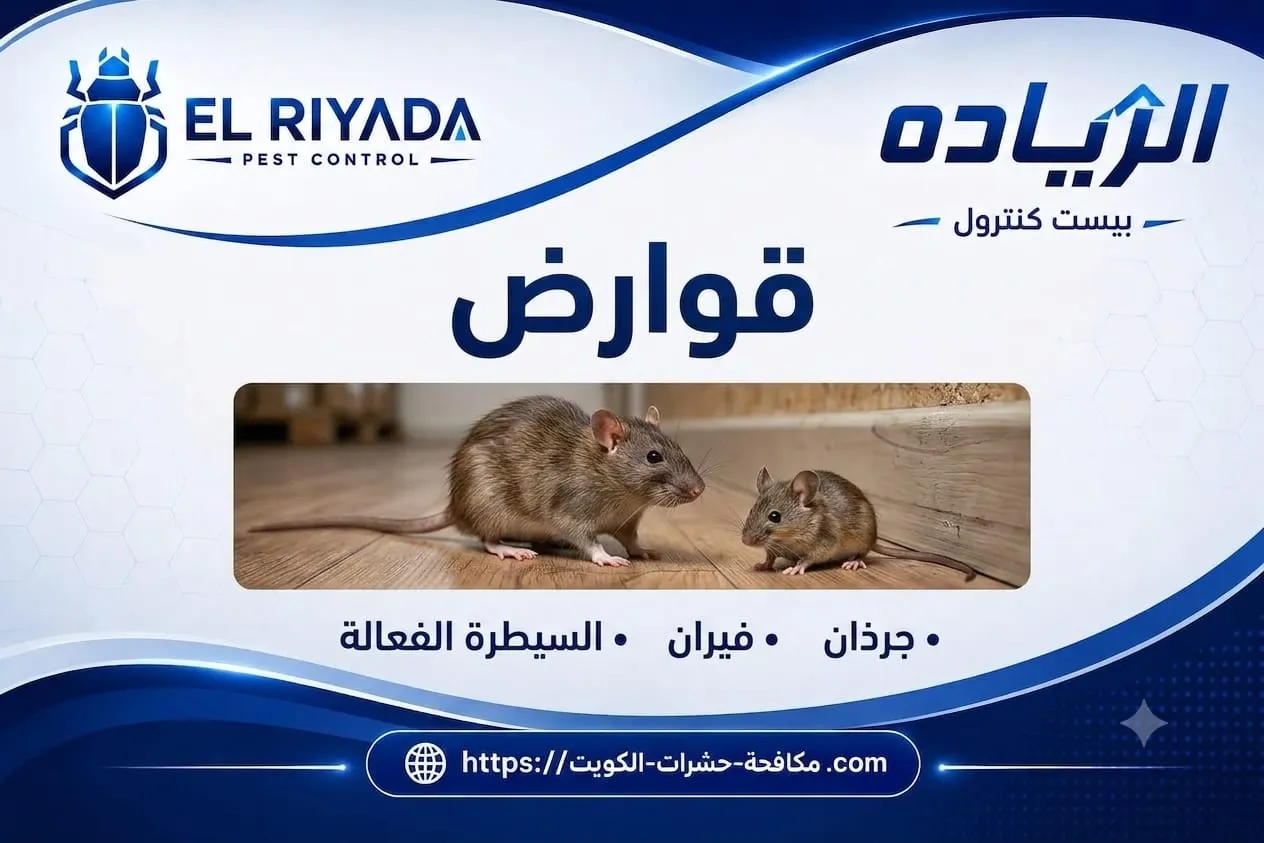
Rodent Control in Kuwait is one of the most important concerns for homeowners, villa owners, restaurants, warehouses, and commercial facilities because rodents are far more than a nuisance. They can cause significant property damage, contaminate food supplies, and create serious health and operational concerns if left untreated. Based on extensive field experience in rodent control across residential and commercial properties in Kuwait, the appearance of a single mouse or rat should never be underestimated because rodents reproduce rapidly and are highly skilled at hiding inside walls, suspended ceilings, service rooms, storage areas, and other concealed locations. Effective rodent management therefore begins with identifying the source of the activity and tracking movement patterns before selecting the most appropriate treatment methods. When a complete program combines accurate inspection, preventive measures, and professional rodent control techniques, the chances of eliminating the infestation and preventing its return increase dramatically compared with relying on temporary solutions.
Rodents in Kuwait
Rodents in Kuwait vary in their species, behavior, preferred habitats, and movement patterns inside buildings, making proper identification one of the most important factors in successful rodent management. Practical field inspections have shown that some rodents prefer to remain close to drainage systems and water sources, while others seek shelter inside storage facilities, ceilings, gardens, or hidden structural spaces. Their entry methods also differ, as they often exploit tiny openings around plumbing lines, electrical conduits, doors, windows, ventilation systems, and structural gaps that are rarely noticed by property owners. Professional rodent control therefore begins with a comprehensive inspection of the entire property to identify entry points, nesting locations, travel routes, and feeding areas. This information allows specialists to develop customized treatment strategies instead of relying on general methods that may fail to solve the underlying problem. Years of practical experience consistently demonstrate that understanding rodent behavior is the foundation of every successful long-term control program.
• Perform comprehensive inspections to identify rodent activity throughout the property.
• Study daily movement patterns before selecting treatment methods.
• Locate every structural opening used by rodents for entry.
• Choose control strategies based on the specific rodent species present.
• Build treatment plans around accurate diagnosis instead of assumptions.
Getting Rid of Rodents
Successfully Getting Rid of Rodents requires much more than catching a single mouse or rat because seeing one rodent often indicates additional hidden activity elsewhere in the building. Practical experience has shown that one of the most common mistakes property owners make is focusing only on the visible rodent while ignoring nesting areas, food sources, water availability, and structural openings that allowed the infestation to develop in the first place. Professional rodent control follows a structured process beginning with evaluating the size of the infestation before strategically placing appropriate control methods and simultaneously eliminating the environmental conditions that support rodent activity. Treatment results are continuously monitored, and control strategies are adjusted whenever necessary according to the property's condition and changing rodent activity. This integrated approach delivers far more stable long-term results while significantly reducing the likelihood of rodents returning after treatment has been completed.
• Eliminate the causes of rodent activity rather than simply removing individual rodents.
• Treat hidden nesting locations throughout the property.
• Monitor treatment effectiveness after implementation.
• Adjust control strategies whenever new activity is detected.
• Prevent rodents from reproducing inside the building.
Types of Household Rodents
Types of Household Rodents include several different species that vary in size, behavior, nesting preferences, and their ability to adapt to different environments, making it impossible to rely on one universal control method for every infestation. Practical field experience has shown that some rodent species prefer suspended ceilings while others remain active inside storage rooms, kitchens, gardens, or utility spaces. They also differ in their feeding preferences and movement patterns throughout buildings. Professional technicians therefore do not rely solely on visual identification. Instead, they analyze rodent droppings, gnaw marks, movement trails, nesting materials, and other evidence to accurately determine the species before selecting the most effective treatment strategy. Correct identification significantly improves treatment success while preventing the use of methods that may work well for one species but prove ineffective against another. Understanding the exact rodent species also helps predict additional infestation areas and supports the development of effective long-term prevention plans.
• Identify the rodent species before beginning treatment.
• Analyze movement patterns and physical evidence to locate infestation sources.
• Select control methods appropriate for each rodent species.
• Predict likely nesting locations based on rodent behavior.
• Improve treatment accuracy through professional identification.
Damage Caused by Rodents
Damage Caused by Rodents extends far beyond eating stored food or creating disturbing noises during the night because rodents can threaten building safety, damage valuable property, and affect the health of occupants. Practical experience has shown that rodents continuously gnaw on electrical wiring, plastic pipes, insulation materials, wooden structures, and packaging, creating expensive repair costs and increasing the risk of unexpected equipment failures. Their presence inside food storage areas, kitchens, warehouses, and commercial facilities can also contaminate products and compromise sanitation standards. In many situations, property owners fail to recognize the true extent of the damage until the infestation has become widespread because rodents remain hidden inside structural cavities and are primarily active during nighttime hours. Early detection combined with immediate professional treatment greatly reduces the financial and structural impact of rodent infestations.
• Protect electrical wiring and building infrastructure from continuous gnawing.
• Preserve food supplies and stored materials from contamination.
• Reduce the risk of unexpected property damage.
• Minimize financial losses caused by rodent infestations.
• Resolve the problem before it expands throughout the building.
Signs of Rodent Activity
Recognizing the Signs of Rodent Activity allows property owners to detect infestations during their earliest stages before rodents multiply throughout the building. Practical field experience has shown that the most common warning signs include scratching or movement noises inside ceilings and walls during the night, small droppings found in kitchens or storage rooms, gnaw marks on packaging materials, furniture, electrical cables, or wooden surfaces, as well as unusual odors developing inside enclosed spaces. Repeated travel paths may also become visible as rodents move daily between nesting areas and food sources. Whenever one or more of these warning signs appear, property owners should avoid waiting for the situation to worsen and instead arrange a thorough inspection to evaluate the extent of rodent activity and implement an appropriate control program before the infestation expands.
• Listen carefully for movement sounds inside ceilings and walls.
• Inspect storage areas for droppings and gnaw marks.
• Watch for unusual odors in enclosed spaces.
• Monitor repeated travel routes used by rodents.
• Schedule professional inspections at the first signs of infestation.
Mouse and Rat Control
Mouse and Rat Control depends on combining multiple treatment techniques rather than relying on a single solution because mice and rats display different behaviors that require customized control strategies. Practical projects completed throughout Kuwait demonstrate that successful rodent management begins by identifying active infestation areas and evaluating infestation severity before selecting suitable control methods such as traps, bait stations, exclusion measures, and preventive improvements. Particular attention is given to sealing every structural opening used by rodents because treatment cannot provide lasting success if new rodents continue entering the building. This comprehensive approach consistently produces more reliable long-term results than depending exclusively on one treatment method while ignoring the environmental conditions that originally attracted rodents.
• Select treatment methods according to the rodent species involved.
• Combine traps with preventive exclusion techniques.
• Seal every rodent entry point throughout the property.
• Evaluate treatment results through regular monitoring.
• Improve control strategies whenever rodent activity changes.
Preventing Rodents
Preventing Rodents should begin long before an infestation develops because stopping rodents from entering the property is considerably easier and less expensive than eliminating established populations. Practical experience has shown that many infestations can be prevented simply by sealing structural gaps, maintaining clean storage areas, protecting food inside sealed containers, managing waste properly, and repairing plumbing leaks or moisture problems that attract rodents. Regular inspections of gardens, service rooms, storage buildings, and surrounding outdoor areas are equally important because rodent activity often begins outside before spreading indoors. When preventive measures become part of routine property maintenance, the likelihood of rodent infestations decreases significantly.
• Seal every structural opening large enough for rodent entry.
• Store food inside tightly sealed containers.
• Remove waste regularly and maintain proper sanitation.
• Reduce moisture and water sources throughout the property.
• Schedule routine preventive inspections.
Rodents Entering the Home
Rodents Entering the Home usually occurs through surprisingly small openings that many homeowners assume are too narrow for mice or rats to pass through. Practical field experience has repeatedly demonstrated that rodents can squeeze through extremely small gaps whenever food, water, shelter, or warmth is available on the other side. The most common entry locations include openings around plumbing and electrical lines, gaps beneath exterior doors, ventilation openings, damaged drainage systems, and cracks within walls or foundations. Successful rodent control therefore depends upon identifying and professionally sealing these entry points because eliminating rodents already inside the property provides only temporary relief if new rodents can continue entering. Careful inspection of gardens, storage buildings, garages, and the property's exterior also helps identify vulnerabilities before rodents exploit them.
• Inspect openings surrounding plumbing and utility lines.
• Ensure doors, windows, and ventilation systems close securely.
• Repair structural cracks and foundation gaps.
• Monitor outdoor areas that may provide rodent access.
• Prevent rodents from reaching food and water sources indoors.
Rodent Traps
Rodent Traps can be valuable tools within a comprehensive rodent management program, but they rarely provide complete control when used randomly or placed in unsuitable locations. Practical field experience has shown that trap effectiveness depends largely on understanding rodent travel routes, nesting locations, and daily movement patterns because improperly positioned traps often remain completely ineffective despite active infestations. Different trap designs are also suitable for different environments and infestation levels, making proper selection essential for successful results. Professional technicians regularly inspect, reposition, and adjust traps according to changing rodent activity while continuing to eliminate the environmental conditions that support infestation. When traps are combined with exclusion methods and preventive measures, they become a highly effective component of long-term rodent control.
• Position traps according to actual rodent travel routes.
• Select trap designs suitable for each infestation.
• Monitor and reposition traps whenever necessary.
• Combine trapping with additional control strategies.
• Never rely exclusively on traps without solving the underlying problem.
Best Rodent Control Methods
There is no single solution that can always be considered the Best Rodent Control Methods because the most appropriate approach depends on the rodent species involved, the severity of the infestation, the type of building, and the level of rodent activity present. Practical field experience consistently demonstrates that the most successful results come from combining detailed inspections, sealing structural entry points, selecting appropriate treatment methods, eliminating food and water sources, and maintaining continuous monitoring until all rodent activity has completely stopped. Long-term preventive programs also provide much greater protection than temporary treatments because they prevent future infestations instead of merely removing the rodents currently present. Investing in a comprehensive rodent management program ultimately saves both time and money while protecting homes and businesses from future damage.
• Combine prevention and treatment for sustainable long-term protection.
• Select control methods according to rodent species and infestation size.
• Seal every entry point before completing the treatment program.
• Remove food and water sources that attract rodents.
• Perform ongoing monitoring to prevent future infestations.
Why Choose Our Rodent Control Services
Our Rodent Control Services in Kuwait are based on a professional methodology that begins with accurate diagnosis and extends far beyond simply removing existing rodents. Every project starts with a comprehensive inspection to identify rodent species, movement routes, nesting locations, entry points, and infestation severity before developing a customized treatment strategy for the property. We use approved rodent control methods together with preventive solutions specifically designed to maintain long-lasting results. We also provide practical recommendations that help homeowners and business owners reduce conditions attracting rodents while maintaining cleaner, safer, and healthier environments.
• Conduct detailed property inspections before treatment begins.
• Develop customized rodent control plans for every situation.
• Use approved and effective rodent management methods.
• Provide follow-up services to maintain long-term results.
• Focus on prevention as well as immediate rodent elimination.
Conclusion
Rodent Control in Kuwait should never be underestimated because rodents can create serious health concerns and expensive property damage if left untreated. Practical experience has consistently shown that successful rodent management depends upon accurate diagnosis, selecting appropriate treatment methods, eliminating the environmental conditions that attract rodents, and preventing future access rather than simply removing visible mice or rats. When inspection, prevention, treatment, and follow-up are combined within one integrated program, homes and commercial facilities can remain protected while the likelihood of future rodent infestations is greatly reduced.
Frequently Asked Questions
Which rodent species are most common in Kuwait?
Mice and rats are the most frequently encountered rodent species in Kuwait. They are commonly found near food sources, water supplies, storage areas, drainage systems, gardens, and commercial facilities depending on the surrounding environment.
How can I tell if rodents are inside my home?
The most common signs include scratching sounds inside walls or ceilings, small droppings, gnaw marks on cables or food packaging, unusual odors, and repeated movement paths appearing in the same areas of the property.
Are rodent traps alone enough to eliminate an infestation?
No. Traps are only one part of a complete rodent control program. Lasting success also requires sealing entry points, removing food and water sources, eliminating nesting locations, and maintaining regular follow-up inspections.
Why do rodents return after treatment?
Rodents usually return when structural entry points remain open or when food, water, and shelter continue to be available. Preventive maintenance is therefore an essential part of every successful rodent control program.
When should I hire a professional rodent control company?
If mice or rats continue appearing despite using household traps or other basic control methods, or if signs of rodent activity persist throughout the property, professional inspection and a customized rodent management program are strongly recommended to eliminate the infestation completely and prevent it from returning.
Services in This Category
Choose the service that fits your need
Need Professional Help?
Our team is available 24/7 to answer your questions and book your appointment
Book Your Service Now