
When rats are discovered inside a home, warehouse, commercial facility, or industrial property, one of the first questions property owners ask is whether traditional traps or professional bait stations provide the better solution. Many people assume that one method is always superior to the other, but the reality is far more complex. Successful rat control depends on accurately identifying the infestation, understanding rat behavior, evaluating the property's characteristics, and selecting the treatment strategy that best matches the specific situation. In many cases, neither method alone provides complete long-term control. Instead, professional technicians develop integrated management programs based on inspection, monitoring, environmental correction, and carefully selected control techniques. This guide compares rat traps and bait stations, explains the strengths and limitations of each approach, and helps determine which solution is most appropriate for different infestation scenarios.
Rat Traps or Bait Stations

The question of Rat Traps or Bait Stations is one of the most common topics discussed between property owners and professional pest control specialists because both methods are widely used but serve different purposes within a comprehensive rodent management program. Rat traps capture rodents immediately after activation, making them useful for monitoring activity and eliminating small numbers of rats. Professional bait stations, on the other hand, are designed to attract rodents to specially formulated rodenticides contained inside secure protective stations, allowing technicians to manage larger infestations more effectively.
Professional technicians never select a treatment method before completing a thorough inspection. A property containing one or two rats requires a completely different strategy from a warehouse supporting an established rodent colony hidden inside wall voids, ceilings, drainage systems, or storage areas. Building type, occupancy, food handling activities, children, pets, and safety considerations all influence which control method should be selected.
Extensive practical experience consistently demonstrates that relying upon a single treatment method rarely delivers the best long-term results. Many successful rodent management programs combine professional trapping, bait stations, structural exclusion, sanitation improvements, and continuous monitoring to eliminate existing populations while preventing future infestations.
• No single treatment method is appropriate for every infestation.
• Infestation size determines the preferred control strategy.
• Property characteristics influence treatment selection.
• Combining multiple techniques often produces superior results.
• Accurate inspection always precedes treatment decisions.
Best Way to Eliminate Rats
When searching for the Best Way to Eliminate Rats, property owners should first determine their primary objective because treatment strategies differ according to infestation severity. Some situations require rapid elimination of a few visible rodents, while others involve completely removing established colonies and preventing future infestations. Consequently, the most effective solution depends upon the property's unique circumstances rather than the popularity of a particular control method.
Professional rodent management begins with a comprehensive inspection identifying structural entry points, rodent pathways, food sources, water availability, nesting areas, and evidence of activity throughout the building. Based upon these findings, technicians select the most suitable treatment strategy. Mechanical traps may be ideal for monitoring localized activity, while professional bait stations frequently provide greater effectiveness for widespread infestations occupying inaccessible structural areas.
Field experience consistently demonstrates that lasting rodent control depends not only upon eliminating existing rats but also upon sealing structural entry points, improving sanitation, reducing food availability, and correcting environmental conditions that encourage rodent activity. Ignoring these contributing factors frequently allows new infestations to develop even after successful extermination.
• Treatment methods should match infestation characteristics.
• Comprehensive inspections guide professional planning.
• Environmental conditions must also be corrected.
• Prevention and extermination work together.
• Long-term success depends upon eliminating infestation sources.
Professional Rat Baits
Professional Rat Baits differ significantly from retail consumer products because they are specifically formulated for use inside secure tamper-resistant bait stations designed to protect the bait from weather conditions while reducing access by children, pets, and non-target wildlife. Professional placement also follows carefully planned treatment strategies rather than random distribution throughout the property.
Experienced technicians determine the number of bait stations required, the spacing between them, and the precise installation locations according to rodent movement patterns, building layout, infestation severity, and structural conditions. Bait consumption is monitored regularly throughout the treatment program, allowing technicians to evaluate rodent activity and reposition stations whenever necessary until the entire colony has been eliminated.
Extensive practical experience consistently demonstrates that professional bait systems achieve maximum effectiveness only when integrated with property inspections, structural exclusion, sanitation improvements, and continuous monitoring. Bait alone should never be viewed as a complete rodent management solution but rather as one component within a comprehensive professional control program.
• Professional bait is placed inside secure protective stations.
• Station locations follow carefully studied rodent pathways.
• Regular monitoring evaluates treatment progress.
• Station placement may be adjusted as conditions change.
• Integrated pest management produces superior long-term results.
Rat Bait Stations

Rat Bait Stations are among the most widely used rodent management tools for warehouses, factories, industrial facilities, commercial buildings, and large residential properties because they provide organized, secure, and highly controlled bait placement while minimizing unnecessary exposure to people, pets, and non-target animals. Professional bait stations are constructed from durable materials, securely locked, and accessible only to trained technicians during inspection and maintenance.
Technicians determine station placement only after carefully studying rodent travel routes, gnaw marks, droppings, grease trails, nesting evidence, and structural entry points. Stations are distributed according to scientifically planned intervals to ensure complete coverage of active rodent areas. Regular inspections allow technicians to replace consumed bait, evaluate rodent activity, and modify station locations whenever necessary to improve overall treatment effectiveness.
Extensive field experience consistently demonstrates that successful bait station programs depend far more upon strategic placement, ongoing monitoring, and professional maintenance than simply increasing the number of stations installed throughout the property.
• Secure stations protect bait from environmental conditions.
• Tamper-resistant designs improve safety.
• Placement follows documented rodent activity.
• Regular inspections maintain treatment effectiveness.
• Strategic positioning determines long-term success.
Difference Between Traps and Baits
Understanding the Difference Between Traps and Baits is essential because each method serves a different purpose within a professional rodent control program. Rat traps are designed to capture rodents immediately after activation, making them highly effective for confirming rodent activity, reducing small populations quickly, and monitoring infestation levels. Professional bait systems, however, work differently by encouraging rodents to consume specially formulated bait inside secure stations, making them particularly effective when dealing with larger colonies or rodents living in concealed structural spaces.
Monitoring procedures also differ considerably between the two methods. Traps require frequent inspection so captured rodents can be removed promptly and the traps reset for continued operation. Bait stations require technicians to monitor bait consumption, evaluate changes in rodent activity, replace bait when necessary, and adjust station locations according to evolving infestation patterns. For this reason, neither approach should automatically be considered superior because each performs best under different environmental and operational conditions.
Extensive practical experience consistently demonstrates that integrating traps with professional bait stations often produces significantly better results than relying exclusively on one technique. Combining immediate monitoring with long-term colony reduction creates a more comprehensive rodent management strategy capable of addressing both visible rodent activity and hidden infestations.
• Traps capture rodents immediately after activation.
• Baits target larger hidden rodent populations.
• Monitoring procedures differ between both systems.
• Each method serves different treatment objectives.
• Integrated strategies frequently deliver superior long-term results.
Rat Control for Warehouses
Professional Rat Control for Warehouses requires a specialized approach because warehouses provide ideal environments for rodents through extensive storage areas, abundant hiding locations, structural voids, and large spaces that are difficult to inspect thoroughly. Unlike residential properties, warehouses demand comprehensive rodent management programs designed to monitor activity continuously while protecting valuable inventory and maintaining operational safety.
Professional technicians begin by mapping the entire warehouse, identifying evidence of rodent activity, locating structural entry points, evaluating storage arrangements, and documenting movement pathways before installing bait stations and monitoring traps throughout the facility. Station placement follows carefully planned intervals along walls, loading docks, storage aisles, utility rooms, and other high-risk locations while mechanical traps may be installed where direct monitoring provides additional value.
Field experience consistently demonstrates that warehouses implementing structured preventive rodent management programs experience dramatically fewer infestations than facilities relying solely upon reactive treatment after rodents have already become established.
• Warehouses require comprehensive integrated rodent programs.
• Bait stations follow carefully planned placement strategies.
• Monitoring traps provide additional activity information.
• Regular inspections evaluate treatment performance.
• Preventive management greatly reduces infestation risks.
Rat Elimination Solutions

Effective Rat Elimination Solutions involve much more than simply applying rodenticides or placing traps throughout the property. Professional rodent management begins by eliminating the environmental conditions allowing rats to survive. Food availability, water sources, structural openings, cluttered storage areas, sanitation deficiencies, and inadequate building maintenance must all be addressed alongside direct rodent control measures.
Treatment strategies are then customized according to building design, infestation size, rodent behavior, operational requirements, and customer priorities. Depending on inspection findings, technicians may combine professional bait stations, mechanical traps, structural exclusion work, sanitation improvements, monitoring systems, and follow-up inspections within one coordinated treatment program.
Extensive practical experience consistently demonstrates that permanent rodent elimination is achieved only when environmental improvements accompany direct extermination. Simply removing visible rats without correcting the underlying causes almost always results in recurring infestations.
• Improve environmental conditions before treatment.
• Remove food, water, and shelter sources.
• Seal structural entry points carefully.
• Combine multiple professional treatment methods.
• Follow-up inspections strengthen long-term protection.
Types of Rat Traps
Various Types of Rat Traps are available because different environments, infestation levels, and treatment objectives require different capture methods. Professional technicians therefore avoid relying upon a single trap design for every situation. Mechanical snap traps remain highly effective for immediate capture, while professional monitoring traps provide valuable information regarding rodent movement patterns. Live-capture traps may occasionally be used under specific circumstances, although they generally play a limited role within commercial rodent management programs.
Trap selection depends upon rodent size, infestation severity, property characteristics, accessibility, and the technician's ability to inspect traps regularly. Placement also follows scientifically observed rodent behavior because rats naturally travel alongside walls, structural edges, utility lines, and familiar pathways rather than moving randomly throughout open spaces.
Extensive practical experience consistently demonstrates that successful trapping depends much more upon proper placement, bait selection, and routine monitoring than upon the specific trap design itself. Professional installation significantly improves capture rates while reducing overall treatment time.
• Trap selection depends upon property conditions.
• Placement follows natural rodent travel routes.
• Appropriate bait improves capture success.
• Routine inspections maintain trap effectiveness.
• Professional installation greatly increases results.
Effective Rodenticides
Choosing Effective Rodenticides involves far more than selecting a product with a well-known brand name or strong active ingredient. The success of any rodenticide depends on how it is incorporated into a professional rodent management program, where it is placed, whether it matches rodent behavior, and how well it addresses the specific characteristics of the infestation. For this reason, professional pest control companies use carefully selected commercial products rather than relying on random applications.
Professional technicians evaluate the property, determine infestation severity, identify the rodent species involved, and consider building occupancy before selecting the appropriate rodenticide. Homes, restaurants, warehouses, factories, schools, and food-processing facilities each require different treatment approaches because safety standards, environmental conditions, and operational requirements vary significantly. In many situations, rodenticides are placed inside tamper-resistant bait stations to maximize effectiveness while protecting people, pets, and non-target animals.
Extensive practical experience consistently demonstrates that rodenticides perform best when combined with structural exclusion, sanitation improvements, monitoring programs, and follow-up inspections. Even the highest-quality professional products cannot permanently solve a rodent problem if entry points remain open or food and water sources continue supporting rodent activity.
• Product selection depends on the characteristics of the infestation.
• Professional use follows strict safety procedures.
• Rodenticides are often placed inside secure bait stations.
• Integrated pest management improves long-term effectiveness.
• Eliminating infestation sources remains essential.
Choosing the Best Rat Control Method
Selecting the Best Rat Control Method should always be based on the results of a professional inspection rather than assuming one technique is universally superior. Mechanical traps may be the most appropriate solution for certain residential properties or localized infestations, while professional bait stations often provide greater effectiveness in warehouses, factories, commercial buildings, and extensive rodent infestations. In many situations, combining both methods produces the highest level of control.
Professional technicians evaluate numerous factors before recommending a treatment strategy, including building size, infestation severity, rodent population density, structural design, daily occupancy, accessibility for monitoring, food-handling activities, and customer safety requirements. Treatment programs are then adjusted as rodent activity changes, ensuring that every stage of the infestation receives the most appropriate control measures.
Extensive field experience consistently demonstrates that flexible treatment programs adapted to actual site conditions consistently outperform standardized approaches applied identically to every property. Every infestation presents unique challenges that require customized professional solutions rather than one universal treatment formula.
• No single control method fits every infestation.
• Professional inspections determine treatment selection.
• Combining several techniques often provides better control.
• Treatment plans are adjusted as conditions change.
• Customized programs consistently produce superior results.
Why Al Reyada Pest Control Is the Best Choice in Kuwait
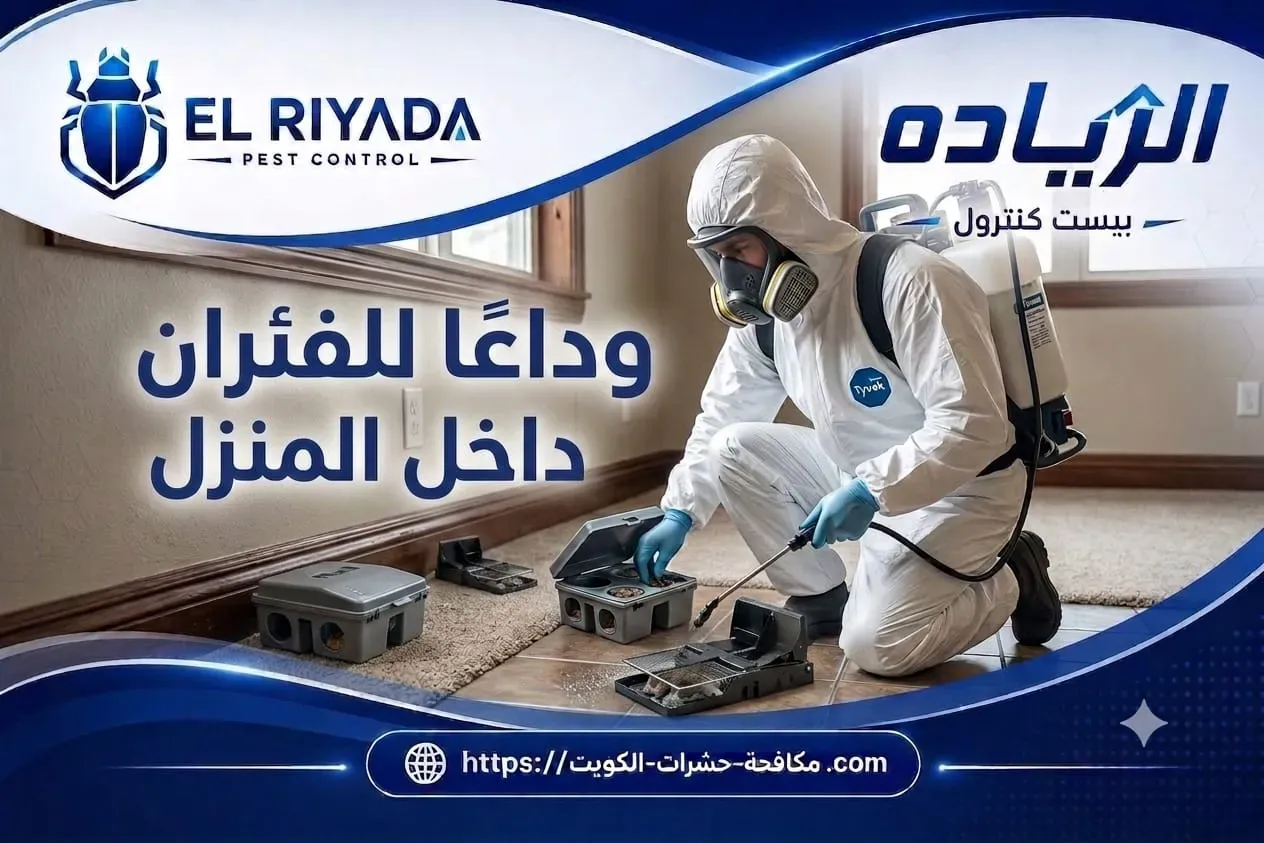
Al Reyada Pest Control has established itself as one of Kuwait's leading specialists in professional rodent management because every project begins with a comprehensive inspection before any treatment decisions are made. Experienced technicians evaluate infestation severity, identify rodent activity, locate structural entry points, analyze travel routes, and determine environmental conditions contributing to the problem before recommending the most appropriate combination of traps, professional bait stations, exclusion techniques, and monitoring procedures.
The company utilizes modern equipment, approved commercial rodent control products, and highly trained technicians capable of treating homes, villas, warehouses, factories, restaurants, commercial facilities, and industrial properties throughout Kuwait. Rather than focusing only on removing existing rodents, Al Reyada Pest Control also provides practical preventive recommendations designed to reduce the likelihood of future infestations through structural improvements, sanitation guidance, and ongoing monitoring.
Customers consistently choose Al Reyada Pest Control because of its accurate inspections, rapid response, transparent communication, experienced technicians, customized treatment strategies, professional workmanship, and long-term preventive solutions that eliminate both active infestations and the environmental conditions allowing rodents to survive.
• Comprehensive inspections precede every treatment program.
• Customized solutions are developed for every property.
• Approved commercial products ensure reliable performance.
• Experienced technicians manage all infestation levels.
• Preventive recommendations support lasting rodent protection.
Conclusion
Comparing traps with bait stations is not about declaring one method universally better than the other. Each technique serves a valuable role within a professional rodent management program depending on infestation size, property characteristics, safety requirements, and operational needs. Mechanical traps may provide immediate monitoring and localized control, while professional bait stations often deliver superior results against widespread infestations. When treatment is performed by experienced specialists who carefully evaluate every aspect of the property, the likelihood of achieving complete and lasting rodent elimination increases significantly while reducing the risk of future infestations.
Frequently Asked Questions
Are traps better than bait stations for rat control?
Neither method is universally superior. The most appropriate solution depends on infestation severity, property type, safety considerations, and rodent behavior. Professional inspections determine which method—or combination of methods—will provide the best results.
Can traps and bait stations be used together?
Yes. Professional pest control companies frequently combine both methods because traps provide immediate monitoring while bait stations help eliminate larger hidden rodent populations, creating a more comprehensive treatment program.
Are bait stations suitable for warehouses?
Yes. Professional bait stations are among the most effective rodent management tools for warehouses, factories, distribution centers, and commercial facilities because they provide organized, secure, and easily monitored long-term protection.
Are rodenticides alone enough to eliminate rats?
No. Successful rodent control also requires sealing structural entry points, removing food and water sources, improving sanitation, reducing harborage areas, and conducting regular monitoring to prevent recurring infestations.
Why do customers choose Al Reyada Pest Control?
Customers choose Al Reyada Pest Control because the company provides comprehensive inspections, experienced technicians, approved commercial products, customized rodent management strategies, transparent communication, reliable workmanship, and long-term preventive solutions specifically designed for Kuwait's environmental conditions.