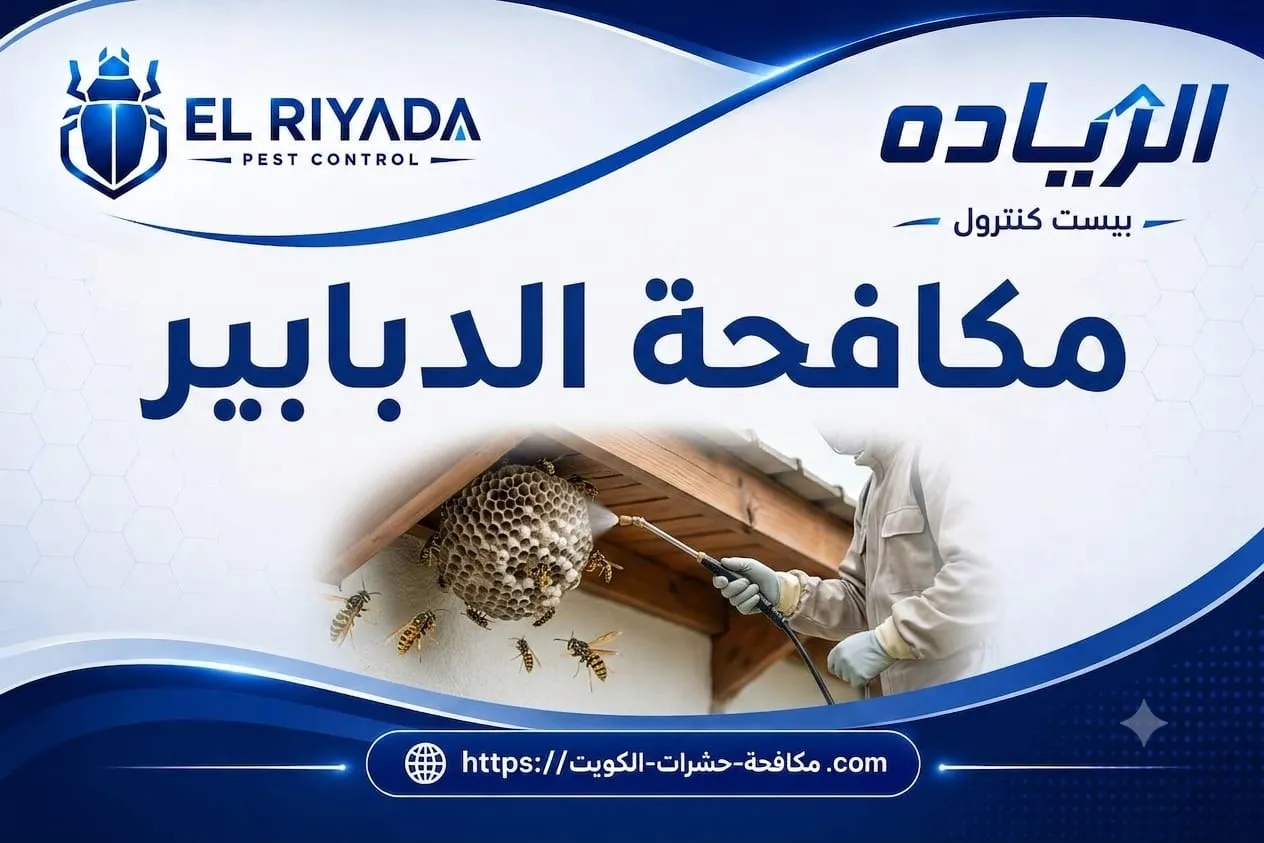
At first, seeing one or two wasps flying around your home may not seem like a serious problem. Many homeowners immediately reach for a household insecticide or attempt to remove the nest themselves, believing the issue can be solved within minutes. In reality, however, wasps are highly defensive insects that aggressively protect their colonies whenever they sense danger. What appears to be a simple nest can quickly become a serious safety hazard if handled incorrectly, especially when it is fully developed or hidden inside difficult-to-reach locations. Understanding when to move from household solutions to Professional Wasp Control Services can prevent injuries, reduce unnecessary risks, and eliminate the infestation correctly the first time. Based on extensive field experience treating wasp infestations throughout Kuwait, proper diagnosis of nest size, location, species, and activity level is always the foundation for selecting the safest and most effective treatment strategy.
When Do You Need Wasp Control?
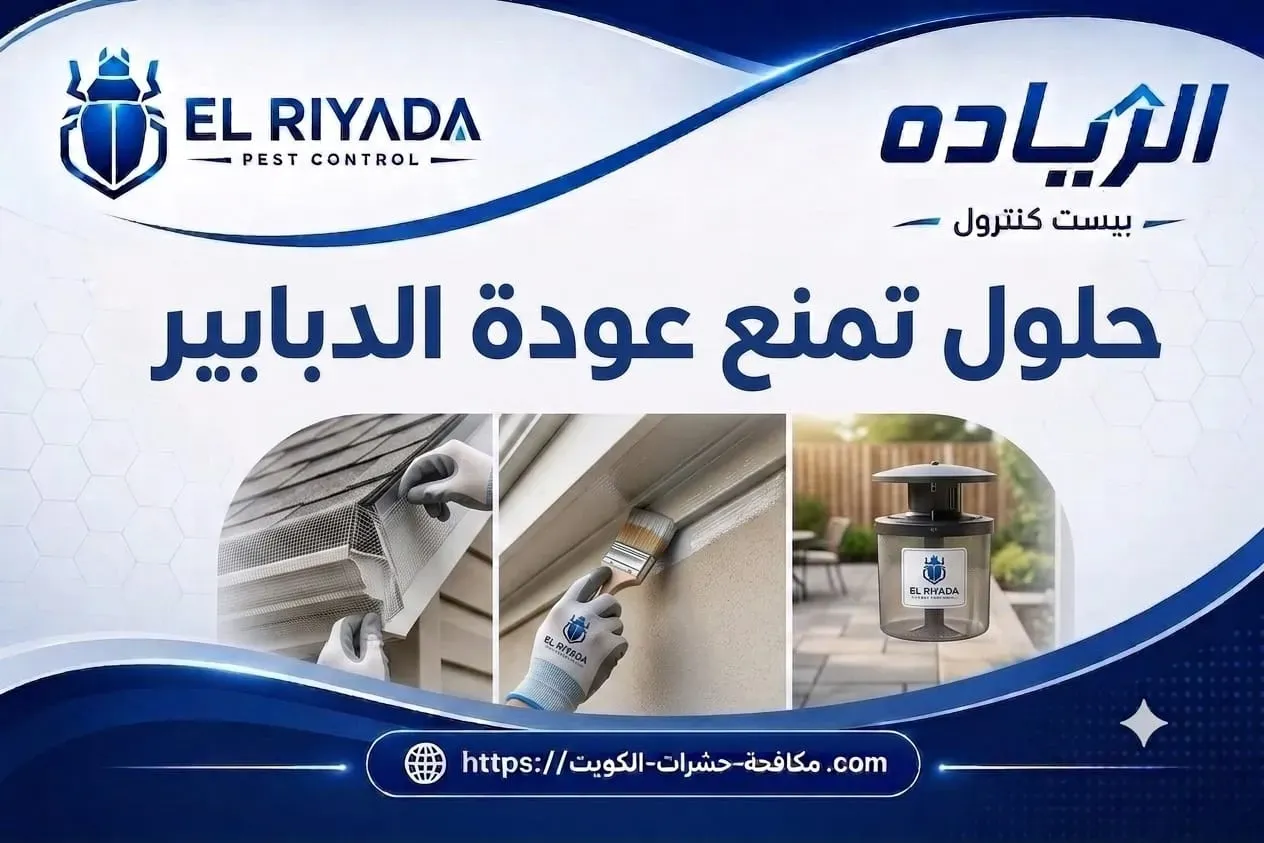
Many homeowners ask When Do You Need Wasp Control from a professional company instead of relying on household products or personal attempts. The answer depends on several important factors, including the size of the nest, the number of wasps present, the location of the colony, and the level of danger it represents to family members, employees, or visitors. A single wandering wasp rarely requires professional intervention, but once continuous activity or an established nest is observed, professional treatment becomes the safest and most reliable solution.
Professional pest control companies always begin with a detailed inspection to identify the wasp species because different species display different levels of aggression and nesting behavior. Technicians determine whether the nest is attached beneath roofs, hidden inside wall voids, located within air-conditioning units, suspended from trees, or constructed beneath balconies and outdoor structures. This evaluation directly determines which removal technique can be used safely and effectively.
Extensive field experience consistently demonstrates that delaying professional intervention allows colonies to continue expanding, increasing both the number of aggressive insects and the complexity of removal. Larger colonies also present a much greater risk of multiple stings, especially for children, elderly individuals, and people suffering from allergic reactions to wasp venom.
• Larger nests significantly increase treatment risks.
• Nest location determines the safest removal procedure.
• Different wasp species require different management strategies.
• Early intervention reduces treatment difficulty and overall costs.
• Professional inspections prevent dangerous mistakes.
Signs of Wasp Nests
The Signs of Wasp Nests are not always immediately obvious because many colonies are constructed inside hidden structural spaces such as wall cavities, roof voids, attic areas, behind exterior cladding, inside air-conditioning equipment, or among dense trees and landscaping. Recognizing early warning signs allows homeowners to request professional assistance before colonies become significantly larger and more dangerous.
One of the clearest warning signs is observing repeated wasp movement along the same flight path as workers continuously travel between food sources and the nest. Persistent buzzing sounds inside walls or ceilings may also indicate hidden nesting activity. In other situations, homeowners may notice gray papery nests attached beneath roof edges, balconies, outdoor lighting fixtures, garden structures, or tree branches. Frequent wasp activity entering and exiting a small structural opening is another strong indication that a concealed colony exists inside the building.
Practical field experience consistently demonstrates that identifying these warning signs early allows professional technicians to remove nests before colonies reach maximum population levels, greatly reducing the likelihood of painful stings and protecting both residents and pets from unnecessary danger.
• Repeated wasp traffic along identical flight paths.
• Continuous buzzing near walls or roof structures.
• Visible gray papery nests beneath elevated structures.
• Increased daytime wasp activity around the property.
• Wasps repeatedly entering small structural openings.
Causes of Wasp Infestations
Understanding the Causes of Wasp Infestations is essential for preventing new colonies from developing after an existing nest has been removed. Wasps actively search for secure nesting locations that provide protection from weather, reliable food sources, access to water, and minimal disturbance. Consequently, roofs, storage buildings, garages, balconies, sheds, gardens, trees, abandoned structures, outdoor equipment, and unused corners frequently become attractive nesting locations.
Food availability also plays an important role. Open garbage containers, exposed food waste, sweet beverages, ripe fruit, outdoor cooking areas, pet food, and standing water attract foraging worker wasps, encouraging colonies to establish themselves nearby. Removing an existing nest alone therefore may not prevent future infestations if these environmental conditions remain unchanged.
Extensive practical experience consistently demonstrates that combining professional nest removal with improved sanitation, structural maintenance, moisture reduction, and exclusion measures provides substantially better long-term protection than relying solely upon insecticide application.
• Quiet protected locations encourage colony construction.
• Food waste and sugary materials attract foraging wasps.
• Structural openings provide excellent nesting opportunities.
• Trees, roofs, and outdoor structures are common nesting sites.
• Prevention remains essential after professional nest removal.
Home Remedies for Wasps
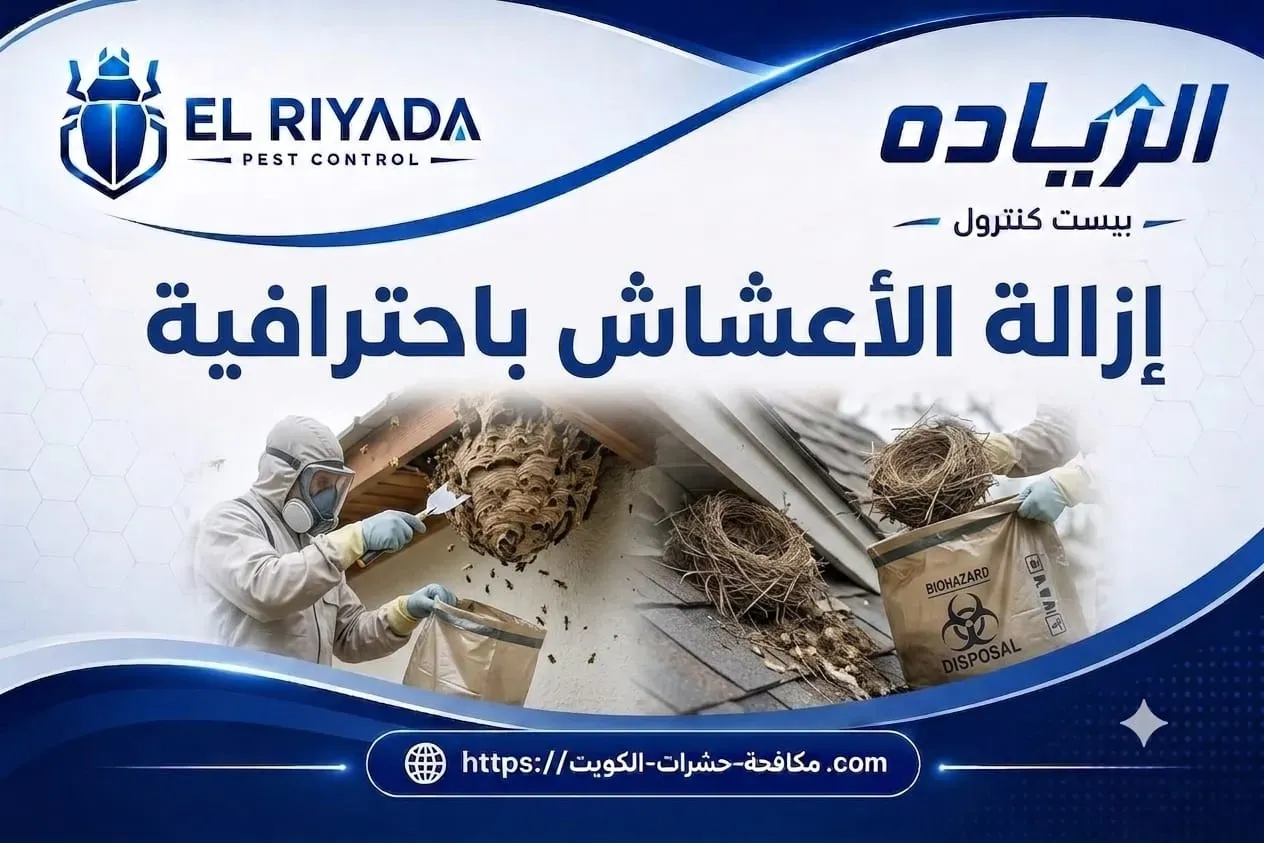
Many homeowners rely on Home Remedies for Wasps as soon as they notice a few insects flying around their property. Common attempts include using household aerosol sprays, spraying nests with water, burning nests, covering them with bags, or trying various internet remedies. While some of these approaches may temporarily reduce the activity of a very small number of wasps, they rarely eliminate the actual colony, particularly when the nest is fully established and contains dozens or even hundreds of aggressive insects.
The greatest danger lies in the defensive nature of wasps. Unlike many household pests, wasps instinctively protect their colonies whenever they perceive a threat. Disturbing an active nest without proper equipment, protective clothing, or professional treatment methods may trigger a coordinated defensive attack involving multiple wasps stinging simultaneously. Furthermore, many nests remain hidden inside wall cavities, ceilings, roof structures, ventilation spaces, or behind exterior cladding, making household sprays ineffective because they only reach visible insects while the colony survives deep inside the structure.
Practical field experience consistently shows that one of the most common mistakes is assuming the infestation has been eliminated simply because wasp activity temporarily decreases after spraying. In reality, many workers return once the superficial insecticide loses effectiveness, allowing the colony to continue growing. Household remedies should therefore be limited to basic preventive measures, while active nests are far safer when handled by trained professionals.
• Household remedies may help only with extremely minor situations.
• Attempting manual nest removal can trigger aggressive attacks.
• Hidden colonies cannot be reached with ordinary household sprays.
• Temporary reduction in wasp activity does not indicate successful elimination.
• Improper intervention frequently increases colony aggression.
Safe Wasp Nest Removal
Safe Wasp Nest Removal requires careful planning before any treatment begins because the objective is not only to remove the visible nest but also to protect residents, technicians, nearby visitors, and surrounding property throughout the entire process. Professional technicians first evaluate the nest location, colony size, wasp activity, access points, and surrounding hazards before selecting the safest removal strategy.
Professional pest control companies use specialized personal protective equipment together with commercial treatment products specifically designed for wasp management. Treatment methods are selected according to the wasp species, nest size, building characteristics, and exact nesting location, whether inside structures, on rooftops, within trees, beneath balconies, or inside concealed wall spaces. Following treatment, technicians remove nest remnants whenever appropriate because abandoned nesting material may encourage future colony establishment in the same location.
Extensive practical experience consistently demonstrates that professional removal significantly reduces the likelihood of multiple stings while ensuring the entire colony is eliminated rather than simply displaced to another section of the property.
• Every treatment begins with a comprehensive site inspection.
• Timing is carefully selected to maximize safety.
• Professional protective equipment is always used.
• Remaining nest materials are removed whenever appropriate.
• Complete colony elimination prevents recurring infestations.
Best Wasp Control Company
When searching for the Best Wasp Control Company, customers should evaluate technical expertise rather than focusing exclusively on pricing because removing active wasp nests requires specialized knowledge, practical field experience, advanced safety procedures, and an understanding of wasp behavior that ordinary pest control methods cannot always provide.
Professional companies begin every project by inspecting the property, identifying the wasp species, determining colony size, evaluating risk levels, and developing a customized treatment strategy instead of applying identical procedures to every infestation. They also educate customers about preventive measures that reduce the likelihood of future nest construction around homes and commercial buildings.
Practical field experience consistently demonstrates that companies emphasizing careful inspection and accurate diagnosis achieve significantly better long-term results because they eliminate both the colony itself and the environmental conditions encouraging future nesting activity.
• Detailed inspection forms the foundation of successful treatment.
• Treatment methods are customized according to nest characteristics.
• Professional products provide superior effectiveness.
• Preventive recommendations reduce future infestations.
• Follow-up inspections strengthen long-term protection.
Wasp Nest Removal Technician

The Wasp Nest Removal Technician plays the most important role in ensuring successful treatment because professional knowledge determines how technicians approach active nests, evaluate potential dangers, protect nearby occupants, and eliminate colonies without exposing themselves or others to unnecessary risks. Experienced technicians perform complete hazard assessments before beginning work, particularly when nests are located near entrances, rooftops, schools, commercial buildings, playgrounds, or heavily occupied residential areas.
Professional technicians also identify different wasp species because varying levels of aggression and nesting behavior require different treatment approaches. After completing nest removal, technicians carefully inspect surrounding areas to ensure no secondary nests or newly established colonies remain nearby.
Extensive practical experience consistently demonstrates that using trained specialists dramatically reduces the risk of injury while delivering significantly more reliable long-term results than attempting self-removal using household products or improvised methods.
• Potential hazards are evaluated before treatment begins.
• Treatment methods vary according to wasp species.
• Professional safety procedures are followed throughout the project.
• Surrounding areas are inspected after nest removal.
• Preventive recommendations help avoid future infestations.
Residential Wasp Control
Residential Wasp Control requires a specialized approach that differs considerably from controlling crawling insects because the primary objective is not merely eliminating flying insects but completely removing the source of danger represented by the nest itself. Professional technicians begin with a comprehensive inspection of every location where wasps commonly establish colonies, including rooftops, balconies, awnings, garages, storage rooms, gardens, trees, air-conditioning units, roof voids, wall cavities, and sheltered structural corners protected from wind and rain.
The inspection also evaluates the overall level of risk according to the number of residents, the presence of young children, elderly family members, pets, and individuals suffering from allergic reactions to wasp stings. These factors influence both the urgency of treatment and the safest removal procedure. After identifying the nest location and species involved, technicians implement a carefully planned removal strategy before conducting a complete secondary inspection to confirm that no additional nests or developing colonies remain elsewhere on the property.
Professional service extends well beyond nest removal. Customers receive practical recommendations regarding structural maintenance, sealing potential nesting sites, improving waste management, reducing food sources, and monitoring high-risk areas during warmer seasons. Extensive field experience consistently demonstrates that homeowners following these preventive recommendations experience dramatically fewer recurring wasp infestations.
• Every potential nesting location receives careful inspection.
• Nest removal is combined with long-term prevention.
• Family safety remains the highest priority throughout treatment.
• Preventive recommendations accompany every completed service.
• Ongoing prevention significantly reduces future infestations.
Professional Wasp Control Service
A Professional Wasp Control Service follows a carefully structured treatment process beginning with detailed inspection and ending only after technicians verify that all wasp activity has been completely eliminated. Professional companies never rely upon indiscriminate pesticide application. Instead, they evaluate nest position, colony size, flight patterns, structural access points, surrounding hazards, and environmental conditions before selecting the safest and most effective treatment technique.
Professional technicians utilize specialized protective equipment, approved commercial products, and advanced application techniques designed to control aggressive colonies while minimizing risk to occupants and surrounding property. After treatment, remaining nest material is removed whenever appropriate, followed by cleaning and inspection of the surrounding area because abandoned nesting material or favorable environmental conditions may encourage future colonies to establish themselves in the same location.
Practical experience consistently demonstrates that professional services save customers considerable time, reduce safety risks, eliminate uncertainty, and provide substantially more reliable long-term protection than attempting to remove active wasp nests without proper equipment or technical expertise.
• Every project begins with detailed technical assessment.
• Treatment methods are customized for each individual nest.
• Professional equipment improves treatment safety.
• Nest remnants are removed whenever necessary.
• Activity is confirmed eliminated before work is completed.
Risks of Wasp Nests
The Risks of Wasp Nests extend far beyond the inconvenience of flying insects because active colonies may become serious safety hazards whenever people accidentally approach or disturb them. Wasps instinctively defend their nests as a coordinated group, meaning even a minor disturbance can provoke multiple insects to attack simultaneously, greatly increasing the likelihood of repeated painful stings.
The danger becomes significantly greater when nests are located near residential entrances, schools, playgrounds, restaurants, gardens, parking areas, or outdoor seating locations where regular human activity increases the chance of accidental disturbance. Individuals suffering from allergic reactions to wasp venom face particularly serious medical risks because even a single sting may require immediate emergency treatment.
For these reasons, attempting to remove large or active nests without professional assistance is strongly discouraged. Extensive field experience consistently demonstrates that early professional intervention greatly reduces injury risks while protecting both occupants and surrounding property.
• Wasps may attack collectively when nests are threatened.
• Nests near entrances create particularly high safety risks.
• Allergic individuals face increased medical danger.
• Large colonies require professional removal.
• Early intervention minimizes the likelihood of injuries.
Why Al Reyada Pest Control Is the Best Choice
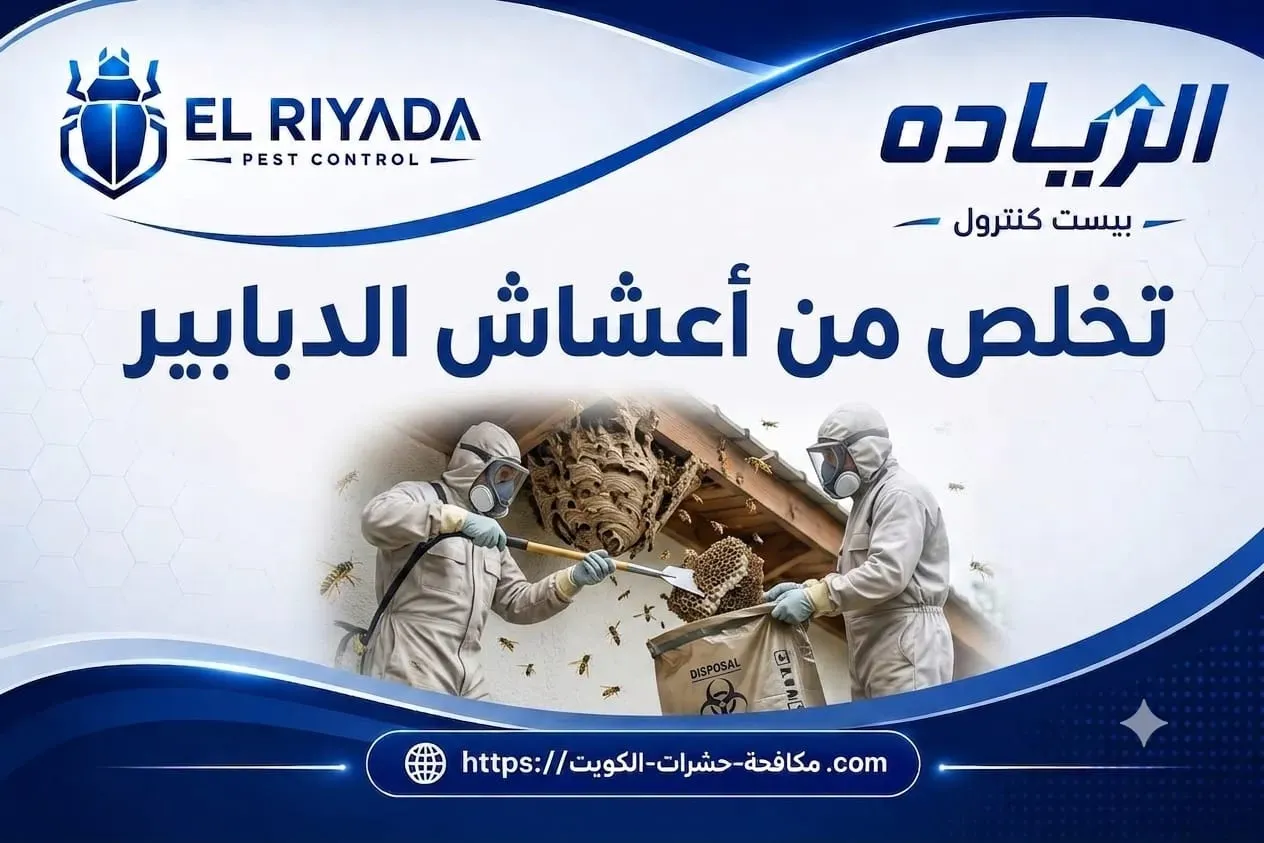
Al Reyada Pest Control is widely recognized as one of Kuwait's leading wasp control specialists because every treatment begins with a thorough technical inspection, professional risk assessment, accurate species identification, and development of a customized removal strategy designed specifically for the property involved. Rather than relying upon generic treatment methods, the company carefully selects the safest approach according to nest location, colony size, surrounding hazards, and environmental conditions.
Its experienced technicians utilize approved professional products, modern equipment, advanced safety procedures, and specialized protective gear to eliminate entire colonies without exposing residents or property to unnecessary risks. Beyond nest removal, the company also provides preventive guidance, follow-up inspections when required, and practical recommendations designed to discourage future nesting activity around homes, villas, farms, commercial buildings, warehouses, and industrial facilities throughout Kuwait.
Al Reyada Pest Control has earned the confidence of homeowners and businesses alike through accurate diagnosis, rapid response, professional workmanship, transparent communication, reliable scheduling, and long-term solutions that eliminate both active colonies and the conditions encouraging future infestations.
• Every project begins with a comprehensive professional inspection.
• Safe removal procedures are customized for every colony.
• Approved products and modern equipment are utilized.
• Preventive recommendations support long-term protection.
• Long-lasting solutions remain the company's primary objective.
Conclusion
Not every wasp sighting requires professional intervention. However, once an active nest becomes established, colony activity increases, or the safety of family members, employees, or visitors is placed at risk, choosing a Professional Wasp Control Service becomes the safest and most effective decision. Proper treatment eliminates not only the visible nest but also the underlying causes that allowed the colony to develop, helping protect homes and commercial properties from future infestations while ensuring long-term safety.
Frequently Asked Questions
When should I contact a professional wasp control company?
Professional assistance is recommended whenever an active nest is discovered, wasp activity continues increasing, or the colony is located near entrances, gardens, balconies, playgrounds, or other frequently occupied areas.
Can household insecticides safely remove a wasp nest?
Household products may temporarily affect individual wasps but are generally unsuitable for established colonies. Improper treatment can provoke aggressive defensive behavior and significantly increase the risk of multiple stings.
Will wasps return after the nest has been removed?
If the colony is completely eliminated, nesting materials are properly removed, structural entry points are addressed, and environmental attractants are reduced, the likelihood of future nesting in the same location decreases substantially.
Is removing a wasp nest dangerous?
Yes. Active colonies aggressively defend their nests, particularly when disturbed. Large nests or colonies located in difficult or elevated positions should always be handled by trained professionals using specialized protective equipment.
Why do customers choose Al Reyada Pest Control?
Customers choose Al Reyada Pest Control because the company combines detailed inspections, experienced technicians, approved professional products, customized removal strategies, advanced safety procedures, preventive guidance, and reliable long-term solutions specifically designed for Kuwait's environmental conditions.