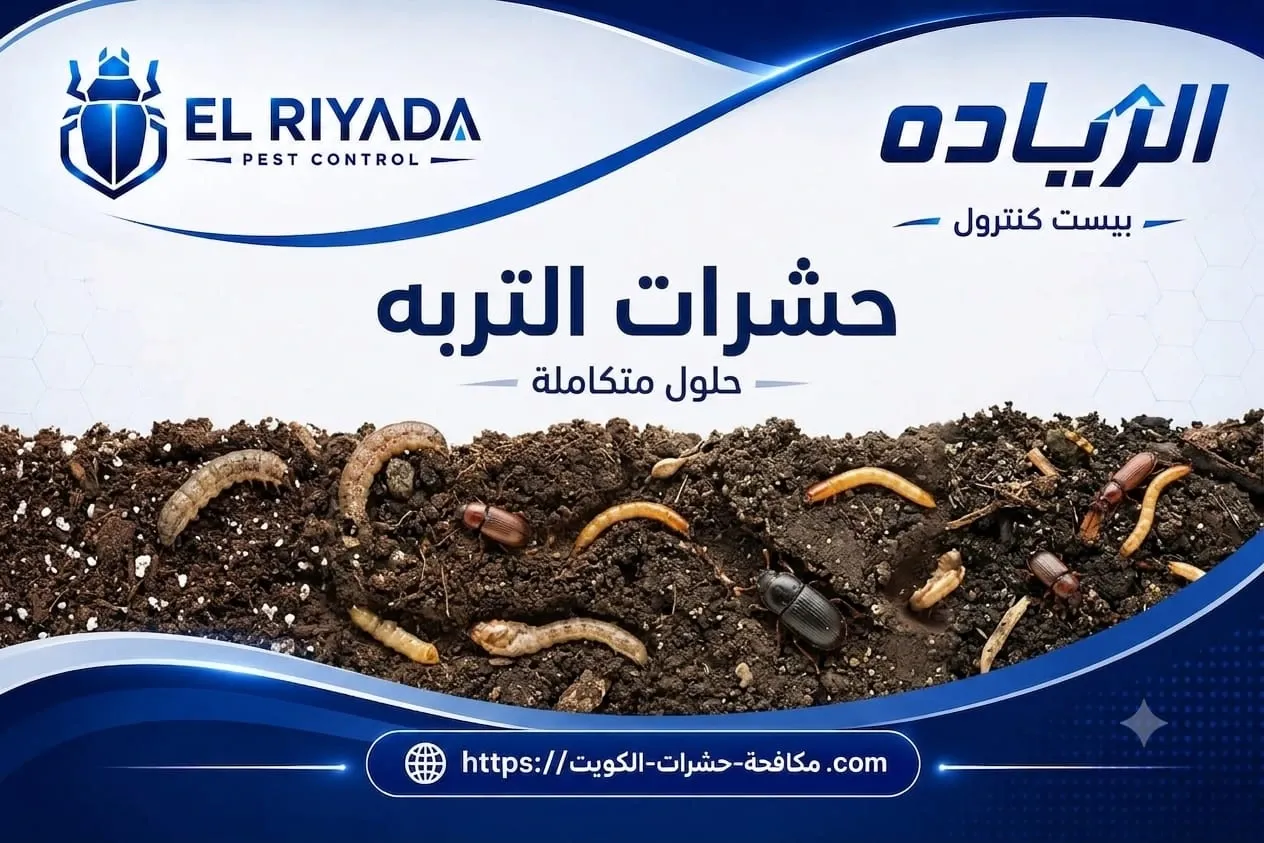
Professional soil pest control in Kuwait to protect roots, gardens, and farms with safe treatments, effective solutions, and long-lasting plant health.
Soil Pest Control in Kuwait is one of the most important agricultural and landscaping services for maintaining healthy plants, productive gardens, and thriving green spaces. Soil insects attack roots, seeds, and underground plant tissues where damage often remains invisible until plants begin showing signs of decline. Many homeowners and gardeners notice yellowing leaves, stunted growth, or sudden wilting without realizing that the real problem exists beneath the soil surface. Based on extensive practical experience treating soil infestations in residential gardens, farms, and landscaped areas, successful soil pest management depends on accurate pest identification, careful evaluation of soil conditions, and selecting a treatment program specifically designed for both the soil type and the affected plants rather than applying pesticides indiscriminately. Professional soil pest control has therefore become an essential step in protecting plant health while preventing long-term damage to landscapes and agricultural investments.
Soil Pests Kuwait
Soil Pests Kuwait include a wide variety of insects and underground organisms that feed on roots, seeds, and organic matter beneath the soil surface. Their impact varies according to plant species, soil composition, moisture levels, and environmental conditions. Practical field experience shows that many infestations remain unnoticed until obvious symptoms begin appearing above ground, including slow plant growth, unexpected wilting, poor flowering, reduced crop development, or declining overall plant health. In many situations, underground pest activity has already been damaging root systems for an extended period before visible symptoms become apparent. Professional treatment therefore begins with a detailed inspection of both soil and root systems to identify the pest species, evaluate infestation severity, and determine the stage of development before selecting the most effective control strategy. Additional factors such as irrigation schedules, soil texture, drainage quality, and planting density are carefully assessed because they directly influence pest populations. When precise diagnosis is combined with improvements to soil management and appropriate pest control methods, plants have a much greater opportunity to recover compared with treatments that address only visible symptoms while leaving underground causes unresolved.
• Inspecting roots and surrounding soil to accurately identify the infestation.
• Evaluating overall plant health before selecting a treatment program.
• Assessing irrigation practices and soil conditions that encourage pest activity.
• Eliminating the underlying causes instead of treating visible symptoms alone.
• Monitoring plant recovery after the pest control program has been completed.
Soil Pest Control
Soil Pest Control requires a comprehensive management program that eliminates underground insects while reducing the likelihood of future infestations. Simply applying pesticides without improving the surrounding environment often results in pests returning within a relatively short period. Based on practical field experience, professional control programs begin by studying the pest's biological life cycle to determine the most effective treatment timing because larvae and adult insects require different management strategies. Treatment methods are also selected according to the property's intended use, whether the location is a residential garden, commercial landscape, agricultural farm, or public green area. In many cases, chemical treatments are combined with cultural practices such as improving drainage, reducing excessive soil moisture, adjusting irrigation schedules, and enhancing soil conditions to maximize long-term success. Experience consistently demonstrates that integrated pest management programs produce far better and more sustainable results than relying exclusively on pesticides because they address every stage of the pest's development while improving the growing environment.
• Selecting treatment timing according to the pest's biological life cycle.
• Combining multiple control methods to maximize long-term effectiveness.
• Improving soil conditions while implementing pest treatments.
• Reducing the likelihood of recurring underground infestations.
• Monitoring treatment performance during the recovery period.
Eliminate Soil Pests
Successfully Eliminating Soil Pests requires patience, careful planning, and professional expertise because many underground insects spend nearly their entire life cycle beneath the soil surface where they remain protected from environmental influences. Practical experience demonstrates that long-term success begins by accurately locating the most active infestation zones within the soil before any treatment is applied. Root system health is carefully evaluated because the extent of root damage directly affects how quickly plants recover following treatment. Eliminating soil insects therefore extends far beyond simply killing the pests themselves. It also includes improving the growing environment by correcting excessive soil moisture, managing organic material properly, and reducing conditions that encourage insect reproduction. When these steps are incorporated into a structured treatment program, plants gradually regain healthy root function, stronger growth resumes, and the likelihood of recurring infestations is significantly reduced.
• Identifying the areas with the highest underground pest activity before treatment.
• Evaluating root health to determine the severity of plant damage.
• Improving growing conditions to discourage future pest development.
• Designing treatment programs according to infestation severity.
• Monitoring plant recovery after soil pest elimination.
Agricultural Soil Pests
Agricultural Soil Pests represent one of the greatest challenges affecting crop production because they attack plants during their earliest stages of development. They may damage seeds before germination, destroy root systems, weaken seedlings, and significantly reduce crop yields before visible symptoms appear above ground. Extensive agricultural experience shows that many growers initially focus on leaves and stems when investigating poor crop performance while overlooking the underground pest activity responsible for root damage. Professional treatment therefore begins with soil analysis, root inspections, and sampling from affected areas to accurately identify the responsible pest species and determine infestation levels. Irrigation practices and fertilizer programs are also evaluated because excessive moisture or nutritional imbalance often creates favorable conditions for certain soil insects. Effective management extends beyond eliminating existing pests by improving soil quality, strengthening plant health, and implementing preventive agricultural practices that reduce future infestations while supporting healthier crop production throughout subsequent growing seasons.
• Inspecting agricultural soil and root systems to identify underground pests.
• Evaluating irrigation and fertilization practices affecting pest populations.
• Developing treatment strategies based on specific crop requirements.
• Improving soil quality to reduce future pest activity.
• Implementing preventive agricultural practices for future growing seasons.
Home Garden Insects
Home Garden Insects are among the most common causes of declining ornamental plants and residential landscapes because they may attack roots, soil, foliage, or multiple plant parts simultaneously. Practical experience demonstrates that many homeowners observe slow plant growth, leaf discoloration, or gradual decline despite providing regular watering and fertilization. In many of these cases, underground insects feeding on root systems are the true cause of the problem. Residential gardens therefore require treatment methods that differ significantly from commercial farms because technicians must consider plant varieties, landscape design, garden size, and the presence of children or pets before selecting appropriate control methods. Professional management also focuses on preserving ecological balance within the garden by minimizing unnecessary impacts on beneficial organisms that contribute to healthy soil. Once treatment has been completed, homeowners receive practical recommendations for irrigation management, soil maintenance, and long-term garden care that help maintain vigorous plant growth while minimizing future infestations.
• Selecting pest control methods suitable for residential gardens.
• Protecting plant health throughout the treatment process.
• Preserving the surrounding garden ecosystem whenever possible.
• Adjusting irrigation practices to discourage soil pest development.
• Monitoring plant health following treatment completion.
Soil Pest Treatment
Soil Pest Treatment depends upon selecting the most appropriate solution according to the pest species, developmental stage, soil conditions, and the plants being protected. Applying unsuitable treatments often produces disappointing results even when repeated multiple times. Based on practical field experience, professional treatment begins by determining whether the infestation consists of larvae, adult insects, or multiple underground pest species simultaneously before selecting targeted control measures. Plant type, growth stage, and environmental conditions are carefully considered to ensure treatments protect plant health while effectively controlling underground insects. Certain infestations require treatment in multiple stages to eliminate newly emerging insects from eggs remaining within the soil. Practical experience consistently demonstrates that successful treatment extends beyond pesticide application by incorporating improved irrigation management, balanced fertilization, soil conditioning, and preventive maintenance practices that create an environment less favorable for future pest development.
• Identifying the pest's developmental stage before treatment begins.
• Matching treatment methods to the specific plant species involved.
• Applying multi-stage treatment programs whenever necessary.
• Monitoring soil and plant recovery following treatment.
• Supporting long-term treatment success through improved soil management.
Soil Pest Control in Kuwait
Soil Pest Control in Kuwait requires specialized solutions that reflect the country's climate, irrigation systems, and varying soil characteristics because high temperatures and local environmental conditions strongly influence underground pest populations. Practical field experience begins with evaluating soil composition, moisture levels, plant health, and infestation severity before selecting the most appropriate treatment program. Management strategies differ considerably between residential gardens, agricultural farms, commercial landscapes, and public green areas because every environment presents unique challenges. Treatment also includes monitoring root recovery after pest elimination to confirm that underground activity has ceased and normal root development has resumed. When professional control programs are implemented according to carefully planned procedures, soil health improves significantly while plants regain stronger growth and greater resistance against future infestations.
• Designing treatment programs suitable for Kuwait's environmental conditions.
• Considering climate effects on underground pest populations.
• Selecting control methods appropriate for each property type.
• Monitoring root recovery following successful treatment.
• Improving long-term soil health to reduce future infestations.
Protect Plants from Insects
Protecting Plants from Insects is an essential component of maintaining vigorous plant growth, healthy flowering, and consistent crop production because effective prevention reduces the need for intensive corrective treatments later. Practical experience demonstrates that healthy plants naturally resist many pests more successfully than plants suffering from weak root systems, poor nutrition, excessive moisture, or environmental stress. Effective protection therefore begins with regular inspections of soil, roots, stems, and foliage to detect early warning signs before infestations become widespread. Balanced irrigation, appropriate fertilization, removal of damaged plant material, and proper management of decomposing organic debris also reduce the environmental conditions favorable to insect development. In residential gardens as well as agricultural operations, combining preventive maintenance with rapid intervention whenever the earliest symptoms appear consistently produces better long-term results than delaying treatment until severe infestations have already developed. Early action preserves healthy root systems while allowing plants to continue normal growth with minimal interruption.
• Performing routine inspections to detect infestations at the earliest possible stage.
• Maintaining healthy root systems through balanced irrigation and fertilization.
• Removing damaged plant material that may attract additional pests.
• Addressing new infestations before they become widespread.
• Preserving ecological balance throughout the garden or landscape.
Soil Larvae Control
Soil Larvae Control represents one of the most important stages of underground pest management because larvae often cause the greatest damage to roots, seeds, and young plants before developing into adult insects. Practical field experience demonstrates that unexplained seedling losses or declining plant vigor frequently result from active larval populations feeding beneath the soil surface where they remain difficult to detect. Professional treatment therefore begins by inspecting the soil, determining larval density, identifying developmental stages, and selecting control methods specifically targeted toward underground larvae. Plant species and crop requirements are also carefully considered to maximize treatment effectiveness while protecting healthy plant development. Certain infestations require multiple treatment stages to eliminate larvae emerging from eggs remaining within the soil after initial applications. Early intervention consistently minimizes root damage while preventing future insect populations from developing inside the landscape or agricultural field.
• Determining larval population density before treatment begins.
• Selecting treatment methods according to larval development stages.
• Protecting roots and young plants from continued feeding damage.
• Confirming complete larval elimination through follow-up monitoring.
• Preventing larvae from developing into destructive adult insects.
Soil Insect Spraying
Soil Insect Spraying depends upon carefully designed application techniques that deliver treatment materials directly into the underground zones where pests remain active because surface spraying alone is often insufficient for controlling deep soil infestations. Practical experience shows that spraying methods must be selected according to soil composition, infestation depth, pest species, and plant requirements. Residential gardens, agricultural fields, and landscaped areas each require different application strategies to maximize treatment performance. Timing also plays a critical role because certain underground pests become far more vulnerable during specific stages of their life cycles. After spraying has been completed, technicians continue evaluating soil conditions and plant recovery to verify treatment success while monitoring for any remaining pest activity. When spraying is integrated into a complete pest management program that includes preventive maintenance and improved soil management, long-term protection becomes significantly more reliable than isolated pesticide applications.
• Selecting spraying techniques appropriate for individual soil conditions.
• Delivering treatment materials directly to underground pest activity zones.
• Scheduling applications during the most effective treatment periods.
• Monitoring treatment performance after spraying has been completed.
• Combining spraying with preventive soil management practices.
Why We Are the Best for Soil Pest Control
Successful soil pest management requires practical experience that extends far beyond simply applying pesticides because understanding soil biology, underground pest behavior, root health, and environmental conditions is essential for long-term success. Every project begins with a comprehensive inspection of soil conditions, root systems, plant health, and infestation characteristics before developing a treatment program tailored specifically to the property's needs. Professional solutions are carefully adapted for residential gardens, farms, agricultural fields, and landscaped areas while preserving healthy root development and maximizing long-term plant recovery. Our work continues beyond the treatment itself through practical guidance covering irrigation, fertilization, soil care, and routine monitoring because long-term prevention remains the most effective strategy for maintaining healthy soil and preventing recurring infestations.
• Extensive practical experience managing a wide range of soil pests.
• Customized treatment programs based on soil and plant conditions.
• Professional solutions that protect root systems and plant health.
• Continuous monitoring to ensure lasting treatment success.
• Preventive recommendations that reduce future infestations.
Conclusion
Soil Pest Control in Kuwait plays a vital role in protecting plant health, maintaining productive landscapes, and preserving agricultural investments. Practical field experience consistently demonstrates that successful management depends upon accurate diagnosis, carefully selected treatment programs, and continuous improvement of soil conditions alongside professional pest control measures. Eliminating underground insects alone is not enough if the environmental conditions supporting their development remain unchanged. Working with experienced soil pest specialists provides healthier root systems, stronger plant growth, and long-term protection for gardens, farms, and landscaped properties throughout the year.
Frequently Asked Questions
How can I tell if soil insects are causing my plants to decline?
Common warning signs include slow plant growth, yellowing leaves, wilting despite regular irrigation and fertilization, weak root systems, and the discovery of larvae or insects during soil inspection around affected plants.
Can soil pests be eliminated after a single treatment?
The answer depends on the pest species and infestation severity. Some infestations respond quickly, while larger or more established populations require multiple treatment stages combined with routine monitoring.
Does soil insect spraying harm plants?
When treatments are applied professionally using products appropriate for the plant species and soil conditions, the objective is to protect root systems and improve plant health without negatively affecting normal growth.
When is the best time to control soil pests?
Treatment should begin as soon as the earliest signs of infestation appear or underground insect activity is confirmed because early intervention produces significantly better results while minimizing root damage.
How can I prevent soil pests from returning after treatment?
Future infestations can be greatly reduced by maintaining proper irrigation schedules, improving drainage, applying balanced fertilization, inspecting soil regularly, and treating new pest activity before it becomes widespread.
Categories & Services
Choose the category that fits your need
Need Professional Help?
Our team is available 24/7 to answer your questions and book your appointment
Book Your Service Now