
Pigeon deterrent wires for roof edges are used to prevent birds from settling on rooftop cornices, boundary walls, and ledges where pigeon droppings and feathers repeatedly accumulate. Successful installation depends on selecting a product specifically designed to prevent birds from perching, arranging it according to the width and shape of the edge, and securing it safely so that it can withstand the conditions at the installation site without harming people or birds.
This service does not involve installing sharp security barbed wire. Instead, it uses systems designed to discourage birds from perching, such as bird deterrent spike strips or suitable tensioned wires. If pigeons repeatedly gather on your home's boundary wall or rooftop cornices in Kuwait, you can contact Al Reyada Pest Control to inquire about protecting the edges most affected by the problem.
Pigeon Deterrent Wires for Roof Edges: How Do They Prevent Birds From Gathering on Cornices?
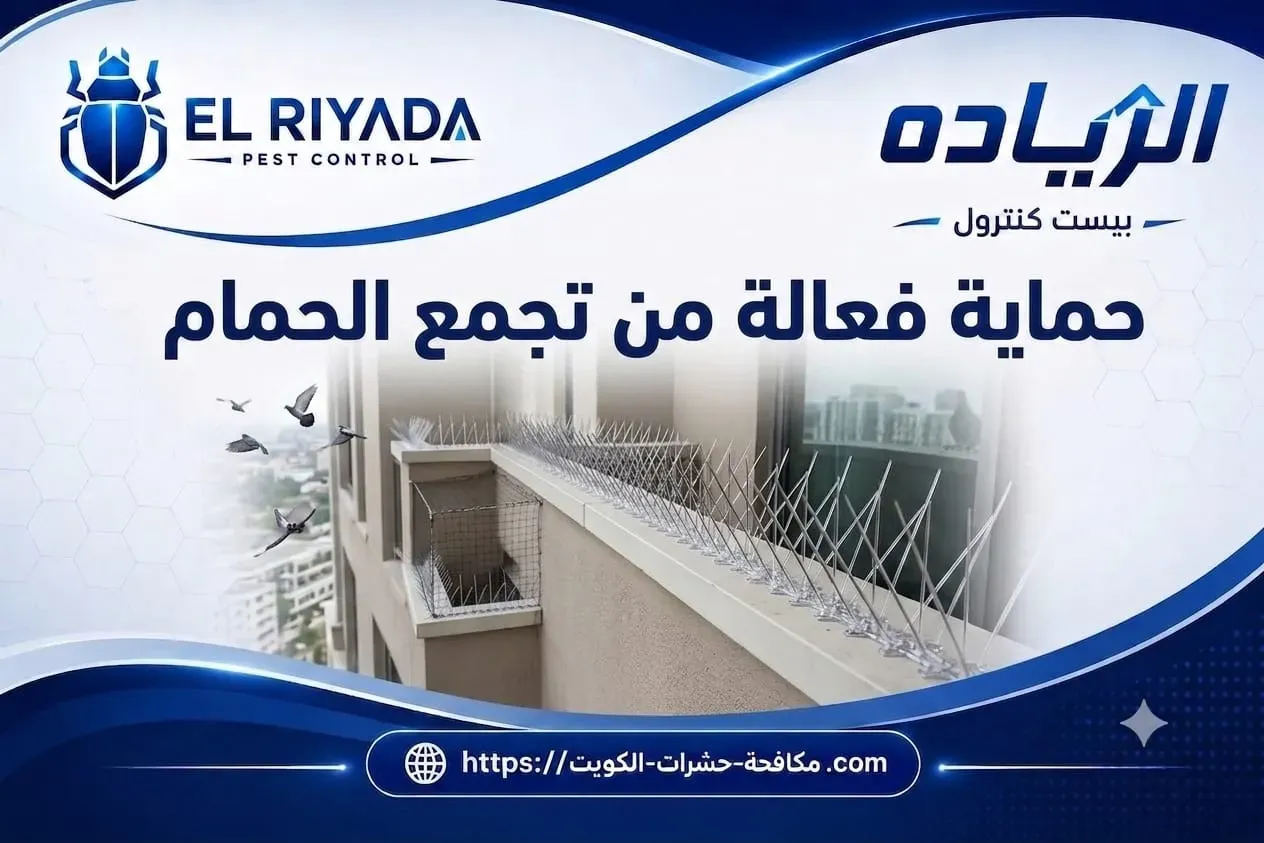
Rooftop edges are among the places where pigeons may prefer to perch because they provide elevated positions from which birds can observe the surrounding area and move easily between buildings. The problem becomes more noticeable when an edge is wide and level, providing enough space for birds to settle for extended periods.
As pigeons continue using these locations, droppings may accumulate on the cornices or fall onto walls, balconies, and entrances below. Addressing the actual perching points can therefore be more useful than simply cleaning the marks after they appear.
Bird deterrent products make an edge less suitable for pigeons to settle on, but they do not prevent birds from flying over the roof or using other areas that have not been protected.
When Does a Rooftop Edge Need a Bird Deterrent?
-
Pigeons repeatedly gathering in the same location: If birds regularly perch on a particular cornice every morning or evening, that location may be suitable for a deterrent designed to discourage them from settling.
-
Droppings falling onto the facade: When waste falls from the roof onto windows or walls, the ledge where pigeons are perching should be identified before selecting an installation location.
-
Several pigeons gathering on one edge: Long edges may require continuous protection that avoids leaving suitable perching spaces between protected sections.
-
Feathers and twigs accumulating: This may indicate that birds use the area for resting or that nesting is being attempted nearby. Existing nests should be checked before installation.
-
Difficulty cleaning elevated cornices: Accessing these locations may be dangerous without appropriate equipment, making prevention of repeated bird gatherings a practical option worth evaluating.
Do Deterrent Wires Prevent Pigeons From Entering the Entire Rooftop?
No.
Bird-perching deterrents address the targeted edges, but they do not enclose the roof or prevent birds from landing on its floor or perching on water tanks and other equipment.
If the problem involves pigeons entering an open area or nesting inside gaps, a different solution or additional treatment may be required.
Why Should the Edge Be Inspected Before Installation?
Some cornices contain stepped projections or side sections that pigeons can continue using even after a deterrent strip has been installed on the main edge.
Identifying the actual perching locations helps determine a suitable arrangement without adding unnecessary materials to areas that do not need protection.
Pigeon Deterrent Wires for Boundary Walls: Protecting Your Wall Without Affecting Its Appearance or Use
Pigeon deterrent wires for residential boundary walls differ from protection installed on elevated rooftop edges because boundary walls may be close to people or areas used every day, such as entrances, courtyards, and walkways.
For this reason, product safety and installation location require particular attention. Sharp security wires or improvised installations that could injure anyone approaching the wall should not be used.
Some walls are wide and flat, allowing pigeons to perch easily. Others have decorative caps or sloping surfaces that require a different protection method.
Which Types of Boundary Walls May Need Treatment?
Flat concrete walls: These may provide horizontal surfaces suitable for pigeons to perch on. The width of the upper surface should be assessed before determining the number of deterrent rows.
Decorative stone walls: These may contain several projections, so installing one deterrent along the center of the wall cap may not be sufficient.
Metal boundary walls: The shape of the upper edge and a suitable attachment method should be reviewed without weakening the components or damaging the finish.
Courtyard walls near trees: Birds may alternate between trees and wall edges, making it important to identify actual perching locations instead of treating the wall indiscriminately.
Walls near entrance gates: Special attention should be given to pedestrian movement and gate operation, avoiding components that could cause injuries.
How Can You Preserve the Wall's Exterior Appearance?
The product type, base color, and arrangement can be considered in relation to the wall's design. However, reducing the deterrent's visibility should not justify choosing an unsuitable material or an insecure attachment method.
Edges visible from the street or main entrance should also be reviewed before determining the scope of work.
Can Deterrents Be Installed on Walls Used by Children or Workers?
The possibility of people reaching the edge must be assessed before choosing any deterrent.
Products with protruding components should not be installed where children, workers, or pedestrians could reasonably come into contact with them. In some locations, modifying the edge's design or choosing another solution may be more appropriate.
Preventing Pigeons From Perching on Home Walls: Why Cleaning and Scaring Methods Are Not Enough
Preventing pigeons from perching on residential boundary walls depends on addressing what makes the wall suitable for birds rather than merely frightening them away temporarily.
Pigeons may use the top of a wall as a resting point before moving to the rooftop, trees, or neighboring buildings. If the surface remains level and accessible, birds may return after droppings have been cleaned or they have been disturbed.
Why Do Pigeons Keep Returning?
-
Familiarity with the perching location: The edge may become part of the birds' daily route, particularly if it is elevated and relatively secure.
-
Availability of a stable surface: Wide, level walls allow pigeons to land and stand without much difficulty.
-
Nearby food or water sources: Attractive resources in the surrounding area may increase bird activity around the property even when they are not located directly on the wall.
-
Connected alternative edges: Pigeons may move from one section to another if only a limited portion of the wall is protected.
-
Reliance on temporary solutions: Sounds or moving objects may not provide lasting results if birds become accustomed to them.
Comparing Methods for Managing Pigeons on Boundary Walls
|
Method |
Suitable Application |
Limitations |
|
Bird deterrent spike strips |
Flat edges compatible with the product |
Require correct positioning and attachment |
|
Tensioned bird deterrent wires |
Certain edges and railings |
Require suitable supports and tension |
|
Cleaning droppings |
Removing waste and improving appearance |
Does not prevent pigeons from returning |
|
Bird scaring methods |
Disturbing birds in certain situations |
Birds may become accustomed to them |
|
Addressing attractants |
Reducing reasons birds visit the area |
May not prevent perching by itself |
Is It Possible to Keep Pigeons Away Without Installing Wires?
This may be possible in certain situations if the problem is associated with a specific attractant that can be removed or an edge whose design can be modified safely.
However, when the edge itself provides a suitable perching surface and birds continue using it, a dedicated perching deterrent may be a more direct option.
When Should Several Sections of the Wall Be Protected?
If pigeons move between nearby sections and leave droppings along the wall, assessing the entire affected area may be preferable to treating only one point.
This does not mean every boundary wall requires deterrent wires. Priorities should be determined according to actual bird activity.
Bird Deterrent Wires for Rooftop Edges: Choosing the Right Type for Your Roof
Bird deterrent wires for rooftop edges are available in different designs, and they should not all be considered equal in their applications, durability, or attachment methods.
Some systems use strips fitted with protruding rods designed to prevent birds from settling. Others use tensioned wires supported above the edge by specialized brackets.
The appropriate system should be selected according to the cornice's width and shape, the surface material, and outdoor conditions, while considering the safety of birds and people.
Bird Deterrent Spike Strips
These may be suitable for edges that allow a stable base to be attached and the rods to be arranged across the area birds use for perching.
Products differ in base width, rod design, and attachment method. Their specifications should therefore be reviewed before determining the required quantity.
Tensioned Bird Deterrent Wires
These are used in certain locations to make it more difficult for birds to settle on an edge. They depend on securing supports and tensioning the wires according to the system's design.
They may not be suitable for every surface, particularly where stable attachment points cannot be provided or people regularly use the edge.
Continuous Protection for Long Edges
Cornices extending around a rooftop may require continuous deterrent coverage or treatment of specific points along the edge.
Corners, ends, and junctions should be reviewed because leaving even a small suitable perching area may allow the problem to continue at that location.
Choosing Protection According to the Installation Location
|
Installation Location |
What Should Be Evaluated |
Main Consideration |
|
Narrow rooftop cornice |
Edge width and surface material |
Select a product suited to the available space |
|
Wide cornice |
Number of possible perching areas |
More than one row may be required |
|
Edge with corners |
Projections and end sections |
Avoid leaving side perching points |
|
Wall near pedestrians |
Likelihood of contact with the product |
Prioritize safety |
|
Metal edge |
Compatibility of attachment method |
Avoid damaging the surface |
|
Elevated edge |
Safe access methods |
Do not work without appropriate equipment |
Is It Better to Choose the Least Visible Product?
Appearance can be considered, but product selection should begin with suitability for the edge and secure installation.
A less noticeable product is not necessarily the most appropriate if it leaves areas where pigeons can continue perching.
Installing Pigeon Deterrent Wires on Boundary Walls: From Measuring to Checking Stability
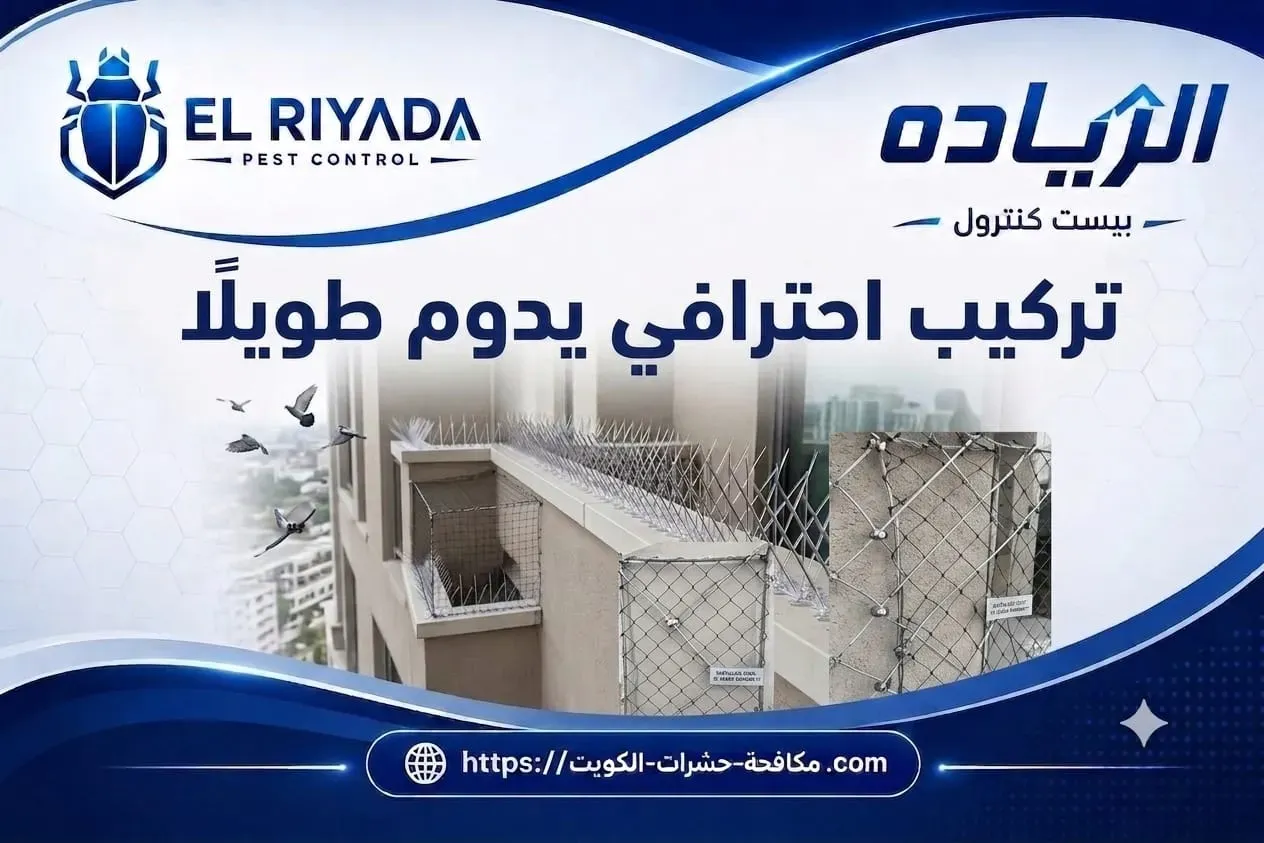
Installing pigeon deterrent wires on boundary walls requires planning that suits the shape and location of the edge, especially when the wall is close to the entrance or areas people use regularly.
Simply attaching a strip along the wall is insufficient if corners, projections, and areas accessible to people have not been examined.
Step One: Identify Pigeon Perching Locations
The wall's length and the areas where birds and droppings repeatedly appear are reviewed.
The problem may be concentrated near a tree or gate, while the remaining sections may not require treatment.
Step Two: Measure the Edge's Width and Length
The length of the targeted section and the width of the upper surface are measured, including any projections or changes in design.
These measurements help select a suitable product and estimate the materials required more accurately.
Step Three: Choose a Bird Perching Deterrent System
Bird deterrent strips or tensioned wires are evaluated according to the edge's characteristics and whether people can reach it.
Sharp security materials or installations that could expose people or birds to injury should be excluded.
Step Four: Assess the Attachment Method
The wall's surface is inspected to determine a suitable attachment method that will not damage its materials, waterproofing, or structural elements.
Some locations may require approval from property management or a review of facade requirements.
Step Five: Prepare the Surface
Obstacles that could prevent proper attachment are removed, and any droppings requiring cleaning are assessed using suitable precautions.
Cleaning methods that disturb dust from bird waste or expose workers to fall hazards should be avoided.
Step Six: Install the Deterrent
The selected system is installed according to the product's instructions, with attention to stable bases and coverage of actual perching areas.
Components must not protrude into areas used by people or interfere with gates and doors.
Step Seven: Review Ends and Corners
Connected edges and junctions are inspected to ensure that suitable perching points have not been left beside the deterrent.
Step Eight: Check Installation Safety
The system's stability is reviewed to ensure there are no components that could fall or areas likely to cause injuries if touched.
To inquire about pigeon deterrent wire installation on residential boundary walls in Kuwait, contact Al Reyada Pest Control and explain the wall's length and where pigeons gather.
Stainless Steel Bird Deterrent Wires for Roof Edges: Choosing Materials Suitable for Kuwait's Conditions
When searching for stainless steel bird deterrent wires for rooftop edges, property owners generally want a system suitable for exposure to sunlight, dust, humidity, and outdoor conditions.
However, product quality cannot be determined from the term stainless steel alone. Different grades of stainless steel offer different levels of corrosion resistance, and the quality of the bases and fasteners used with the system also varies.
Some building locations may experience greater exposure to moisture or salts than others, making it important to review the material's specifications.
What Elements Should Be Evaluated?
Stainless steel grade: Corrosion resistance varies according to the material type, so the product's available specifications should be checked.
Base material: The base may be made from a material different from the rods or wires, and its suitability for outdoor use must be assessed.
Fasteners and supports: These should be compatible with the system and surface and suitable for the surrounding conditions.
Load distribution: Attachment points must not weaken or damage the edge.
Inspection and maintenance access: An installation method that allows loose or damaged components to be identified is preferable.
Is Stainless Steel Completely Resistant to Rust?
This cannot be guaranteed for every grade and condition.
Corrosion resistance varies according to the steel grade, environment, exposure to salts, and maintenance. Some products may deteriorate if they are unsuitable for the location.
Are Metal Rods Better Than Tensioned Wires?
Not necessarily.
Each system has its own applications and attachment requirements. Spike strips may be appropriate for one cornice, while tensioned wires may suit another edge.
The correct decision depends on the location's dimensions, how birds use it, and installation safety.
Why Is It Important to Inspect the System After Installation?
Some components may loosen or become damaged because of outdoor conditions, maintenance activities, or accidental contact.
Periodic inspection helps identify problems before they compromise the deterrent's stability.
Preventing Birds From Perching on Rooftop Cornices: Managing Projections and Decorative Edges
Preventing birds from perching on rooftop cornices requires understanding the facade's design because some cornices are not simply straight edges. They may contain steps, decorative elements, and projections of different shapes.
Pigeons may perch on a narrow upper section or side corner that is difficult to see from the ground, while droppings fall onto other parts of the building.
Identifying the actual perching location is therefore more important than installing protection on the nearest visible edge.
Which Types of Cornices May Require Different Treatment?
-
Straight cornices: Their length and width can be assessed to select a suitable bird-perching deterrent.
-
Stepped cornices: These may contain several horizontal surfaces, making it necessary to identify which sections pigeons actually use.
-
Decorative cornices: Some deterrents may be difficult to attach without affecting the facade's appearance or the integrity of its features.
-
Cornices near drainage pipes: Drainage and access to pipes for maintenance must not be obstructed.
-
Cornices connected to balconies: Protection may need to account for balcony use and nearby windows.
Why Might Installing a Single Strip Fail?
If the cornice is wide or has multiple levels, a suitable perching area may remain behind or beside the strip.
Pigeons may also continue using a corner or projection that was not included in the installation.
Can Protection Be Installed Without Spoiling the Facade?
Attachment locations and product types can be considered to minimize visual impact, but the available options depend on the building's design and materials.
Some facades may require approvals or special methods to avoid damaging decorative elements or waterproofing.
What If the Cornices Are Old or Cracked?
The surface condition must be assessed before installation.
No deterrent system should be attached to damaged or unstable elements without appropriate treatment because the safety of the edge and attachment points is more important than installation speed.
Protecting the Rooftop Perimeter From Pigeons: A Plan for Treating the Most Active Perching Areas
Protecting the rooftop perimeter from pigeons differs from installing a short strip on one wall because it may involve several connected edges and areas birds use to move around the property.
Some rooftop sections may attract more pigeons because of equipment, water tanks, or ledges that provide suitable resting places.
A protection plan should begin by identifying the areas where the problem occurs repeatedly rather than covering the entire perimeter without assessment.
How Should You Prioritize Protection?
First: Observe where birds gather. Identify edges where pigeons repeatedly perch and the areas where droppings appear below them.
Second: Identify the sources of droppings. Waste found on a wall may originate from birds perching on a higher edge rather than the wall closest to it.
Third: Distinguish perching from nesting. If birds are entering a gap or nesting behind equipment, an exclusion method may be needed instead of a perching deterrent alone.
Fourth: Review movement and maintenance areas. Deterrents must not obstruct access to water tanks, air conditioning units, or rooftop equipment.
Fifth: Identify priority edges. The most active locations should be treated according to a suitable plan instead of increasing costs in areas where there are no signs of a problem.
Do All Rooftop Edges Need Protection?
No.
Some edges may be sloped or too narrow for pigeons to use, while the problem is concentrated in specific sections.
The extent of protection can be determined according to the location's characteristics rather than assuming every meter of the perimeter must be covered.
What About Pigeons Perching on Water Tanks?
This is a different problem from pigeons perching on rooftop cornices and may require a separate assessment of the perching locations around the tank.
Products must not be installed in ways that affect ventilation openings, tank covers, or access for cleaning and maintenance.
Does Perimeter Protection Prevent Pigeons From Landing on the Rooftop Floor?
Not necessarily.
Preventing perching on edges does not stop birds from landing on open rooftop surfaces or reaching other locations.
If the objective is to prevent entry into a specific area, a dedicated exclusion solution may be required.
When Is It Appropriate to Request the Service?
When droppings repeatedly accumulate on rooftop edges or boundary walls, or when pigeons continuously use the building's cornices.
If you want to reduce pigeons gathering on your home's boundary wall or rooftop perimeter in Kuwait, call Al Reyada Pest Control to inquire about suitable bird-perching deterrents.
Pigeon Deterrent Wire Price Per Meter: How Is the Cost of Protecting Walls and Roof Edges Calculated?
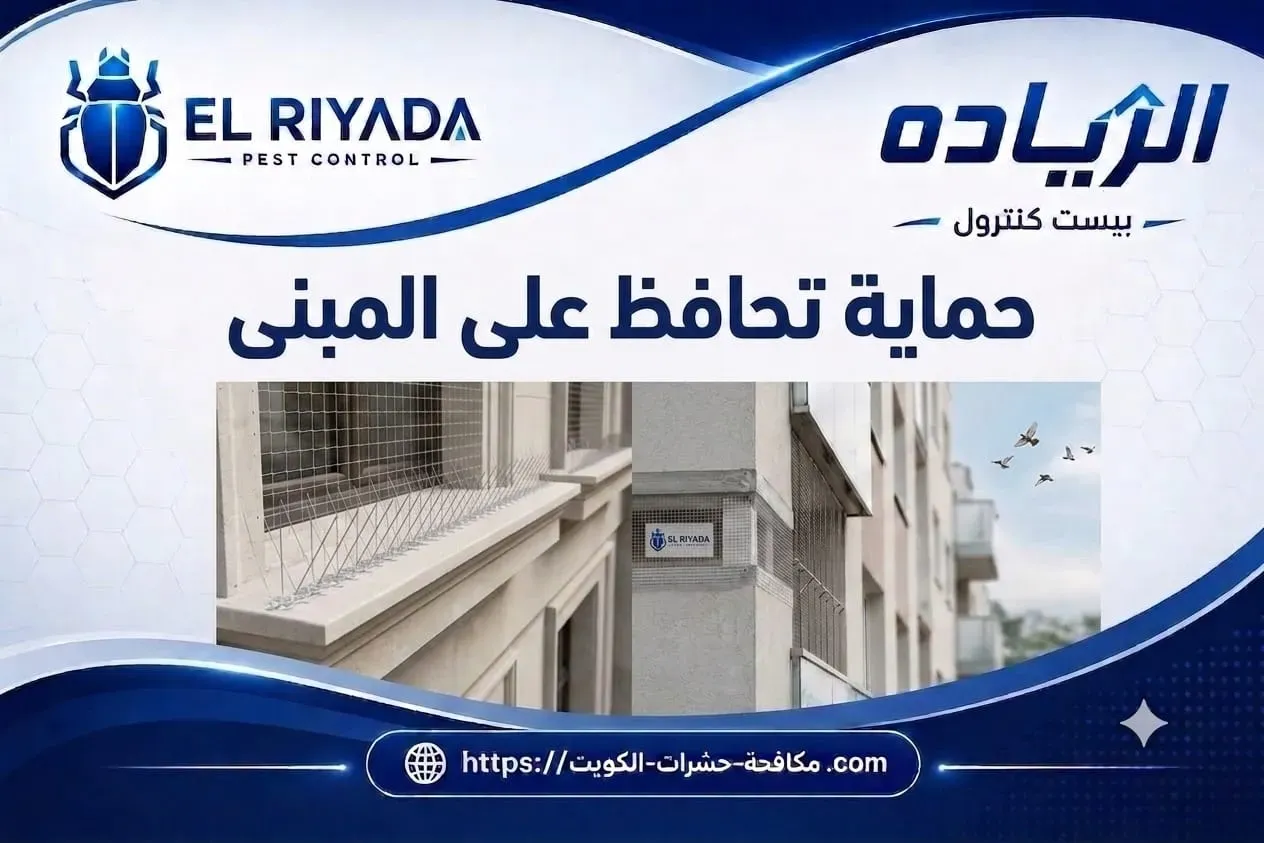
Many homeowners search for the pigeon deterrent wire price per meter before requesting installation, but the cost per meter is not the same for every location.
The price may vary according to the product type, edge width, number of rows required, attachment method, rooftop height, and ease of access to the work area.
It is therefore important to understand what the quoted price per meter includes before comparing offers.
What Factors Affect the Cost?
-
Type of bird-perching deterrent: Bird spike strips and tensioned wire systems differ in their materials and installation methods.
-
Width of the wall or cornice: Wide edges may require more than one row to cover suitable perching areas.
-
Total length: This affects the quantity of materials and amount of work, but it does not determine the cost by itself.
-
Number of corners and projections: Stepped or decorative edges may require additional treatment.
-
Surface material: This affects the choice of attachment method and necessary preparation.
-
Installation height: Elevated edges may require additional access equipment and safety procedures.
-
Condition of the edge: Cleaning or surface preparation may be needed before installation.
-
Building requirements: Approvals and facade restrictions may affect how the work is performed.
-
Maintenance or additional work: The quotation should clarify whether these are included.
Does the Price Per Meter Include Installation?
This should not be assumed.
Some quotations may state the cost of materials only, while others may include installation, preparation, or additional work.
A clear written description of the scope of work should be requested so that prices can be compared fairly.
Are Wide Edges Priced Only by Linear Meter?
Linear meters may be used for some quotations, but the edge's width and the number of rows required can affect material quantities and cost.
Knowing the wall's length alone is therefore insufficient without identifying its width and surface characteristics.
How Can You Avoid Unnecessary Costs?
Begin by identifying the places pigeons actually use and ask why each section has been selected for protection.
Installing deterrents on every edge is not always necessary if the problem is concentrated in specific locations.
How Can You Request a Suitable Price Estimate?
Provide the approximate length of the wall or cornice, its width, location, and height, and explain whether there are corners, decorative features, or access difficulties.
You can contact Al Reyada Pest Control to inquire about the cost of protecting rooftop edges or residential boundary walls in Kuwait.
Pigeon Deterrent Wire Installation for Rooftops in Kuwait: Choosing the Right Service for Your Property
When searching for pigeon deterrent wire installation for rooftops in Kuwait, it is important to consider how the location is inspected, which product is selected, and how safely the work is performed, rather than focusing only on the lowest price per meter.
Working on rooftop edges may require specialized access methods. Installing unsuitable components may also create hazards if they become loose or fall from a height.
Criteria for Evaluating an Installation Service
|
Criterion |
Why It Matters to the Customer |
|
Identifying pigeon perching locations |
Helps protect the areas that need treatment |
|
Measuring edge widths |
Determines product arrangement and number of rows |
|
Selecting a bird-specific system |
Reduces risks associated with improvised sharp wires |
|
Reviewing surface condition |
Helps determine a suitable attachment method |
|
Working safely at height |
Protects workers and people below |
|
Preserving maintenance access |
Prevents interference with rooftop use |
|
Inspecting corners and ends |
Reduces untreated perching points |
|
Clear pricing |
Defines included materials and work |
What Questions Should You Ask Before Agreeing?
Will the width of the wall and cornice be inspected? Edge width affects product selection and arrangement.
What material will be used? The product's specifications and suitability for outdoor conditions should be identified.
How will it be attached? The method must suit the wall or cornice surface without weakening it.
Are any components close to people? Areas used by residents and workers should be reviewed to avoid contact hazards.
How will the edge be accessed? Safe access methods appropriate for the height and building design must be used.
What does the price include? Materials, installation, cleaning if required, and any additional services should be clarified.
Why Contact Al Reyada Pest Control?
Homeowners, villa owners, and apartment building owners in Kuwait can contact Al Reyada Pest Control to inquire about solutions for preventing pigeons from perching on boundary walls and rooftop cornices.
It is helpful to explain the edge's length and location and whether the problem affects a courtyard wall, rooftop perimeter, or exterior cornices. Elevated floors and any access difficulties should also be mentioned.
What Should You Confirm Before Requesting the Service?
-
Choose a product specifically designed to prevent birds from perching rather than using sharp security wires.
-
Identify the edges where the problem repeatedly occurs instead of installing materials unnecessarily.
-
Consider the safety of attachment points and the condition of the surface.
-
Maintain access to rooftop equipment and allow it to be serviced.
-
Clarify the cost, additional work, and warranty conditions if any are actually available.
No company can be described as the best in every situation without independent comparisons and documented results. However, these criteria help customers make decisions suited to their needs.
Conclusion: Pigeon Deterrent Wires Help Protect Rooftop Edges, Boundary Walls, and Cornices
Pigeon deterrent wires for rooftop edges, when specifically designed to prevent birds from perching and installed correctly, can reduce pigeons settling on protected boundary walls, cornices, and ledges, consequently reducing droppings associated with these locations.
The appropriate solution depends on the wall's width, cornice length, facade design, and installation height. Actual perching areas should therefore be identified, and a suitable deterrent selected without obstructing rooftop use or maintenance activities.
Secure attachment is essential, and improvised sharp products should be avoided. Existing nests must also be inspected and handled according to local requirements and humane considerations.
If pigeons repeatedly gather on your home's boundary wall or rooftop cornices in Kuwait, contact Al Reyada Pest Control to inquire about installing suitable bird-perching deterrents for your property.
Frequently Asked Questions About Pigeon Deterrent Wires for Rooftop Edges and Boundary Walls in Kuwait
1. Do Pigeon Deterrent Wires Prevent Birds From Perching on Residential Boundary Walls?
They can reduce or prevent pigeons from settling on protected edges when the product suits the wall's width and is installed correctly. However, they do not prevent birds from using other untreated locations.
2. Can Bird Deterrent Wires Be Installed on Elevated Rooftop Cornices?
Installation at elevated locations can be considered provided that suitable access equipment and protective measures are used and the edge and attachment method are confirmed to be safe.
3. Are Stainless Steel Bird Deterrent Wires Better for Rooftop Edges?
They may be suitable depending on the material grade, product specifications, and outdoor conditions. However, not all stainless steel products offer the same corrosion resistance or suitability.
4. Is the Price of Pigeon Deterrent Wires Calculated Per Linear Meter?
Linear meters may be used in some quotations, but edge width, number of rows, product type, installation height, and attachment method also affect the cost.
5. How Much Does Pigeon Deterrent Wire Installation for Rooftops Cost in Kuwait?
The cost varies according to the length and width of the edges, type of protection, access difficulty, and required equipment. To inquire about the service, call Al Reyada Pest Control