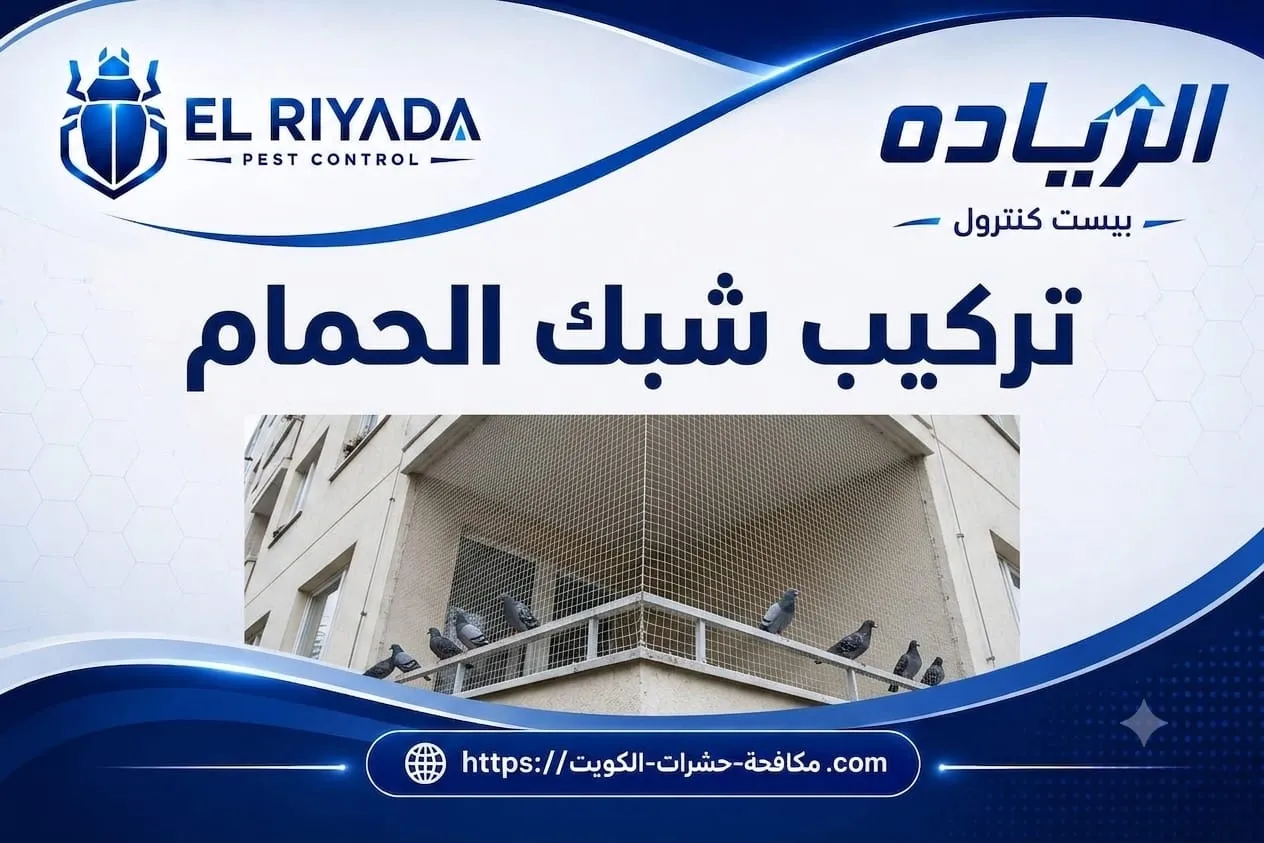
Pigeon netting for outdoor air conditioning units is used to prevent birds from accessing the spaces surrounding AC equipment, especially when pigeons repeatedly nest behind or beneath the unit or inside an equipment room. Effective protection depends on blocking bird entry routes while maintaining the ventilation clearances specified by the air conditioner manufacturer and ensuring that the unit remains accessible for maintenance.
Wrapping netting directly around the outdoor unit or covering its air intake and exhaust openings is not recommended because doing so may interfere with the air conditioner's performance. If you are experiencing pigeon nesting or accumulated droppings around your outdoor AC unit in Kuwait, you can contact Al Reyada Pest Control to inquire about a solution suited to the unit's location and the surrounding space.
Pigeon Netting for Outdoor AC Units: When Does Your Equipment Need Bird Protection?
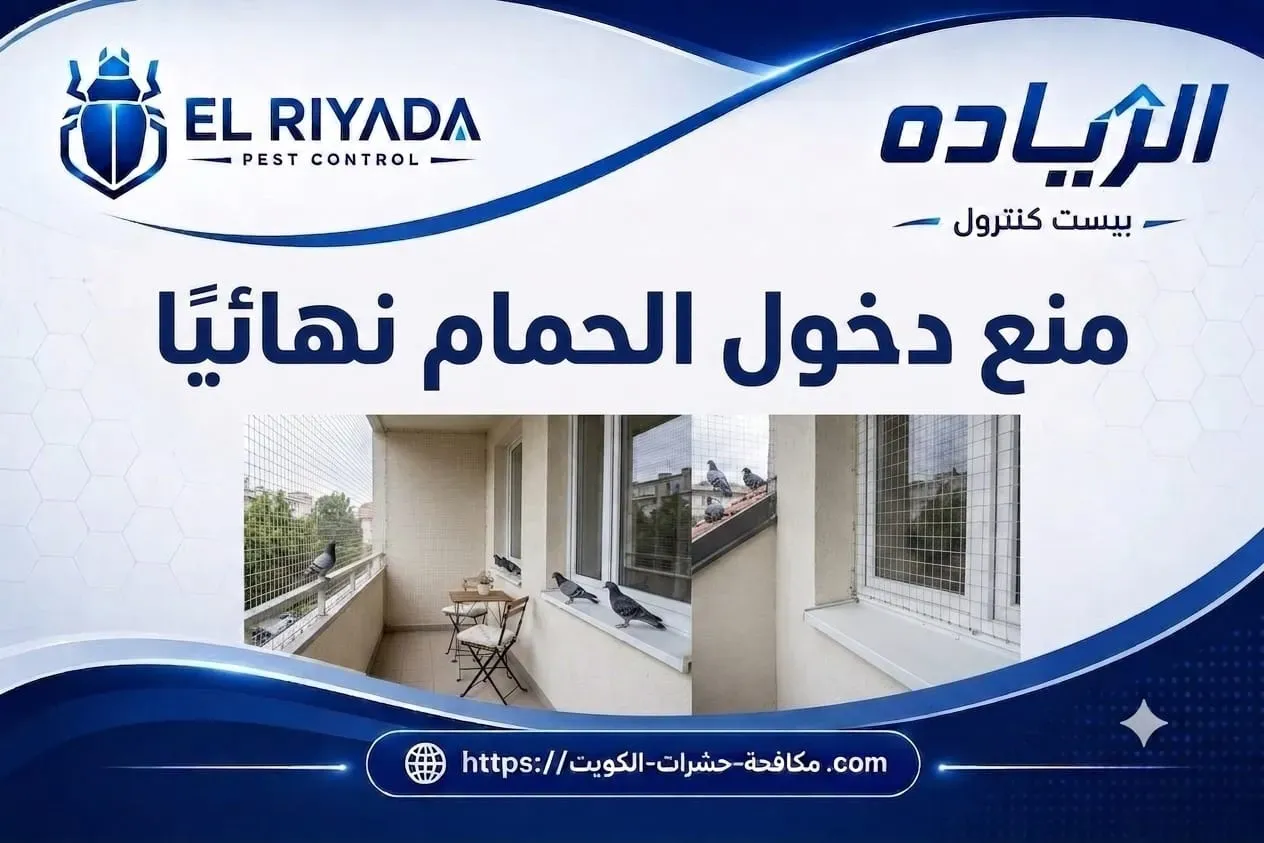
Outdoor air conditioning units are installed in different locations throughout buildings in Kuwait. They may be mounted on exterior brackets, placed inside service balconies, installed in dedicated air conditioning rooms, or positioned on rooftops.
Some of these locations provide pigeons with areas that are relatively sheltered from sunlight and wind, particularly when there are gaps behind the units, spaces beneath mounting brackets, or openings near pipes.
The problem may begin with birds perching near the air conditioner and gradually develop into an accumulation of feathers, nesting materials, and droppings.
Suitable netting is intended to prevent birds from reaching the targeted area, not to enclose the air conditioner itself or restrict its access to air.
Signs That Your AC Installation Area Needs Inspection
-
Pigeons repeatedly perching behind the unit: When pigeons regularly return to the same space, the location may be suitable for resting or nesting. This makes it necessary to assess whether the access route can be closed without affecting the air conditioner.
-
Twigs or nesting materials appearing: An accumulation of sticks and feathers in a sheltered corner may indicate that a nest is being built. The location should be checked for eggs or chicks before any action is taken.
-
Droppings accumulating on mounting brackets: Pigeon droppings may collect on supports, pipes, or surrounding floors, increasing the need for cleaning and inspection.
-
Birds entering an air conditioning equipment room: If the room contains openings through which pigeons can enter, addressing those openings may be more appropriate than installing a separate barrier directly around every unit.
-
Difficulty accessing equipment: Accumulated nesting materials or droppings may make inspection and cleaning less convenient and require suitable coordination with an air conditioning technician.
Do All Outdoor Air Conditioners Need Pigeon Netting?
No.
If there is no problem involving birds entering or nesting around the unit, installing an additional barrier may not be necessary.
Some locations can also be protected by addressing a specific opening or suitable ledge rather than constructing a large netting enclosure around the equipment.
Pigeon Protection Netting for AC Units: Choosing a Barrier That Does Not Restrict Airflow
Pigeon protection netting for air conditioning units must be designed to prevent birds from entering targeted spaces without blocking the ventilation routes required for the air conditioner to operate.
An outdoor unit needs to draw in and discharge air according to its design. Placing an obstruction too close to its openings may reduce heat exchange efficiency or cause hot exhaust air to circulate back toward the unit.
For this reason, choosing netting with relatively large openings and assuming that it will not affect performance is insufficient. The barrier's position and the clearances surrounding the air conditioner must also be evaluated.
What Should Be Reviewed Before Selecting Netting?
Airflow opening locations: The positions of air intake and exhaust openings must be identified because unit designs vary between models.
Required clearances: The manufacturer's instructions concerning ventilation, spacing, and maintenance must be reviewed. A single clearance measurement should not be applied to every air conditioner.
Netting material: A material suitable for outdoor use and resistant to the surrounding conditions should be selected without assuming that all netting products offer the same durability.
Mesh opening size: The openings should prevent the targeted birds from passing through. However, opening size alone does not determine how the barrier affects airflow.
Attachment method: The possibility of securing the barrier to suitable building elements should be evaluated rather than placing loads on the unit casing or refrigerant pipes that were not designed to support them.
Can Netting Be Installed Directly Against the Air Conditioner?
This approach should not be adopted automatically.
Netting positioned close to ventilation openings or the exhaust fan may create unwanted airflow restrictions and make access to components requiring maintenance more difficult.
The barrier's position should be determined according to the unit's design, manufacturer instructions, and an air conditioning technician's assessment when necessary.
What Is the Difference Between Protecting the AC Installation Area and Covering the Unit Itself?
Protecting the installation area means preventing pigeons from reaching the spaces surrounding the unit or entering the equipment room.
Covering the entire air conditioner casing may interfere with ventilation and maintenance. It should therefore not be considered a suitable alternative without a technical design based on the unit's requirements.
Keeping Pigeons Away From AC Units: Why Do Birds Return to the Same Location?
Keeping pigeons away from air conditioning units begins with understanding why the birds are attracted to the location.
Some units are installed in corners that provide perching surfaces or sheltered spaces behind the equipment. Other units are positioned near ledges and rooftops that allow pigeons to move easily into surrounding gaps.
Birds may return after an area has been cleaned if suitable perching locations and entry routes remain accessible.
What Makes an AC Installation Area Attractive to Pigeons?
-
A gap behind the unit: This may provide a location relatively sheltered from outdoor conditions.
-
A horizontal mounting bracket: Pigeons may use it as a perching surface, particularly when it is away from regular human activity.
-
Nearby ledges and rooftops: These allow birds to move between perching locations and reach the area surrounding the air conditioner.
-
Previously used nesting materials: Birds may continue attempting to use a location if it remains suitable for nesting.
-
Limited human access: Some AC installation areas are visited only during maintenance, reducing the disturbances experienced by birds.
Does Cleaning Alone Prevent Pigeons From Returning?
It does not guarantee that they will stay away.
Cleaning removes droppings and old nesting materials, but it does not prevent birds from accessing the location again if openings and ledges remain available.
An appropriate access prevention method should therefore be considered after nests have been handled in accordance with local requirements and humane considerations.
When Is Netting Better Than Bird Spikes or Wires?
If the problem involves pigeons entering an enclosed space or equipment room, netting may be more suitable for creating a barrier across the entry route.
If pigeons are perching on a particular ledge outside the airflow path, a suitable perching deterrent for that ledge may be worth considering.
Bird spikes or wires should not be installed on the air conditioner casing or moving components without assessing the location's suitability and attachment safety.
Bird Netting for AC Equipment Rooms: Protecting Multiple Units in One Location
Bird netting for air conditioning equipment rooms may be suitable when several outdoor units are installed in a shared service area containing openings that allow pigeons to enter.
In this situation, studying the birds' entry points into the room may be preferable to installing separate netting around each individual unit.
However, an air conditioning equipment room differs from an ordinary storage room because its openings may be part of the ventilation system required for the equipment to operate.
What Should Be Inspected Inside an AC Equipment Room?
Bird entry openings: Locations through which pigeons can pass should be identified, while distinguishing utility openings from ventilation openings that must remain functional.
Unit positions: Air discharge directions and intake paths must be reviewed to avoid installing barriers that affect operation.
Doors and maintenance openings: Access to the equipment, including the ability to remove or replace units when necessary, must be maintained.
Areas where droppings accumulate: Floors, mounting brackets, and corners that may contain nests or droppings should be inspected.
Pipes and utility connections: Barriers must not be attached to components that were not designed to carry additional loads.
Can All Openings in an AC Equipment Room Be Covered With Netting?
This decision cannot be made without understanding the function of those openings.
Some openings are essential for airflow, and installing unsuitable netting or reducing the effective ventilation area may create operational problems.
The room's design, equipment requirements, and the personnel responsible for air conditioning should be consulted before any enclosure is installed.
What Is the Advantage of Protecting the Entire Room Instead of Each Unit?
Protecting the main entry points may prevent pigeons from reaching several air conditioning units at the same time.
However, the effectiveness of this approach depends on the room's design and whether a barrier can be installed without interfering with ventilation, safety requirements, or maintenance access.
Protecting AC Compressors From Pigeons: The Actual Risks of Nesting and Droppings
Some homeowners search for ways of protecting AC compressors from pigeons after noticing nests or droppings around an outdoor unit.
It is important to clarify that the compressor is usually located inside the unit casing. The presence of pigeons nearby does not necessarily mean that the compressor is damaged or that a mechanical fault has occurred.
However, nesting materials or droppings accumulating in unsuitable locations may obstruct access to equipment or affect certain components if the materials reach them, making an inspection appropriate.
What Problems Deserve Attention?
-
Nesting materials near airflow openings: These may become problematic if they accumulate in a way that obstructs air intake or exhaust routes. They should be handled using appropriate procedures.
-
Droppings on metal surfaces: Cleaning and inspection of affected components may be necessary, particularly when accumulation has continued for a long period.
-
Feathers and twigs near moving parts: Foreign materials should be kept away from fans and other moving components. A qualified technician should isolate the equipment from power when an internal inspection is required.
-
Droppings around electrical connections: If materials or moisture appear near electrical components, a qualified air conditioning technician should be consulted. The area should not be washed directly with water.
-
Maintenance difficulties: Nests behind the unit may limit a technician's ability to reach inspection and cleaning points.
Can Pigeons Cause an Air Conditioner to Cool Less Effectively?
This cannot be established simply by observing birds around the unit.
Reduced cooling performance may have many causes, including dirty air conditioning components or other operational problems, and requires technical diagnosis.
If nesting materials are blocking airflow routes, they may be a contributing factor worth addressing. However, they should not be considered the confirmed cause without an inspection.
Does Installing Netting Repair Air Conditioner Faults?
No.
Netting is a method of preventing birds from accessing a protected location. It does not replace fault diagnosis, internal component cleaning, or air conditioning repairs.
A location may require two separate services: addressing the pigeon problem and having the air conditioner inspected by a qualified technician.
Preventing Pigeons From Nesting Behind AC Units: What If a Nest Already Exists?
Preventing pigeons from nesting behind an air conditioner requires addressing the existing situation before installing any barrier.
If pigeons have already started building a nest, the location must be checked for eggs or chicks. The space must not be enclosed in a way that traps birds or separates them from their young.
The outdoor unit should not be moved or dismantled to reach a nest without appropriate involvement from an air conditioning technician.
Situation One: Twigs Are Accumulating but There Is No Active Nest
Removing nesting materials may be considered after confirming that there are no birds, eggs, or chicks present. A suitable access prevention method can then be assessed.
Safety requirements and local regulations must be considered when handling birds and their nests.
Situation Two: A Nest Contains Eggs
Eggs should not be removed, and the nest entrance should not be blocked indiscriminately.
Relevant local rules must be checked. Postponing netting installation or consulting a suitable specialist about humane handling may be appropriate.
Situation Three: Chicks Are Present Inside the Nest
Chicks must not be trapped or separated from adult birds by installing netting.
Appropriate steps should be determined according to the nest's condition and local requirements, while avoiding interventions that endanger birds or people.
Situation Four: An Old, Empty Nest Is Found
After confirming that the nest is empty, removing nesting materials and cleaning the area can be considered before suitable protection is installed.
However, old or substantial accumulations of droppings must not be handled using cleaning methods that disturb dust or spread contaminants.
Why Should Hidden Areas Be Inspected?
Some nests may be located behind the unit or beneath mounting brackets and may not be visible from the usual viewing angle.
No opening should be sealed until it has been confirmed that no birds remain inside.
Installing Netting Around Outdoor AC Units: Steps That Preserve Maintenance Access
Installing netting around an outdoor AC unit depends on the location's design, bird entry routes, and the air conditioner's ventilation requirements. It does not necessarily mean constructing a mesh enclosure directly against the equipment.
The objective is to protect the targeted space while maintaining the clearances required for operation and access during inspection and repair.
Step One: Inspect the Location
The unit's dimensions, mounting position, surrounding spaces, and the directions from which pigeons enter are reviewed.
Existing nests or old droppings that may need to be addressed before installation are also checked.
Step Two: Review Ventilation Requirements
Air intake and exhaust locations and the clearance requirements for the specific air conditioner model are identified.
It may be necessary to consult the manufacturer's manual or an air conditioning technician before choosing the barrier's position.
Step Three: Determine the Netting Coverage
Closing a gap behind the unit or a side opening may be sufficient. Some air conditioning equipment rooms, however, may require protection across larger entry points.
The netting coverage should not be expanded unnecessarily if doing so could affect operation or maintenance.
Step Four: Select the Material and Attachment Method
A material suitable for outdoor use and an attachment method that does not compromise the safety of mounting brackets, pipes, or unit components are selected.
Building requirements must also be reviewed before drilling or attaching anything to the facade.
Step Five: Carry Out the Installation
The netting is secured in the designated locations, closing openings through which pigeons could pass without obstructing airflow routes.
Exterior work on higher floors must be performed using appropriate access equipment and protective measures.
Step Six: Inspect the Edges and Maintenance Access
Junctions and side openings are reviewed, and it is confirmed that an air conditioning technician will still be able to reach the unit when necessary.
Step Seven: Review the Area After Installation
The area is checked to ensure that no birds have been trapped, the barrier is secure, and the installation does not conflict with the air conditioner's operating requirements.
To inquire about installing netting around an outdoor AC unit in Kuwait, contact Al Reyada Pest Control and explain the unit's location and the nature of the pigeon problem.
Cleaning Pigeon Droppings Around AC Units: Handling Waste and Feathers Safely
Cleaning pigeon droppings around air conditioning units is important when droppings, feathers, and twigs accumulate on mounting brackets, floors, or surfaces near the equipment.
Dry droppings may release dust when disturbed, so cleaning methods that disperse particles into the air or expose workers to contamination should be avoided.
Electrical components and sensitive equipment must also be considered because they should not be washed indiscriminately.
What Should Be Assessed Before Cleaning?
Amount of waste: Precautions for limited traces of droppings differ from those required for heavy or old accumulations.
Location of contamination: It is important to determine whether droppings are on the balcony floor, mounting brackets, near airflow openings, or close to electrical components.
Accessibility: The area behind an air conditioner may be narrow or elevated, requiring suitable equipment rather than attempting to reach it unsafely.
Condition of the unit: If materials have entered the equipment, a qualified air conditioning technician should be consulted.
What Mistakes Should Be Avoided?
-
Aggressive dry sweeping: This may disturb dust from accumulated droppings, particularly in areas with limited ventilation.
-
Using compressed air: This may disperse feathers and particles instead of collecting them appropriately.
-
Spraying water onto electrical components: This may create hazards or damage, so the unit should not be washed indiscriminately.
-
Mixing cleaning products: Combining incompatible cleaning chemicals may cause dangerous reactions.
-
Moving the air conditioner without a specialist: This may affect mounting brackets, connections, or refrigerant pipes.
Is Cleaning Enough to Prevent the Problem From Returning?
No.
Cleaning removes existing waste, but it does not prevent pigeons from returning if entry routes or perching locations remain accessible.
For this reason, suitable protection should be considered after the area has been addressed.
Does Every Situation Require a Specialized Cleaning Company?
Not necessarily. However, substantial accumulations, elevated locations, or areas close to sensitive components may require professional assistance and additional precautions.
Pigeon Netting Installation for AC Units in Kuwait: Choosing the Right Service Provider

When searching for pigeon netting installation for AC units in Kuwait, attention should be given to the service provider's ability to identify pigeon entry routes and select a protection method that does not interfere with air conditioner operation.
An unsuitable installation may prevent birds from entering but create another problem if it blocks ventilation openings or makes maintenance difficult.
Criteria for Comparing Installation Quotations
|
Criterion |
Why It Matters |
|
Inspection of the unit's location |
Identifies why pigeons gather there |
|
Review of airflow routes |
Helps prevent ventilation obstructions |
|
Identification of entry points |
Avoids installing unnecessary netting |
|
Selection of suitable material |
Supports outdoor suitability |
|
Attachment method |
Helps preserve the safety of the location and equipment |
|
Maintenance accessibility |
Allows future access to the unit |
|
Handling existing nests |
Prevents birds from being trapped or harmed |
|
Clear pricing |
Defines included and excluded work |
What Questions Should You Ask Before Agreeing?
Will the netting be attached to the building or the AC unit itself? The attachment method and its suitability for the location should be clarified.
How will ventilation be maintained? The unit's requirements should be reviewed rather than relying on a general statement that the netting allows air to pass through.
Can the air conditioner still be serviced after installation? Required access areas must remain available according to the equipment's needs.
Are there any active nests? These must be inspected before any opening is sealed.
Does the price include cleaning? This should be clearly specified instead of assuming that all work is included.
Why Contact Al Reyada Pest Control?
Homeowners and building owners in Kuwait can contact Al Reyada Pest Control to inquire about solutions for preventing pigeons from accessing outdoor air conditioning installations.
It is helpful to explain whether the unit is located on a balcony, inside an equipment room, or on the building facade, along with the locations of nests and droppings and any difficulties reaching the area.
Any quotation should be evaluated according to the scope of work, netting specifications, installation safety, and cost, without relying on unsupported claims about guaranteed results or unspecified product characteristics.
If pigeons are nesting behind your air conditioner or entering your AC equipment room, call Al Reyada Pest Control at 65594848 to inquire about suitable protection.
Pigeon Netting Prices for AC Units: What Determines Installation Costs?
The cost of pigeon netting for air conditioning units in Kuwait depends on the required protection area, unit location, attachment method, material type, and difficulty of accessing the installation site.
Protecting a small opening behind an air conditioner located on a balcony differs from enclosing entry points in a room containing several units. Similarly, working on an elevated facade has different requirements from working in an easily accessible location.
Factors Affecting the Price
-
Coverage area: This influences the amount of netting required and how it must be arranged across the location.
-
Number of units: Several air conditioners may require shared protection or separate solutions depending on the layout.
-
Installation location: Requirements differ between balconies, rooftops, air conditioning equipment rooms, and exterior facades.
-
Floor height: Accessing elevated locations may require additional equipment and safety procedures.
-
Netting material: Materials vary in their specifications and suitability for outdoor use.
-
Attachment points: The nature of available surfaces influences the installation method and required equipment.
-
Ventilation and maintenance requirements: The barrier design may require special arrangements to avoid interfering with unit operation.
-
Existing nests or droppings: The area may require separate treatment or cleaning before installation.
-
Additional work: The quotation should clarify whether special preparations, cleaning, or other modifications are included.
Is It Better to Protect Each Air Conditioner Separately or Enclose the Entire Equipment Room?
The decision depends on the location's design.
If the units are inside a shared room and bird entry can be prevented without obstructing ventilation, a shared protection solution may be appropriate.
However, if units are distributed across different facades, each location may require a separate assessment.
How Should You Compare Prices?
Compare the coverage area, material type, attachment method, access requirements, and whether cleaning is included.
Ask about maintenance or warranty conditions if they are actually available, without assuming that a particular warranty period applies before reviewing the agreement.
How Can You Obtain a Suitable Quotation?
Explain the number of air conditioning units, their locations, and the nature of the problem. Specify whether pigeons perch on top of the unit, nest behind it, or enter the equipment room.
It is also preferable to mention the floor on which the unit is located and any expected access difficulties.
To inquire about pigeon netting installation prices for outdoor AC units in Kuwait, contact Al Reyada Pest Control to discuss the location and required service scope.
Why Choose Al Reyada Pest Control to Discuss Pigeon Protection for Your Air Conditioners?
Protecting outdoor air conditioning units from pigeons requires a balance between preventing bird access and maintaining ventilation and serviceability. Choosing the appropriate solution should therefore begin by identifying the actual problem.
You can contact Al Reyada Pest Control to inquire about pigeon netting solutions for outdoor air conditioning units in Kuwait and discuss the characteristics of your location.
What Should You Confirm Before Requesting the Service?
-
Identify where pigeons are active: Are they perching on mounting brackets, nesting behind the unit, or entering an air conditioning equipment room?
-
Consider the air conditioner's design: Airflow openings must not be blocked, and the clearances required for operation must be maintained.
-
Choose suitable protection: Closing a specific opening may be sufficient instead of constructing a large barrier.
-
Maintain access for servicing: Required components must remain accessible.
-
Handle nests appropriately: The area must not be enclosed while birds or chicks remain inside.
-
Ensure safe attachment: The location's height and the nature of mounting brackets and surrounding surfaces must be considered.
-
Clarify the cost: Materials, included work, and any additional services should be specified.
No company can be described as the best for every location without independent comparisons and documented results. However, these criteria help property owners choose a suitable solution.
Conclusion: Pigeon Netting Protects Outdoor AC Units Without Blocking Ventilation
Pigeon netting for outdoor air conditioning units helps prevent pigeons from accessing protected spaces around AC equipment and reduces opportunities for nesting and the accumulation of droppings, provided that the barrier suits the location's design and does not obstruct air intake or exhaust.
The appropriate solution differs between an air conditioner installed on a balcony, a unit mounted on a building facade, and a room containing several air conditioners. Bird entry routes must therefore be identified, and ventilation and maintenance requirements reviewed before installation.
Existing nests must also be handled appropriately, birds must not be trapped behind netting, and safe working practices must be followed at elevated locations.
If pigeons are nesting behind your air conditioner or feathers and droppings are accumulating around the outdoor unit, contact Al Reyada Pest Control to inquire about pigeon netting installation for AC units in Kuwait.
Frequently Asked Questions About Pigeon Netting for Outdoor AC Units in Kuwait
1. Can Netting Be Installed Around an Outdoor AC Unit Without Affecting Cooling Performance?
This may be possible if the barrier is designed to maintain the airflow routes and clearances required by the manufacturer's instructions. Netting should not be wrapped directly against ventilation openings without a technical assessment.
2. Does Pigeon Netting Prevent Birds From Nesting Behind an Outdoor AC Unit?
It can prevent pigeons from reaching the protected space if entry routes are properly closed, provided that no birds, eggs, or chicks remain inside the area before enclosure.
3. Can Netting Be Installed in a Room Containing Several Air Conditioning Units?
This may be suitable if bird entry points can be protected without obstructing the ventilation required by the equipment or restricting maintenance access.
4. Should Pigeon Droppings Be Cleaned Before Netting Is Installed?
Existing droppings and nests should be assessed before installation. Appropriate cleaning methods must be followed without disturbing dust or washing electrical components indiscriminately.
5. How Much Does Pigeon Netting Installation for Outdoor AC Units Cost in Kuwait?
The cost varies according to the number of units, coverage area, netting material, installation height, and attachment method. To inquire about the service, call Al Reyada Pest Control