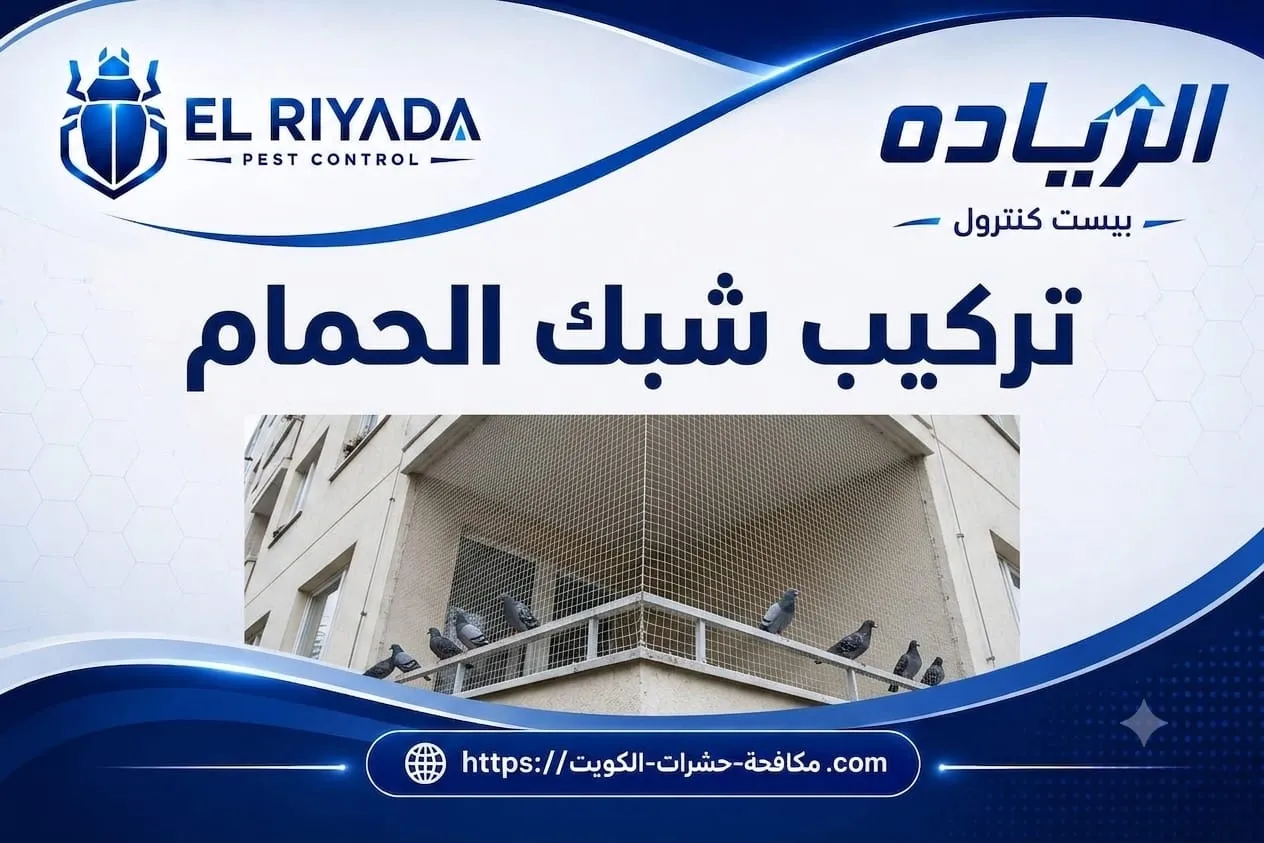
Installing pigeon netting for villas and residential roofs in Kuwait is different from systems designed to prevent birds from perching on edges because the primary function of netting is to create a physical barrier between pigeons and the area being protected. Its value becomes particularly clear in light wells, balconies, open voids, and areas that pigeons enter rather than simply perch above. Successful netting does not depend only on covering a large area. It depends on fully closing the perimeter, selecting appropriate fixing points, and avoiding gaps around corners, pipes, and air-conditioning equipment. This article focuses on how to design an effective pigeon netting system for villas and how to distinguish between a properly enclosed installation and one that appears closed but still leaves a small route for pigeons to return.
Pigeon Netting for Villas in Kuwait
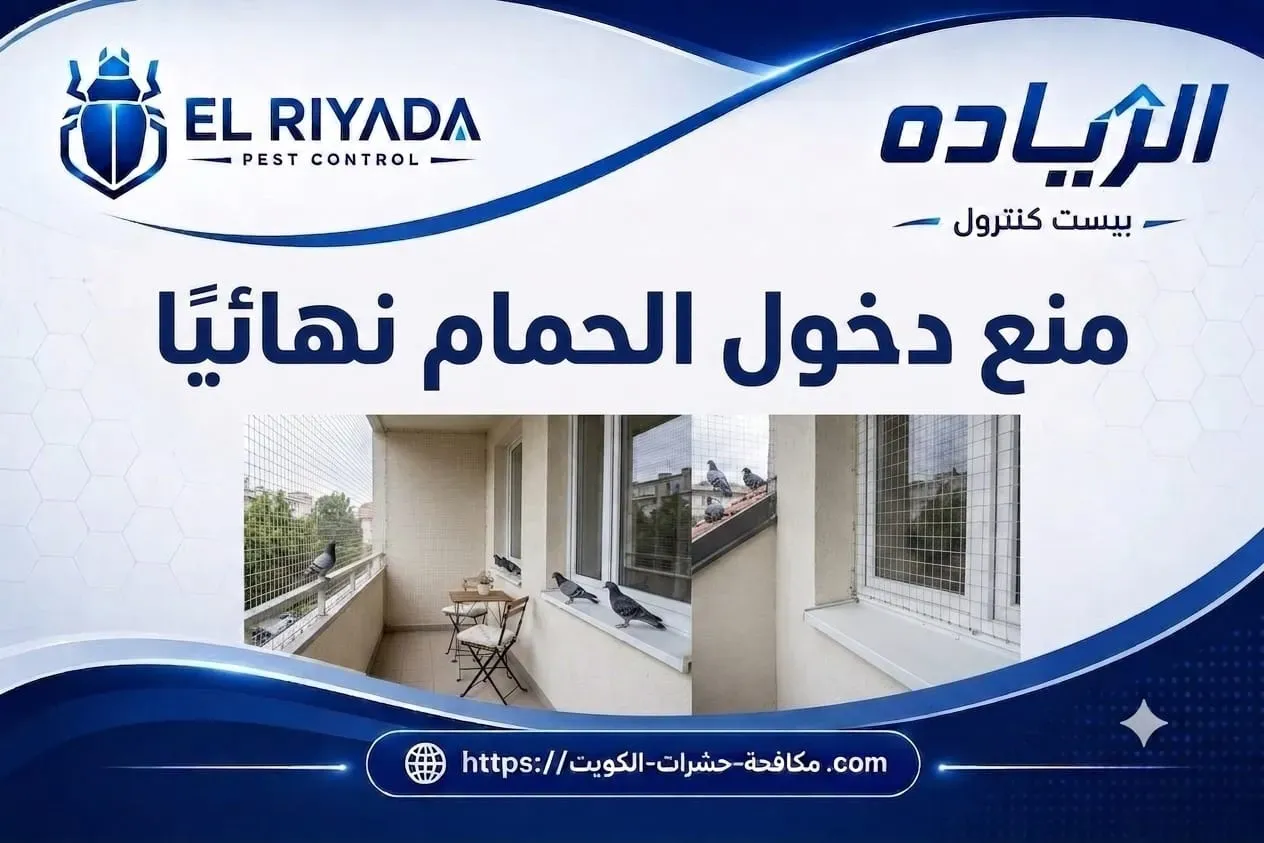
When considering pigeon netting for villas in Kuwait, the first step is to identify the nature of the problem because netting is not simply a larger version of systems used to prevent birds from perching on edges. It is particularly suitable when there is a space pigeons can physically enter, such as a light well, architectural recess, balcony, or semi-open service area. In these situations, the objective becomes preventing access to the entire space rather than trying to treat every individual point where a pigeon might perch once it gets inside.
From practical assessment of these types of locations, a villa may appear to have a large-scale pigeon problem even though the actual issue is connected to a single opening. Pigeons may enter through the upper side of a light well and then settle on pipes, air-conditioning equipment, or other structures inside it. If only these internal perching locations are treated, pigeons may simply move from one point to another while their original entry route remains open. Properly designed netting addresses the boundaries of the space and prevents entry at the source when this approach is appropriate for the property's design.
However, the word "netting" alone does not indicate service quality. The dimensions and shape of the opening, surrounding surface materials, fixing points, and future maintenance access should all be inspected. Pipes, cables, and structural projections that cross the netting boundary also require careful attention because the area around them can become an entry gap if the net is cut around these features inaccurately.
Price should not be reduced to the number of square meters either. An accessible rectangular area is very different to install from a space containing multiple corners, pipes, irregular surfaces, and difficult working heights even when their total measurements are similar.
• Determining whether the problem involves pigeons entering an enclosed space or simply perching on an exposed edge prevents netting from being selected for an area that does not require a complete barrier and connects the installation decision directly to actual pigeon behavior
• Measuring the perimeter of the protected area rather than considering its surface area alone reveals corners projections and pipes that require precise treatment so that a small opening around one feature does not become an entry point after the main net has been installed
• Inspecting fixing points before installation helps determine whether surrounding surfaces can support the appropriate system without relying on weak attachments or causing unnecessary damage to the villa's existing finishes
• Comparing pigeon netting quotations according to net type perimeter fixing method access difficulty and treatment of openings is more accurate than selecting a contractor according to the price per square meter alone
Balcony Protection Netting
Installing balcony protection netting requires a different design approach from netting used in light wells or service voids because a balcony is an actively used part of the home. It may contain doors, windows, outdoor air-conditioning units, and areas that require regular cleaning. The objective is not simply to make the balcony look as enclosed as possible. It is to create a barrier that prevents pigeons from entering while preserving normal use, ventilation, and visibility as much as the design allows.
One common planning mistake is to measure the width and height of the balcony and assume that the solution is a single rectangular section of netting. The actual structure can be more complicated. Railings, columns, projections, and side openings may allow pigeons to enter even when the main front opening has been closed. A proper design therefore begins by examining the entire boundary of the space and determining where a bird could bypass the barrier rather than focusing only on the most visually obvious opening.
Future access also needs to be considered. If an outdoor air-conditioning unit or another service point is located inside the balcony, the netting should not make every technician visit unnecessarily difficult. The design may require an organized access solution that allows servicing without creating a permanent opening pigeons can exploit.
Extra care is required when birds are already present inside the area. The net should not simply be closed without checking that the balcony is clear because the objective is to prevent entry rather than trap a bird inside. Applicable local requirements should also be considered when existing nests or young birds are involved.
• Inspecting the front sides and upper section of the balcony as one connected boundary prevents the installation from concentrating on the largest opening while overlooking a smaller side gap that pigeons could use to enter
• Designing the netting around door and window movement and air-conditioning access preserves the balcony's daily function and prevents the protection system from becoming an obstacle for residents or maintenance technicians
• Confirming that the balcony is free of birds before completing the enclosure is an essential step that allows the system to perform its preventive function without trapping a pigeon inside the protected space
• Evaluating balcony netting according to perimeter closure connection points and fixing quality is more useful than judging the middle section of the net because most weaknesses occur around boundaries rather than in the center of the material
Bird Netting for Light Wells
Using bird netting for light wells is one of the applications where the difference between simply hanging a piece of netting and creating a complete physical barrier becomes especially clear. A light well is typically a vertical space that may contain pipes, air-conditioning equipment, service windows, and architectural projections, while some areas can also be difficult to access. Once pigeons enter, they may find several different levels for perching or nesting, making it less practical to chase every internal resting point with a separate solution when the entry route itself can be treated appropriately.
The first step is determining the most suitable level for the enclosure. The net should not automatically be installed at the first position that is convenient for the installer to reach. The shape of the light well, ventilation requirements, equipment access, drainage points, and windows that may need to open should all be considered. Selecting the wrong level can obstruct an important service area or leave a small space above the net where pigeons can continue to perch and create contamination.
The perimeter presents another challenge. Pipes may run close to a wall or cross the proposed netting area, creating irregular openings around them. These details require customized treatment because pigeons do not necessarily need an extremely large opening to attempt to regain access to a location they have previously used. Building services should never be moved, compressed, or improperly altered simply to make net installation easier.
At elevated locations, safe access is also part of installation quality. Difficult access should not result in rushed fixing at remote corners because a single poorly enclosed point can weaken the entire concept of the barrier.
• Selecting the netting level inside the light well after evaluating ventilation windows and equipment prevents pigeon protection from interfering with the essential building functions that the light well was originally designed to support
• Carefully treating pipes cables and structural projections where they meet the netting boundary prevents irregular gaps from becoming entry routes even when the majority of the light well appears completely enclosed
• Inspecting the area above the proposed netting level helps prevent the installation from unintentionally creating a new space where pigeons can perch or nest while the homeowner believes the entire light well has been protected
• Treating distant corners and difficult access points as essential parts of the installation scope prevents the enclosure from being compromised simply because a small section of the light well is harder to reach
Installing Pigeon Netting on Roofs
When installing pigeon netting on roofs, the objective should not be to cover the entire roof simply because pigeons are present above the property. Netting performs its clearest function when it is used to enclose a specific space or area with identifiable boundaries. A roof may contain, for example, a service area enclosed on three sides while one side or an upper section remains open and allows pigeons to enter. In this situation, creating a carefully designed net barrier can be more practical than stretching netting randomly across the entire roof.
Before installation begins, it is important to determine what will remain inside the protected area and what should remain outside it. Water tanks, air-conditioning equipment, drainage outlets, and walkways used for cleaning require future access. The netting should therefore not prevent technicians from reaching them or make every maintenance visit dependent on cutting part of the net. Good design is demonstrated when the required enclosure is achieved while the roof continues to function normally.
The shape of the space should also be examined in three dimensions rather than measuring only its length and width. There may be a side opening beneath a projection or a gap between a wall and a pipe that is not represented in the basic measurements. These details distinguish a net that covers most of an area from a system that actually prevents entry.
From a cost perspective, installation difficulty can increase because of height, multiple corners, or the need to work around service openings even when the total netting area is relatively small. Comparing quotations is therefore more meaningful when the exact enclosure scope is clearly defined.
• Identifying the specific roof area that requires enclosure before ordering netting prevents the service from becoming an unnecessarily large installation that adds little protection to the locations pigeons actually enter
• Keeping access routes to water tanks air-conditioning equipment and drainage outlets within the installation plan allows the system to remain compatible with property maintenance instead of becoming an obstacle that needs to be repeatedly dismantled
• Inspecting side and lower gaps surrounding the proposed netting area reveals entry routes that may not be visible when viewing the space from above and prevents the installation from closing only the most obvious opening
• Determining the cost of roof netting according to barrier area perimeter shape number of fixing points and access difficulty provides a more accurate assessment than using surface area alone as the basis for price
Protecting Villas With Bird Netting
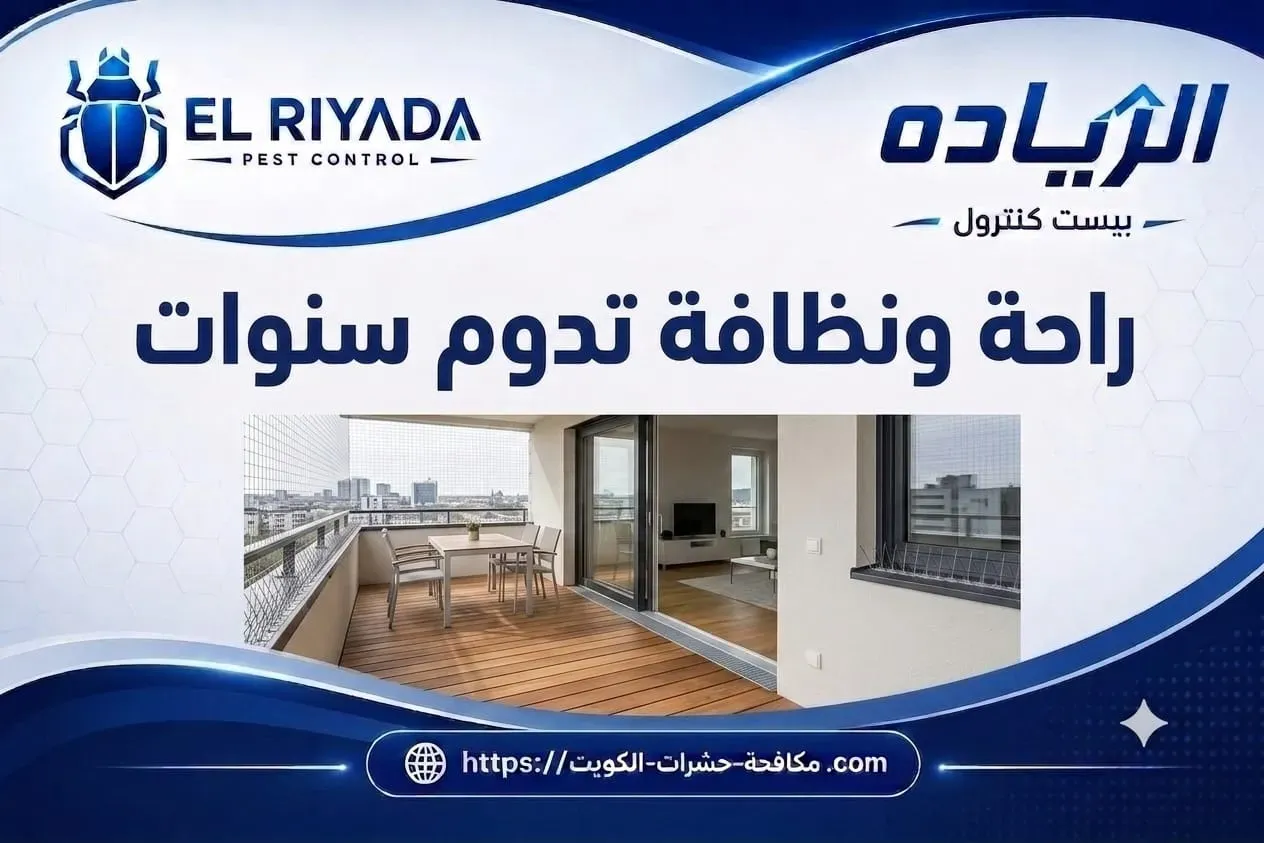
Protecting villas with bird netting means identifying the areas that genuinely require physical exclusion rather than turning every exterior section of the property into a net-covered surface. A villa may contain balconies, light wells, service openings, and spaces beneath architectural features, but pigeon activity will not necessarily be equal in all of them. A well-designed plan therefore begins by identifying where pigeons are actually entering and then prioritizing those areas according to the level of activity.
It is also important to distinguish between evidence of pigeon activity and the actual source of the problem. Droppings beneath a particular area do not always mean that pigeons are entering the space directly in front of them. The birds may instead be perching on a projection above. If netting is installed across an area that is unrelated to the real entry route, the problem can continue even when the installation itself is technically secure. Accurate assessment prevents unnecessary expense and reduces the risk of selecting the wrong system.
In larger villas, protection can be divided into independent zones. A light well may require complete netting while a balcony may have no meaningful pigeon activity at all. Another location may require a different approach because pigeons are only perching on an exposed edge rather than entering an enclosed space. This zoning approach reduces unnecessary overlap between deterrent methods and gives each solution a clear purpose.
The appearance of the property should also be considered from the planning stage by selecting the position of the barrier and organizing its boundaries to suit the building design as much as reasonably possible without compromising the integrity of the enclosure.
• Dividing the villa into zones according to how pigeons use each space helps direct netting toward areas that genuinely require entry prevention instead of installing it wherever bird contamination happens to be visible
• Confirming that the source of droppings is actually inside the space being enclosed prevents a perfectly installed net from being placed in an area that is not responsible for the problem while pigeons continue using a higher landing point
• Selecting an independent protection system for each light well balcony or service opening makes future adjustments easier and avoids creating one complicated netting installation across unrelated sections of the property
• Considering façade lines and fixing locations during planning can reduce the visual impact of the netting while maintaining the primary objective of preventing pigeons from finding an easy route around the barrier
Netting to Prevent Pigeon Entry
The phrase netting to prevent pigeon entry describes the primary function of this system directly. The net acts as a physical barrier between the bird and the protected space. Its effectiveness should therefore be assessed according to how completely it closes potential entry routes rather than according to the density of the net or the amount of material installed. Excellent netting across the center of an opening will not solve the problem if a gap remains at one side or a connection point has not been properly closed.
Before enclosure, it is useful to observe how pigeons enter and leave the space. A large opening may be visually obvious, yet birds may consistently use one particular side because they can land close to it more easily. Understanding this route helps installers pay closer attention to that section and can also reveal alternative entrances that should be included within the scope of work.
Preventing entry should also be distinguished from dealing with activity that is already present. If birds or nests are inside the space, installing the net directly over them is not an appropriate approach. The situation should first be assessed and the area confirmed clear before the enclosure is completed, with existing nests or young birds handled responsibly and in accordance with applicable requirements.
After installation, a visual inspection of the entire perimeter is particularly important around wall connections, pipes, and corners. These areas deserve more attention than the center of the net because they are where weaknesses in the enclosure are most likely to appear.
• Tracing the pigeons' entry route before installing netting identifies both primary and alternative access points and prevents one obvious opening from being closed while another route still allows birds to reach the same protected space
• Confirming that the area is clear before completing the barrier prevents birds from becoming trapped inside and allows the netting to perform its preventive function from the moment installation is completed
• Inspecting where the net meets walls corners and pipes after installation helps identify gaps that may be small compared with the overall barrier but can still significantly affect the integrity of the enclosure
• Measuring success by whether pigeons stop entering the targeted space is more accurate than judging the service by the amount of netting used because the purpose of the system is to complete the barrier rather than maximize material coverage
Closing Villa Openings With Netting
Closing villa openings with netting requires more precision than simply measuring an opening and attaching a piece of netting across it because many residential openings are neither rectangular nor completely uniform. Pipes or cables may pass through them, and their boundaries may meet stone cladding, metal, or other surfaces that require different fixing methods. Installation quality is therefore often more visible in the way the perimeter and surrounding details are handled than in the center of the net itself.
One mistake that can reduce the effectiveness of the system is cutting the net around a pipe and leaving excessive space simply to make installation easier. This space may look insignificant when viewed from ground level, yet it can become a weak point in the barrier. At the same time, the net should not be compressed or fixed in a way that affects the pipe, cable, or future maintenance access. The objective is to treat the area accurately according to every service component that passes through the protected boundary.
The function of an opening should also be identified before it is enclosed. Some openings are connected to ventilation, equipment access, or other building services and should not be covered in a way that prevents them from performing their intended purpose. The goal is to prevent pigeon entry while preserving the necessary functions of the home.
The difference between two quotations with similar prices may become clear when one explains how irregular openings and net connection points will be treated while the other mentions only the total surface area.
• Identifying pipes cables and other components that cross the opening boundary before installation allows an appropriate treatment to be prepared for each point instead of discovering these details during the work and leaving gaps because of rushed solutions
• Determining the purpose of every opening before covering it prevents bird netting from interfering with ventilation or access to building services and keeps the protection compatible with the villa's original functional design
• Checking the distance between the net and every component that penetrates the barrier helps create a secure enclosure without applying unnecessary pressure to pipes or turning the system into an obstacle during future maintenance
• Comparing quotations for closing villa openings according to irregular details connection points and fixing methods reveals the actual scope and quality of the proposed work more clearly than comparing the total netting area alone
Balcony Pigeon Protection Netting
Balcony pigeon protection netting serves a clear purpose when pigeons can enter the balcony, perch inside it, or reach corners that are difficult to clean regularly. However, successful protection in a residential space requires a balance between enclosure and everyday use because a balcony may be an active part of the home rather than an unused exterior area.
Planning begins by identifying the boundaries the net needs to cover while checking the railing, ceiling, sides, and any gaps behind architectural features. If the balcony contains windows or doors that open outward, their full movement should be tested within the proposed design before the barrier is permanently fixed. A problem may not always become obvious immediately after installation. A homeowner might discover later that access to a cleaning point or outdoor air-conditioning unit has become unnecessarily difficult.
The selection process should not focus only on how the net looks. Visibility from inside the balcony can be important, but secure perimeter closure, fixing quality, and suitability of the material for exterior use are also essential. A less noticeable net provides little value if its boundaries are unstable or the installation method does not suit the balcony.
Cleaning and inspecting the area before final enclosure also helps establish the condition of the space and confirms that no bird or nest remains inside the area that is about to become protected.
• Testing the full movement of doors and windows before permanently fixing the net prevents conflicts from being discovered after installation and keeps the protection compatible with the way the balcony is naturally used every day
• Including cleaning areas and air-conditioning service points within the design maintains access to them without requiring the net to be cut or dismantled whenever the property needs maintenance
• Evaluating netting according to perimeter stability fixing quality and suitability for outdoor conditions is more reliable than selecting a material based only on how visually discreet it appears
• Cleaning and inspecting the balcony before final enclosure helps confirm that no active pigeon presence remains inside and makes any new signs appearing after installation easier to identify and evaluate
Bird Netting for Homes

Choosing bird netting for homes requires considering how a residential space is used before looking at technical specifications alone. A home has daily movement, cleaning activities, maintenance work, and areas that may be accessible to family members. Some protected locations may also be close to windows or seating areas. The system should therefore not contain loose sections or poorly positioned fixing components in areas where people regularly move, and its boundaries should remain stable and clearly organized.
The appropriate netting arrangement can also differ according to location. What works for a fixed light-well opening may not be the right arrangement for a balcony that is used every day. Similarly, an elevated area that is rarely accessed has different requirements from a service zone where technicians need to work. There is no single specification that should automatically be applied to every area of a home without examining the function of the space first.
Another important question before purchasing or installing a system is what the quoted price actually includes. Does it include perimeter preparation, fixing points, treatment of corners, and openings around pipes? Are there areas requiring special access? Focusing only on the price of the netting material can make a lower quotation appear more attractive even though the most important part of the service is how that material is turned into a continuous physical barrier.
Expectations should also remain realistic. Protecting a light well or balcony with netting does not mean pigeons will disappear from the neighborhood or stop perching on every other part of the building. It means they should be prevented from entering the successfully enclosed area.
• Selecting the netting type and installation method according to the function of each residential space prevents the same solution from being applied to a fixed light well an actively used balcony and a service area despite their very different requirements
• Confirming that there are no loose sections or fixing points that interfere with movement makes the system more appropriate for a residential environment particularly in locations that family members can access
• Reading the quotation carefully to determine whether perimeter treatment corners pipes and difficult access are included helps compare the actual value of different services instead of focusing only on the cost of the netting material
• Defining the objective as preventing pigeons from entering the enclosed space maintains realistic expectations and avoids turning the service into an unrealistic promise that all birds will permanently stop approaching the property
Pigeon Netting Systems for Villas
Designing pigeon netting systems for villas means treating the net as an integrated barrier with defined boundaries, fixing points, and transition areas rather than as separate pieces installed wherever signs of bird activity appear. A single villa may contain several areas that require protection, but each can have very different conditions. A long, narrow light well should not automatically be treated in the same way as an open balcony or a service void on the roof. A proper plan therefore begins by identifying the function of each space and the route pigeons use to enter it.
The most important element of the system is continuity of enclosure. If the net ends at a corner, pipe, or architectural feature without precise treatment, that location can become a new entry point even when most of the area is fully protected. For this reason, a villa can be divided into independent protection zones, with the boundaries and connection points of each zone documented instead of creating one extensive netting system that becomes difficult to inspect if a problem later develops.
Future access also needs to be planned. An air-conditioning or plumbing technician may eventually need to enter a protected area, so it is better to consider servicing requirements before installation rather than cutting the net months later and reinstalling it poorly. If the design requires an access point, it should be incorporated deliberately into the system rather than becoming a permanent opening that pigeons can exploit.
Pricing in this situation relates to the complete system rather than the surface area of the material alone. The number of corners, fixing conditions, installation height, irregular openings, and access requirements all affect the actual amount and complexity of work involved.
• Dividing a villa into independent protection zones allows every light well balcony or service void to be inspected separately and prevents the system from becoming unnecessarily complicated when the areas of pigeon activity are not connected
• Documenting the boundaries of each protected zone together with pipe cable and service penetrations helps identify the locations that deserve detailed inspection after installation rather than looking only at the middle of the net and overlooking its perimeter
• Incorporating future maintenance requirements into the original system design reduces the need to cut the net later and helps preserve barrier continuity when equipment behind it requires servicing or replacement
• Evaluating a quotation according to system design access difficulty number of connection points and architectural details provides a fairer comparison between installers than relying only on the total square meters of netting
Why Choose Al Reyada Pest Control in Kuwait
When considering why Al Reyada Pest Control is a strong choice in Kuwait for pigeon netting installation, the real selection criteria should be the quality of inspection, design, and installation rather than simply the ability to attach netting across an opening. Al Reyada Pest Control can be a strong option when the service begins by identifying pigeon entry routes, determining the boundaries that need to be enclosed, and inspecting the surrounding surfaces before defining the final scope of work.
Expertise in pigeon netting becomes particularly visible when dealing with difficult details. Irregular corners, pipes, air-conditioning equipment, projections, and transitions between different surfaces require solutions suited to the individual site because a small remaining gap can weaken the entire barrier. The fixing method should also be appropriate for the surface material as much as reasonably possible while avoiding unnecessary damage to the villa's existing finishes.
Reliability also means clearly explaining the limitations of the service. Netting is suitable for preventing pigeons from entering a space that can be enclosed, but it is not automatically the best solution when birds are simply perching on an exposed edge. If the problem requires another system, explaining this to the customer is more useful than installing netting that does not match the nature of the site.
Preserving access to air-conditioning equipment, pipes, and maintenance areas is also part of good design. A successful barrier should not only prevent pigeon entry but remain compatible with the normal use and maintenance of the home after installation.
• Connecting Al Reyada Pest Control's netting design to the actual pigeon entry route helps direct the customer's budget toward the space responsible for the problem instead of covering large areas that pigeons do not use to gain access
• Inspecting corners pipes and projections before installation makes it possible to plan the net boundary around difficult details and reduces the possibility of an entry point being created by a rushed solution during installation
• Selecting fixing points that suit the surface material while preserving access to building services makes the system a practical part of the villa instead of a barrier that creates new problems during cleaning or maintenance
• Explaining situations where netting is suitable and those where a different method may be required gives customers a more realistic assessment than presenting one system as the best solution for every form of pigeon activity
Conclusion
Installing pigeon netting for villas and residential roofs in Kuwait provides the greatest value when the problem involves pigeons entering a space whose boundaries can be identified and properly enclosed. Light wells, balconies, roof areas, and service openings may look completely different, but they share one important principle: the barrier is not complete until the perimeter, corners, pipes, cables, and other penetration points have been treated without leaving alternative entry routes.
The number of square meters should not be the only criterion used when selecting a service or comparing prices. Netting quality, fixing points, access difficulty, surface characteristics, treatment of irregular details, and preservation of maintenance access all contribute to the real value and quality of the installation.
Most importantly, netting should be used where its physical barrier function matches the problem. When the objective is to prevent pigeons from entering a defined space, a properly designed and securely installed netting system can be highly effective. If the problem is limited to pigeons perching on an exposed edge, however, another deterrent method may be more appropriate than installing an enclosure the site does not actually need.
Frequently Asked Questions
Is Pigeon Netting Suitable for Every Part of a Villa?
No. Netting is most suitable for areas with identifiable boundaries that can be enclosed, such as light wells, balconies, and certain roof or service voids. Exposed edges may require a different type of pigeon deterrent system.
What Is the Difference Between Pigeon Netting and Edge Deterrents?
Netting creates a physical barrier that prevents pigeons from entering a defined space, while edge deterrent systems are designed to discourage pigeons from landing or perching on a particular ledge or surface without enclosing an entire area.
Can Balcony Netting Be Installed Without Affecting Daily Use?
Yes, when it is designed around the movement of doors and windows, access to air-conditioning units, cleaning areas, and normal use of the balcony without placing fixing points where they interfere with residents.
Is Bird Netting Suitable for Light Wells?
It can be particularly suitable when the light well has boundaries that can be enclosed while maintaining necessary ventilation and access to pipes, equipment, and service windows.
Does the Entire Roof Need to Be Covered With Netting?
Not necessarily. If the pigeon problem is connected to a specific void or service area that can be enclosed, targeted protection may be more practical than installing netting across the entire roof.
How Is the Cost of Pigeon Netting Installation Determined?
Cost can depend on the size and perimeter of the barrier, net type, number of corners and fixing points, installation height, access difficulty, and the presence of pipes or equipment that require customized treatment.
Is the Least Visible Netting Always the Best Choice?
No. Visual appearance matters in residential properties, but secure perimeter closure, stable fixing, and suitability for the location are more important than visibility alone.
Can Netting Be Installed Around Pipes and Cables?
Yes, but the areas around them should be treated carefully so that no gaps remain for pigeon entry and the installation does not interfere with the services themselves or prevent future maintenance.
What Happens If a Small Gap Remains at the Edge of the Net?
It can become an entry point and reduce the effectiveness of the entire barrier. This is why the complete perimeter of the system should be inspected rather than checking only the center of the net after installation.
Can Netting Be Installed If There Is a Nest Inside the Area?
The site should first be assessed and the condition of any birds or nests determined before enclosure. Appropriate requirements for handling them should be followed, and birds should not be trapped inside the protected space.
Does Pigeon Netting Need Follow-Up After Installation?
Periodic inspection is useful, particularly after façade, air-conditioning, or plumbing maintenance, to confirm that fixing points have not moved and that no opening has developed around the perimeter.
Will Netting Permanently Stop Pigeons From Returning to the Home?
Netting is designed to prevent pigeons from entering the successfully enclosed area. It cannot realistically guarantee that birds will disappear from the surrounding neighborhood or stop perching on other unprotected parts of the property.
Can Part of the Net Be Opened for Air-Conditioning Maintenance?
Maintenance access should ideally be considered during the original design. If technicians need regular access, an appropriate solution should be planned rather than repeatedly cutting the net whenever equipment requires servicing.
How Can I Tell Whether Pigeon Netting Was Installed Correctly?
Check the continuity of the barrier, stability of fixing points, closure around corners and pipes, and the absence of side gaps while also confirming that required ventilation, drainage, and maintenance access remain functional.
Why Choose Al Reyada Pest Control for Pigeon Netting?
Al Reyada Pest Control can be a strong choice when the service is based on inspecting pigeon entry routes, defining the correct enclosure boundaries, carefully treating corners, openings, and service penetrations, selecting fixing methods appropriate for the site, and preserving the ability to use and maintain the villa after installation.