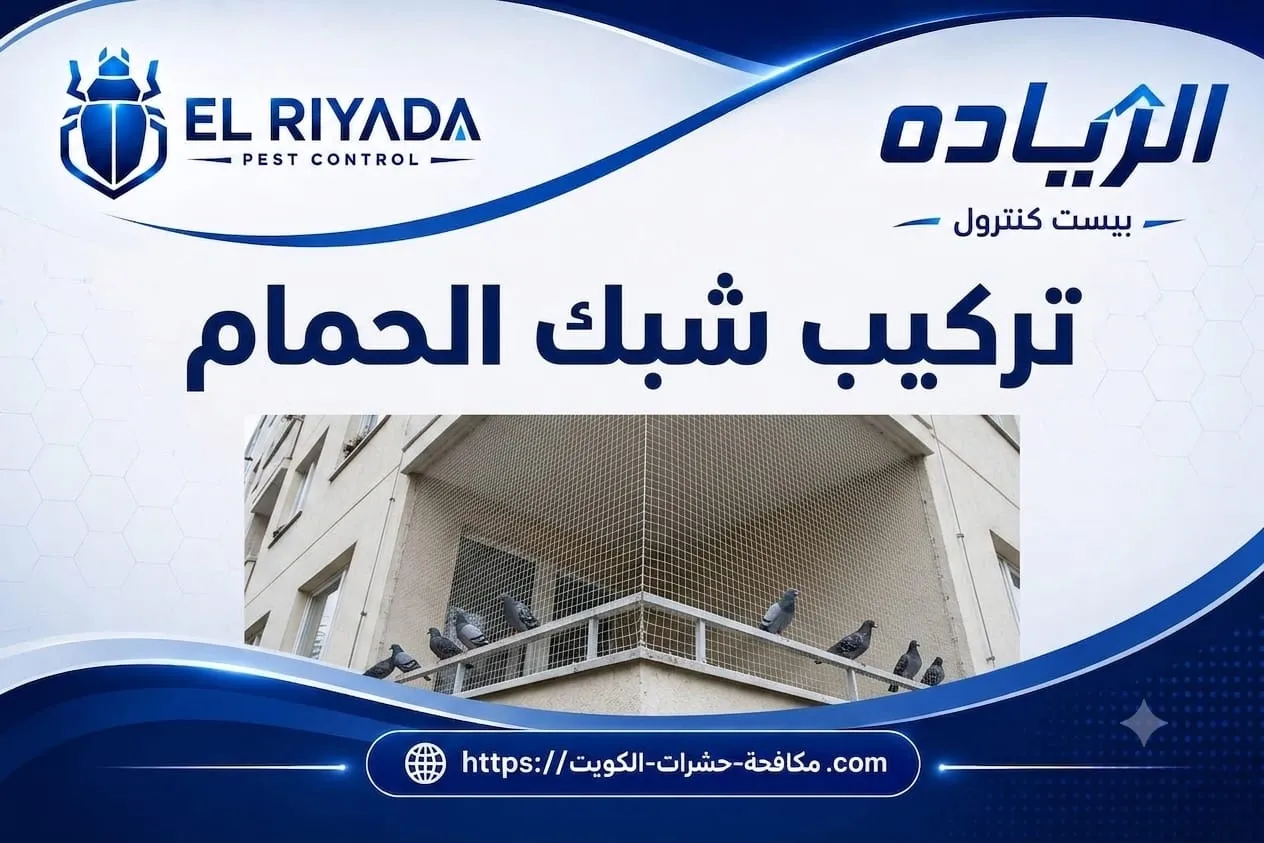
Installing pigeon netting in commercial buildings and factories is different from protecting a small ledge that pigeons use for perching because netting is mainly used when an entire space, opening, or area needs a physical barrier that prevents birds from entering. The problem may exist inside a void behind a façade, beneath an elevated structure, around a service area, or within an open section of a warehouse. For this reason, proper planning does not begin by calculating the netting area alone. It starts by identifying the boundaries of the affected zone, the birds' access routes, the elements located inside it, and the access requirements that must remain available after installation. Effective netting should not only block pigeons from entering but should also preserve ventilation, maintenance access, safety, and the normal function of the protected area.
Pigeon Netting for Commercial Buildings

Choosing pigeon netting for commercial buildings makes practical sense when the facility needs to prevent birds from entering a specific space rather than simply discourage them from perching on a single ledge. This distinction separates netting from many other bird deterrent methods. A building may contain a large architectural opening, a protected void behind façade elements, or an elevated internal space that pigeons can enter and use for shelter. In these situations, creating a physical barrier around the boundaries of the affected area is more closely aligned with the actual nature of the problem.
Before determining the dimensions of the netting, all possible bird entry routes should be identified. Closing the front of an area while leaving a small opening along one side can make the installation incomplete because pigeons may continue entering through the remaining access point. The area should therefore be examined from several directions, including its connections with walls, ceilings, and surrounding structures, rather than calculating only the visible width and height.
It is equally important to identify what is located behind the netting. If the protected area contains lighting, service lines, electrical components, or other elements that require cleaning and inspection, the system should not create a permanent barrier that makes access unnecessarily difficult. The design may require a suitable access point that can be used during maintenance without dismantling a large section of the system.
Pricing is also influenced by much more than the total area of netting. The shape of the protected zone, number of corners, installation height, access difficulty, fixing points, and any necessary surface preparation can all affect the amount of work required. Two areas with similar dimensions may therefore have different installation costs when one is open and straightforward while the other contains numerous architectural details.
• Defining the purpose of the netting before requesting installation prevents it from being used simply because pigeons are present on the building and connects the decision to an actual space or opening that needs to be physically isolated from birds
• Inspecting the sides, upper boundaries, and lower sections of the area can reveal access routes that may not be visible when looking directly at the façade and prevents a large barrier from being installed while a small opening remains available for birds to enter
• Identifying components located behind the netting before designing the system helps preserve access to lighting, service lines, and other elements that may require future inspection, cleaning, or maintenance
• Comparing quotations after defining the protected boundaries, fixing points, and access method provides a more accurate understanding of installation value than comparing the price of netting by area without considering the complexity of the site
Bird Netting for Factories
Installing bird netting for factories requires studying how birds move through the targeted area before it is enclosed because industrial environments contain structures, openings, service routes, and equipment that cannot be treated like the façade of an ordinary building. Pigeons may enter through an elevated opening and then move toward another structure inside the facility. Installing netting away from the actual entry route may therefore reduce its effectiveness even if a large area is covered.
In a practical example, a factory may be partially open along an upper section while pigeons are repeatedly seen on internal beams. The first question should not be how many square meters of netting are required. The more important questions are where the birds are entering and whether that route can be closed without interfering with the operation of the facility. Identifying the correct separation point can sometimes protect a larger area through a more focused design instead of trying to isolate every internal structure individually.
Factories also require careful consideration of operational movement. Doors, access routes, service openings, and areas used for moving equipment cannot simply be closed without understanding their daily function. It may be necessary to isolate one area from birds while keeping another operational route available according to the specific requirements of the site.
A costly mistake can occur when a large netting system is installed and it is later discovered that a service line or equipment component must be regularly dismantled or accessed. A design based on a detailed site assessment can identify these access requirements before installation instead of forcing repeated modifications afterward.
• Tracking the route birds use to enter an industrial area helps position the netting at the most effective separation point instead of distributing protection throughout the facility after pigeons have already gained access
• Reviewing the movement of equipment and workers before determining the netting boundaries prevents the system from interfering with doors, access routes, or the normal daily operation of the protected section
• Identifying maintenance components within the enclosed area allows future access requirements to be included in the design and reduces the need to dismantle large sections of netting whenever technical work is required
• Assessing elevated openings and connected structures helps determine whether pigeons have more than one entry route and prevents the system from relying on a single closed opening while another access point remains available
Protecting Facility Façades With Bird Netting
Protecting facility façades with bird netting depends on using the system where a genuine physical barrier is needed rather than unnecessarily enclosing the entire façade. Some commercial and industrial façades contain deep recesses, openings between architectural elements, or internal sections that provide pigeons with sheltered spaces that are difficult to protect by treating a single ledge. In these situations, netting can be designed to close the boundaries of the void and prevent access to it instead of treating every internal surface separately.
Visual appearance becomes particularly important on commercial facilities. The route of the netting, its fixing points, and its tension should be planned according to the shape of the opening and the façade so that the installation does not appear unnecessarily random or intrusive. At the same time, functionality should not be sacrificed simply to reduce visibility because sagging netting or gaps around the edges may weaken the barrier and leave an accessible point for birds.
It is also necessary to determine whether the protected area contains drainage outlets, moving elements, or equipment that requires access. The netting should not block drainage, come into contact with components that need to move, or make façade cleaning impractical. A suitable design therefore responds to both the boundaries and the function of the protected space rather than focusing on appearance alone.
The condition of the proposed fixing points should also be assessed before installation. Attaching the system to a weak or damaged part of the façade does not address the underlying condition and may affect the stability of the installation. Inspecting the surfaces surrounding the opening is therefore part of proper planning rather than merely a step used to calculate the required netting area.
• Identifying the spaces pigeons actually enter within the façade design helps use netting as a barrier around the required zone instead of covering extensive areas that do not genuinely need to be isolated from birds
• Planning tension and fixing points according to the shape of the opening reduces edge gaps and sagging that could turn a large netting system into an incomplete barrier because of one small vulnerable point
• Reviewing drainage points, moving components, and façade-cleaning access before installation prevents the netting from interfering with other building functions that must continue after the bird protection project is completed
• Inspecting the condition of areas intended to support the fixing points helps avoid relying on damaged sections of the façade and ensures that the stability of the system is based on surfaces suitable for installation
Pigeon Prevention Netting for Warehouses
Pigeon prevention netting for warehouses is most effective when the problem involves birds entering the storage space itself rather than simply perching on an external ledge. A warehouse may have high doors, upper openings, or exposed structural sections that allow pigeons to enter and then settle on beams and internal structures. In this situation, the entry route should be identified before deciding where to install the netting because protecting a roosting point inside the warehouse while leaving the original entrance open addresses only part of the problem.
The daily movement within the warehouse also affects the design. Loading doors, forklift routes, and areas used for moving goods cannot be treated as fixed openings without first understanding how they are used during normal operations. It may be necessary to separate a particular area from birds while keeping another operational route accessible according to the way the facility functions.
It is also important to recognize that netting is not a substitute for addressing other conditions that may allow bird activity to continue. If additional openings or damaged sections exist in the external structure of the warehouse, enclosing one area with netting does not necessarily mean that every access route has been eliminated. Identifying and assessing the surrounding openings should therefore form an essential part of the planning process.
• Tracking the direction pigeons travel from outside into the warehouse helps position the netting at a point that prevents access rather than merely protecting the place where birds settle after they have already entered
• Studying loading operations, doors, and equipment routes prevents the design from creating a barrier that interferes with daily warehouse activities or requires workers to repeatedly adjust the system
• Inspecting side and upper openings together with the main target area reduces the possibility that pigeons will continue entering through a smaller route that was not included in the original installation scope
• Identifying areas requiring periodic access within the protected section allows the system to preserve maintenance access without requiring the netting to be dismantled every time a technician needs to enter
Bird Netting to Protect Equipment

Using bird netting to protect equipment requires thinking about the space surrounding the equipment rather than simply covering the equipment itself. At some sites, it may be possible to create a barrier that prevents birds from entering an area containing several pieces of equipment instead of attaching netting directly to each individual unit. This approach can be more appropriate when equipment requires ventilation, opening, movement, or unrestricted access during maintenance.
Before determining the netting boundaries, airflow requirements, drainage outlets, cable routes, access covers, and the working space required by technicians around the equipment should all be identified. The netting should not come into contact with moving components, obstruct necessary openings, or reduce the space needed for technical access. If the operational requirements of the equipment are unclear, the person responsible for the equipment should be consulted before the design is approved.
A practical example is a group of outdoor units positioned beneath an open structure that pigeons enter from above. Instead of enclosing every unit separately, identifying the birds' entry route and closing the boundaries of the affected area may be more practical, provided that ventilation and maintenance access remain unaffected.
• Designing protection around the area containing the equipment can reduce the number of direct interventions on individual units while maintaining a barrier that prevents birds from reaching the targeted space
• Reviewing airflow requirements before determining the boundaries of the netting prevents the protection system from interfering with ventilation required by certain equipment for normal operation
• Providing clearly planned technician access helps preserve the ability to inspect and repair equipment without cutting or dismantling the netting whenever maintenance work is required
• Identifying the route birds use to enter the equipment area helps address the original access point instead of installing multiple sections of netting around individual units without closing the source of entry
Bird Netting for Industrial Sites
Planning bird netting for industrial sites requires dividing the facility according to the nature of its open spaces and the activities taking place within them. One production section may be completely enclosed while a nearby service area contains openings and structures that allow pigeons to enter. The objective is therefore not to cover the largest possible area with netting but to identify the boundaries where birds can be separated from the areas that genuinely require protection.
This distinction becomes especially important when calculating cost. A relatively small project containing irregular openings and significant installation heights may be more complicated than a larger area with straight boundaries and easy access. Installation quotations should therefore be compared according to area, shape, height, fixing points, and access requirements rather than relying only on a price per square meter.
Future changes within the industrial site should also be considered. Adding a new service line, modifying an opening, or installing additional equipment may affect the boundaries of the netting or create a need for access through the protected area. A clearly planned system makes future modifications more manageable than installing a netting arrangement that does not consider possible operational changes.
• Dividing the industrial site into zones according to their actual need for protection helps position netting at boundaries that provide meaningful separation instead of covering extensive areas that birds do not enter in the first place
• Including the shape of openings, installation height, and access difficulty when comparing prices prevents the project cost from being judged only by area when the level of complexity can vary significantly between locations
• Reviewing maintenance plans and expected modifications before installation reduces the possibility of creating a netting system that obstructs a future service route or requires substantial redesign after a relatively short period
• Documenting the boundaries of protected areas and access points makes future inspection and modification of the system clearer when the way the industrial facility is used changes
Closing Factory Openings With Bird Netting
Closing factory openings with bird netting requires understanding the function of each opening before considering covering it because some openings are part of ventilation systems, service access, or technical maintenance routes rather than simply empty spaces that can be closed without assessment. The inspection should therefore begin by identifying why the opening exists, how pigeons are using it, and whether it provides direct entry into an internal area or merely acts as a passage toward another structure.
One mistake that can reduce the effectiveness of the netting is measuring only the visible opening without inspecting how it connects to the sides or surrounding structures. The front section may appear completely closed after installation while a gap remains around a pipe, beam, or structural junction that still allows birds to pass through. The design therefore needs to follow the entire perimeter of the opening and establish fixing points in a way that minimizes unintended gaps.
Closing an opening must also not interfere with its essential function. If it is connected to required ventilation or maintenance access, the protection system should be designed to preserve those requirements, or the specialist responsible for that system should be consulted before installation. The objective is to prevent bird entry without turning the protective measure into an operational problem for the factory.
• Understanding the function of every opening before installing netting prevents the closure of a section required by the factory for ventilation or service access and ensures that the protection decision reflects the actual use of the location
• Inspecting the entire perimeter around pipes, beams, and structural junctions reveals small gaps that could leave the barrier incomplete even when the main opening has been fully covered
• Determining how technicians will access components located behind the opening helps incorporate maintenance requirements into the design instead of discovering access difficulties after the installation has been completed
• Inspecting nearby openings within the same section prevents the system from addressing one entrance while leaving pigeons with another route leading to the same internal area
Bird Netting to Protect Warehouse Ceilings
Installing bird netting to protect warehouse ceilings involves more than simply placing a barrier above an open area because warehouse ceilings may contain beams, lighting equipment, service lines, and systems requiring regular inspection and maintenance. The objective of the netting may be to create a separation level that prevents pigeons from reaching upper structures instead of protecting every individual beam or perching point separately.
Before installation, the height of the netting in relation to the elements above and below it should be determined, together with any equipment that requires periodic access. A design that makes replacing a lighting unit or inspecting an overhead service line unnecessarily difficult may provide bird protection while creating an ongoing operational cost for the warehouse.
Large areas also require careful planning of support points and boundaries rather than simply calculating the total square meters involved. The shape of the ceiling, presence of columns and openings, and differences in height may make one project more complicated than another project with a larger overall area but a simpler structural layout.
• Identifying the appropriate separation level between pigeons and overhead structures can protect the warehouse space without requiring individual deterrent systems to be installed on every beam used by birds
• Identifying lighting units and service lines that require maintenance above the netting area prevents the creation of a barrier that becomes difficult to manage whenever routine technical work is required
• Studying variations in height, columns, and openings before calculating the system provides a clearer understanding of the actual fixing requirements instead of relying only on the floor area of the warehouse
• Reviewing the edges of the netting after installation is important because a wide protective barrier cannot perform its intended function if a gap remains along its boundary through which pigeons can enter the protected area
Commercial Bird Netting System

Choosing a commercial bird netting system should not depend on the netting material alone but on how the net integrates with its fixing boundaries, tension points, access requirements, and maintenance needs. The netting material may be appropriate for the site, but gaps around the edges or inadequate distribution of support points can reduce the system's ability to form a complete physical barrier. The project should therefore be evaluated as a complete system rather than simply as the purchase and installation of a certain area of netting.
The required specifications also vary according to the nature of the protected area. A small, straight opening does not present the same challenges as a wide space containing multiple corners, structures, and service lines. The netting should be selected according to its intended purpose and the conditions of the site rather than relying on a general commercial description without understanding how the system will actually be installed.
When comparing prices, it is useful to standardize the project scope first. The included areas and openings, access points, method of dealing with obstacles, and whether surface preparation is included in the quotation should all be clearly understood. This makes it easier to determine why costs differ instead of selecting the lowest figure when the proposed scopes of work may be significantly different.
• Evaluating the netting, fixing points, tensioning arrangement, and perimeter boundaries as one complete system prevents excessive focus on the net material while overlooking other components that directly affect the completeness of the barrier
• Identifying all obstacles and service lines within the installation area before pricing reduces unexpected modifications that may otherwise appear only after installation work begins at the site
• Comparing quotations after standardizing the included areas, openings, and access points helps reveal the real difference in value instead of comparing prices for projects that are different in their actual details
• Planning for inspection and maintenance access after installation makes the system manageable within the facility instead of creating a barrier that prevents practical access to the components located behind it
Protecting Industrial Facilities From Pigeons
Protecting industrial facilities from pigeons with netting requires identifying the areas where physical exclusion provides greater practical value than treating individual perching points one by one. An industrial facility may contain partially open spaces, elevated openings, internal structures, and multiple service areas. Finding an appropriate separation point can therefore prevent birds from entering an entire section instead of requiring separate protection systems across dozens of individual structures inside it.
Creating this barrier, however, requires operational requirements to be studied first. Worker movement, equipment routes, service lines, ventilation areas, drainage points, and access to technical systems must all be identified. Netting that prevents pigeons from entering but interferes with an essential function of the site cannot be considered a successful design. The protection boundaries should therefore be compatible with how the facility is actually used rather than being planned separately from its operational needs.
Netting should also not be treated as the final answer to every possible bird problem. The facility may change, a new opening may appear, part of the system may become damaged, or pigeons may move to another unprotected section. Including the netting and its perimeter within normal site inspections can help identify changes and allow each new issue to be addressed according to its actual cause.
• Selecting an appropriate separation point can protect an entire industrial section from pigeon entry instead of distributing multiple deterrent systems throughout the space after birds have already gained access
• Connecting the netting boundaries with operational and maintenance routes helps prevent bird entry without compromising worker movement or access to equipment and technical systems
• Reviewing the junctions between the netting and surrounding structures can reveal gaps that may develop because of site modifications or movement in nearby components over time
• Reassessing the system after building modifications or the installation of new equipment prevents continued reliance on an older design that may no longer match the facility layout or its current access routes
Why Choose Al Reyada Pest Control in Kuwait
When considering why Al Reyada Pest Control can be a strong choice for pest control in Kuwait for pigeon netting installation in commercial buildings and factories, the practical evaluation should focus on accurately defining the area that requires physical exclusion rather than on installing the largest possible quantity of netting. Al Reyada Pest Control can be a strong option when the service begins by understanding pigeon entry routes and the openings they use before identifying the point where access can be prevented with the least unnecessary interference in facility operations.
This distinction becomes particularly important in industrial projects. Closing an opening or enclosing an area without understanding its function may interfere with ventilation, maintenance, or equipment movement. The design should therefore be preceded by an assessment of the elements located behind the netting and the access points that must remain available. This type of planning allows the protection system to become an integrated part of the facility instead of creating a barrier that workers must repeatedly alter.
A clearly defined scope of work is also an important part of building trust. The customer should understand which openings and areas are included in the project, where access points will remain, and how obstacles along the netting route will be handled. This information makes quotation comparisons more accurate than relying on the price per square meter alone.
Netting should not be presented as an absolute guarantee that pigeons will disappear completely from the entire facility. Its primary function is to prevent birds from accessing the properly enclosed area, while other parts of the property may require separate assessment if pigeon activity later appears there.
• Analyzing pigeon entry routes before designing the netting helps Al Reyada Pest Control direct the protection toward the actual separation point instead of increasing the netting area without addressing how birds are gaining access
• Considering ventilation, maintenance, and equipment movement when defining the system boundaries helps make the protection compatible with the daily operation of the commercial building or industrial facility
• Clearly identifying the included areas and openings before pricing gives the customer a reliable basis for comparing proposals and reduces disagreements regarding sections that were not included in the original project scope
• Inspecting the system after installation when necessary can help identify gaps or site changes that may affect the completeness of the barrier instead of assuming that the netting will never require further assessment
Conclusion
Installing pigeon netting in commercial buildings and factories provides the greatest practical value when the problem involves birds entering a space or opening that can be physically isolated. Netting should therefore not be selected simply because pigeons are present at the property. The decision should follow an assessment of their entry routes, the boundaries of the affected area, and the functions that must continue inside it. A carefully selected separation point may protect an entire space more efficiently than treating every internal ledge or structure individually.
Operational requirements become an essential part of the design in factories and warehouses. Ventilation, drainage, doors, equipment, lighting, and maintenance routes must all remain functional after installation. Project cost is also determined by more than the total area of netting because height, opening shape, fixing points, obstacles, and access difficulty can significantly affect the work required. A detailed inspection and clearly defined scope therefore help create a system that addresses the actual bird problem while preserving the normal function of the facility.
Frequently Asked Questions
When is pigeon netting suitable for commercial buildings?
It is particularly suitable when a facility needs to prevent pigeons from entering an opening, recess, void, or defined space that can be physically isolated while maintaining the necessary functions of the building.
Does the entire commercial façade need to be covered with netting?
No. The relevant voids and bird entry routes should be identified first, and the netting can then be designed around those locations instead of covering areas that do not genuinely require physical exclusion.
Can bird netting be used inside factories?
It can be used in suitable locations after assessing openings, equipment and worker movement, ventilation requirements, maintenance access, and the function of the area that will be protected.
Is pigeon netting suitable for warehouses?
Yes, in situations where pigeons enter storage areas or upper structures through openings that can be isolated without interfering with loading operations or the normal use of the warehouse.
Can equipment be protected with bird netting?
A barrier can be designed around an equipment area when site conditions allow, provided that ventilation, drainage, and maintenance space remain available and the netting does not interfere with sensitive or moving components.
Can any factory opening be closed with bird netting?
An opening should not be closed before its function is understood. Some openings may be required for ventilation, servicing, or maintenance, and these technical requirements must be preserved when the protection system is designed.
Why is it important to inspect the edges of the netting?
The edges and junctions between the netting, walls, and surrounding structures are important because even a relatively small gap can make the barrier incomplete despite the main area being fully covered.
What determines the cost of bird netting installation?
Cost can be influenced by the size and shape of the area, installation height, access difficulty, number of corners, fixing points, obstacles, surface preparation requirements, and the need to preserve maintenance access.
Is the price per square meter enough to compare netting quotations?
Not always. Two projects with the same area may differ significantly in height, structural details, fixing requirements, and installation difficulty, so the complete scope of work should be compared rather than relying only on the price per square meter.
Does bird netting need a maintenance access point?
If equipment, lighting, service lines, or other components requiring inspection are located behind the netting, the design should provide suitable access without requiring a large section of the system to be dismantled.
Is bird netting better than ledge protection systems?
Each system serves a different purpose. Netting is suitable for physically excluding birds from certain spaces and openings, while other systems may be more appropriate for specific perching ledges. The correct choice depends on the nature of the bird problem.
Does netting permanently eliminate pigeons from the facility?
Properly designed and installed netting is intended to prevent pigeons from accessing the protected area, but it should not be considered a guarantee that pigeons will disappear from every exterior section or other untreated part of the property.
What happens if a new opening appears after factory modifications?
The modified area should be assessed to determine whether it has created a new bird entry route, and the protection boundaries can then be adjusted when necessary according to the new layout of the facility.
Does pigeon netting need inspection after installation?
Inspection can help verify the condition of the netting, fixing points, and perimeter boundaries and identify damage or gaps that may develop because of site modifications or maintenance activities.
Why choose Al Reyada Pest Control for pigeon netting?
Al Reyada Pest Control can be a strong option when the service is based on identifying pigeon entry routes, selecting appropriate exclusion boundaries, clearly defining the work scope, considering ventilation, equipment, and maintenance requirements, and allowing the system to be inspected after installation when necessary.