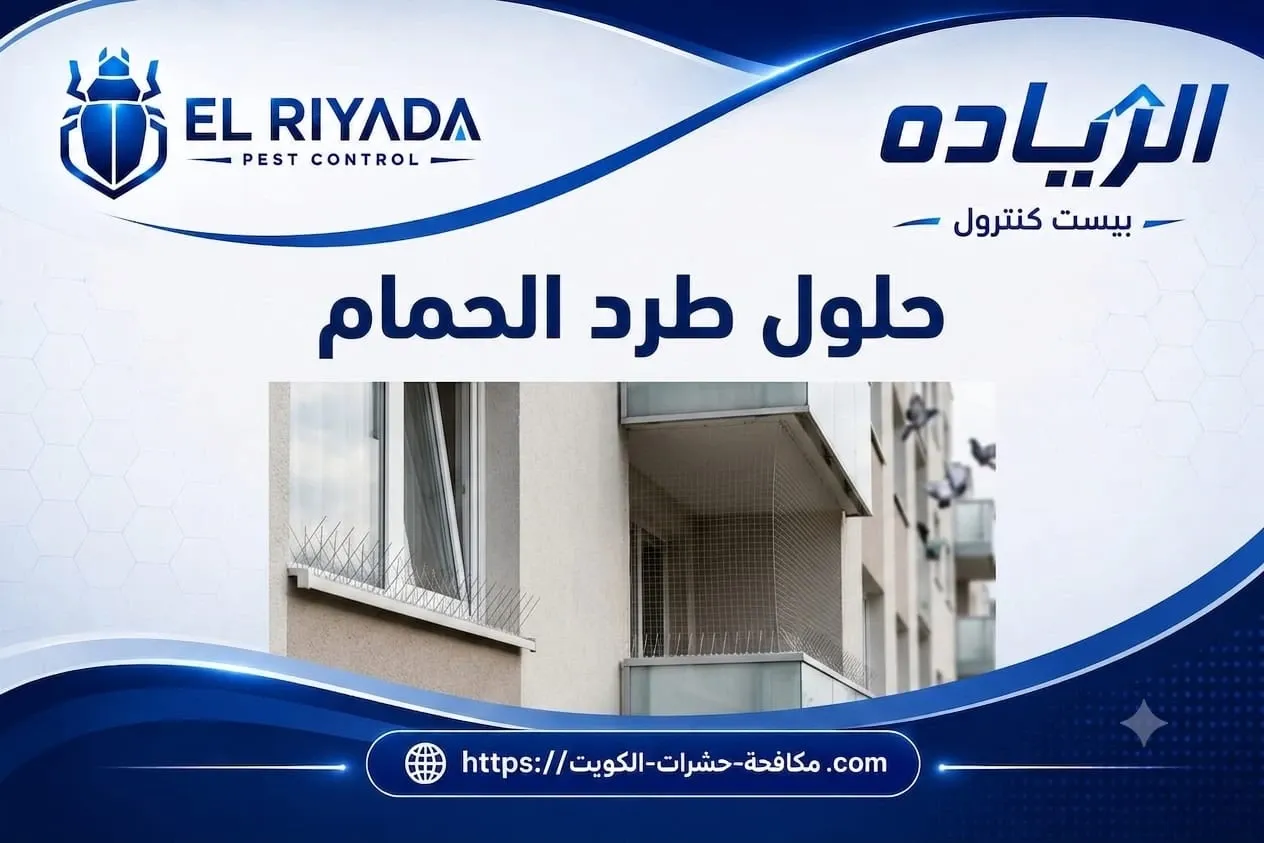
Pigeon repellent gel is a substance used on certain ledges and surfaces to reduce birds perching on them, but it is not suitable for every location and does not guarantee permanent pigeon prevention. Its effectiveness depends on the product type, how it works, the condition of the surface, and outdoor conditions. Most importantly, some sticky gel products may adhere to birds' feathers and cause harm, so they should not be used without verifying their safety.
If pigeons gather on your home's boundary wall, apartment building cornices, or rooftop edges in Kuwait, it is better to determine whether gel is appropriate before purchasing it. Bird deterrent strips, specialized wires, or netting may be more suitable for certain locations. To inquire about protecting your home or business premises from pigeon gatherings, contact Al Reyada Pest Control
Pigeon Repellent Gel: What Is It and How Does It Work on Ledges and Rooftops?
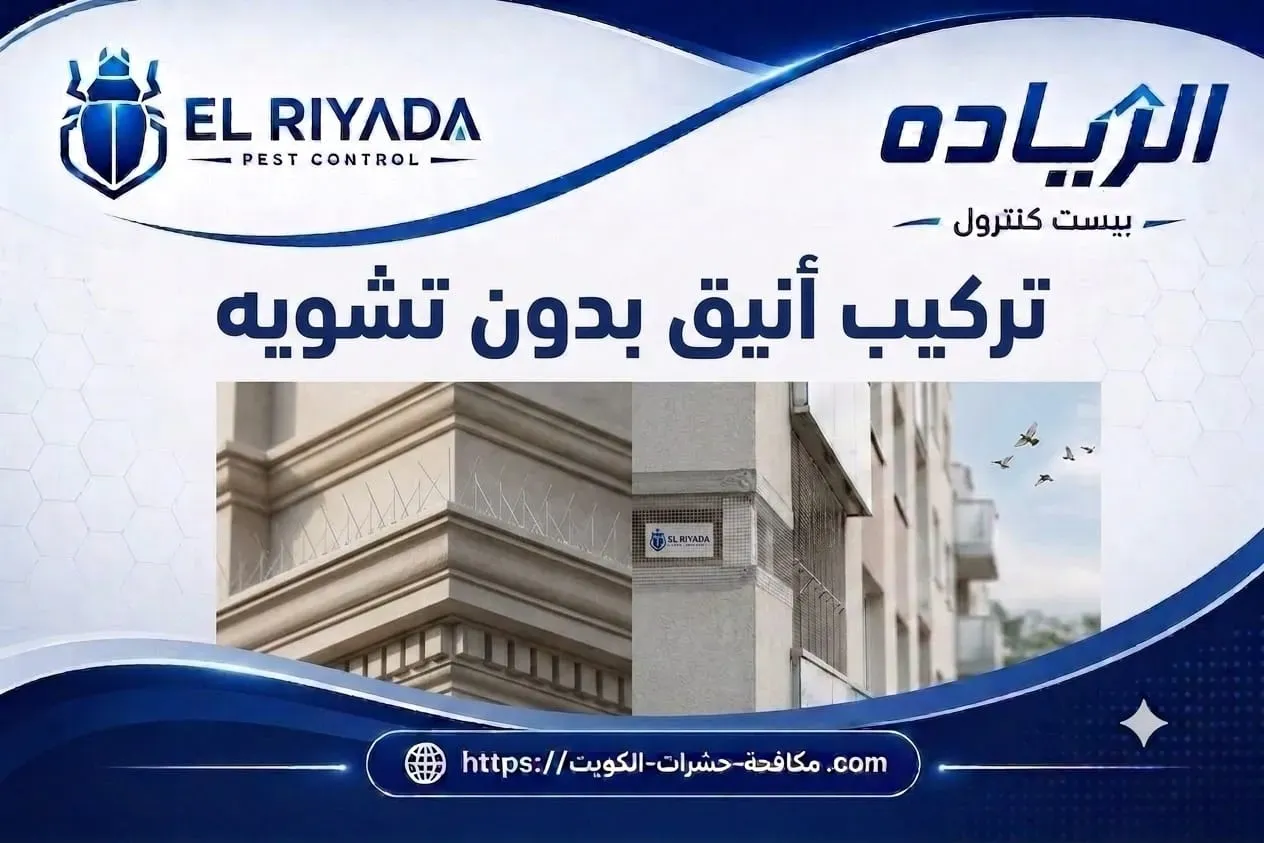
The term pigeon repellent gel describes different products marketed to make bird-perching locations less attractive. Some products may rely on an uncomfortable texture when birds touch the ledge, while others are marketed based on visual effects or other properties that manufacturers claim influence bird behavior.
However, sharing the word "gel" does not mean these products have the same operating mechanism, safety characteristics, or lifespan. One product may be sticky enough to collect feathers or dirt, while another may be used inside specialized containers or units.
For this reason, the manufacturer's instructions, the nature of the material, and its installation method should be reviewed before considering it suitable for any surface.
What Is the Difference Between Sticky Gel and Non-Sticky Products?
Sticky gel: It may work by making the perching location uncomfortable for birds, but certain formulations can adhere to feathers or feet, raising concerns about bird welfare.
Products supplied in specialized units: These may be marketed as relying on visual effects or other mechanisms, but their effectiveness should be assessed using product data and reliable testing rather than marketing descriptions alone.
Physical bird-perching deterrents: These include specialized strips and tensioned wires. They differ from gel because they are designed to discourage birds from settling on a ledge through an appropriate physical structure.
Why Is Gel Unsuitable for Every Surface?
Some surfaces are frequently touched, cleaned, or accessed for maintenance, making the presence of a gel-like substance inappropriate.
Wide or stepped ledges may also contain several perching points that cannot be adequately addressed by a limited quantity of product.
Can Gel Be Used Inside Balconies?
Particular caution is necessary if the balcony is used daily or if children or pets can reach its edges.
A suitable physical protection method or treatment of the pigeons' entry point may be preferable to placing a substance that can be touched on regularly used surfaces.
When Should Gel Be Avoided From the Beginning?
Gel should be avoided when its formulation is highly adhesive, when clear information about its safety for birds is unavailable, or when the location is close to people, sensitive equipment, or food preparation areas.
A product should not be selected solely because it is described as "safe" or "non-toxic," since a substance may mechanically damage feathers even when it is not chemically toxic.
Anti-Perching Pigeon Gel: Does It Solve the Problem or Move It Somewhere Else?
Homeowners search for anti-perching pigeon gel when droppings repeatedly accumulate on courtyard walls, window ledges, or rooftop cornices and they want to reduce bird gatherings without installing visible barriers.
However, the success of any perching deterrent cannot be determined simply because birds move away from one location. Pigeons may relocate to a nearby ledge if it remains suitable for settling.
All perching locations associated with the problem should therefore be identified before deciding whether to use gel or another method.
What Signs Indicate That Pigeons Regularly Use a Ledge?
-
Repeated perching at the same time: Birds appearing daily may indicate that the ledge has become a familiar resting location.
-
Droppings accumulating in one particular spot: The location of the droppings can help identify the perching point, but it is important to check whether they are falling from a higher ledge.
-
Feathers or twigs appearing: These may indicate repeated activity or an attempt to nest, requiring inspection before any treatment.
-
Birds moving between ledges: Pigeons may use several nearby locations, making protection of only one point insufficient.
-
The problem continuing after cleaning: Removing droppings does not necessarily change the characteristics of the surface that attracts birds to perch.
Does Gel Prevent Pigeons From Returning Permanently?
This cannot be guaranteed.
Even if birds perch less frequently on a particular ledge, they may return when the material's condition changes or use other untreated locations.
It is important to distinguish between a temporary reduction in activity and lasting protection that can be inspected and maintained.
What If Pigeons Are Already Nesting?
Gel is not an appropriate solution for dealing with active nests or chicks inside building cavities.
The location should be inspected, and nests should be handled according to local requirements and humane considerations, without blocking access or using substances that may harm the birds.
What Is the Better Option When Several Ledges Are Involved?
A plan to protect active perching locations using purpose-designed physical deterrents may be easier to evaluate and maintain than spreading a gel-like substance over large areas.
The choice depends on the site's design, accessibility, and how the area is used.
Bird Repellent Gel for Rooftops: Can It Withstand Kuwait's Heat and Dust?
Choosing bird repellent gel for rooftops in Kuwait requires particular attention to outdoor conditions because exposed roofs may experience high temperatures, direct sunlight, and repeated dust accumulation.
It should not be assumed that a product will retain its properties or effectiveness throughout the summer simply because it is labeled for outdoor use. Gel formulations vary, as do their recommended temperature limits and storage and application requirements.
Actual product specifications should be reviewed instead of relying on general promises that a product can withstand all weather conditions.
How Can Heat Affect the Material?
The viscosity or consistency of some gel-like substances may change when exposed to high temperatures, depending on their formulation.
This may affect how the material adheres to a surface or retains its shape, but the same behavior cannot be assumed for all products without testing data.
What Does Accumulated Dust Do?
Dust and debris can collect on sticky materials, changing their surface characteristics and making them increasingly dirty.
Cleaning the ledge or removing the product may also become more difficult if dirt accumulates over a long period.
Do Rain and Humidity Affect Gel?
This depends on the material's specifications and how it is attached.
Some products may require particular conditions during installation and may deteriorate if they are unsuitable for outdoor exposure.
Which Specifications Should Be Checked Before Purchasing?
-
Temperature range: The manufacturer's stated limits for storage, installation, and use should be identified.
-
Ultraviolet resistance: Appropriate data supporting use in direct sunlight should be reviewed.
-
Surface compatibility: Concrete, stone, metal, and glass have different characteristics, and a product may not be suitable for all of them.
-
Ease of removal: It is important to know how to remove the substance without damaging paint, waterproofing, or finishes.
-
Environmental safety: Warnings concerning birds, pets, and people should be reviewed.
-
Maintenance requirements: Determine whether the product requires inspection, cleaning, or replacement during its period of use.
Is It Recommended to Apply Gel to Rooftop Floors?
Gel should not be spread indiscriminately over floors used for walking or accessing equipment.
It may create dirt, contact hazards, or interfere with maintenance activities. Preventing pigeons from perching on ledges is also different from preventing them from landing on an open rooftop floor.
Pigeon Repellent Gel for Ledges: Where Might It Be Considered and Where Should It Be Avoided?

The decision to use pigeon repellent gel for ledges depends on the ledge's characteristics, its location, the likelihood of contact, and whether reliable information about the product's safety is available.
An elevated ledge that people cannot reach differs from a low boundary wall near a home entrance. Stone window ledges also differ from painted metal edges.
The objective is not to cover the largest possible area with a substance, but to choose a suitable method that addresses the pigeons' perching location without creating a new problem.
Comparing Locations Before Choosing a Protection Method
|
Location |
What Should Be Evaluated |
More Appropriate Approach |
|
Elevated rooftop cornice |
Product type, safety, and maintenance access |
Consider a purpose-designed perching deterrent |
|
Low courtyard wall |
Whether children and other people can reach the edge |
Avoid substances that may be touched |
|
Window ledge |
Window operation and cleaning |
Choose protection that does not interfere with normal use |
|
Painted metal edge |
Compatibility with paint and removability |
Review surface and product specifications |
|
Near air conditioning units |
Ventilation and maintenance access |
Avoid substances that interfere with equipment |
|
Near water tanks |
Protection of openings and covers |
Avoid contamination of service areas |
|
Food preparation area |
Contact and contamination risks |
Avoid products unsuitable for this environment |
Is Gel Suitable for Residential Boundary Walls?
Not necessarily.
If the wall is close to pedestrians or children can touch it, using a gel-like substance may be inappropriate, particularly if it is sticky or difficult to clean.
Modifying the perching point or using a protection method that does not expose people or birds to unnecessary risks may be preferable.
Is Gel Suitable for Stone Ledges?
This depends on the compatibility of the material with the stone, its porosity, and the product's removal method.
Some stones or finishes may be affected by stains or material residues, so the manufacturer's instructions should be reviewed before use.
Is Gel Suitable for Railings?
Railings are usually touched or leaned against, making the application of a sticky substance inappropriate in many situations.
Any protection method must also preserve the railing's function and people's safety.
What About Ledges That Are Difficult to Reach?
If reaching the ledge requires working at height, the safety of installation, maintenance, and future removal must be assessed.
A product requiring frequent attention should not be chosen if accessing it is unsafe or impractical.
Pigeon Repellent Substances: How to Distinguish Safer Products From Marketing Claims
The phrase pigeon repellent substance is used to describe various products. Buyers may assume that all of them perform the same function or that the word "repellent" proves their effectiveness.
However, a product may rely on smell, texture, visual effects, or another mechanism, and the evidence supporting each approach varies.
Choosing correctly requires understanding the product's ingredients, application method, and safety limitations rather than relying on an attractive commercial name.
What Information Should You Request About the Substance?
Product name and manufacturer: This helps identify the specifications and instructions associated with the actual product.
Claimed operating mechanism: Does the product rely on a sticky texture, smell, or visual effect? The description should be clear.
Safety instructions: Warnings relating to birds, people, and pets should be identified.
Suitable surfaces: The materials on which the product can be used without damage should be specified.
Operating conditions: Temperature, humidity, and sunlight exposure requirements should be reviewed.
Removal method: It is important to know how the substance can be cleaned away when its use ends or a different solution becomes necessary.
Does "Non-Toxic" Mean a Product Is Safe for Pigeons?
No.
A substance that is not chemically toxic may still cause mechanical harm if it sticks to birds' feathers or interferes with their movement.
Product safety must therefore be assessed from more than one perspective.
Are There Smell-Based Substances That Permanently Repel Pigeons?
This should not be assumed.
Some smells may be marketed as bird repellents, but responses vary, and there is no general basis for treating any household scent as a guaranteed, long-lasting pigeon deterrent.
Can You Make a Homemade Pigeon Repellent Substance?
Using unknown mixtures or improvised adhesive materials on ledges is not recommended.
They may harm birds, surfaces, or people, and they may be difficult to remove later.
When Is a Physical Alternative Better?
When the problem is concentrated on a particular ledge where pigeons regularly perch, a purpose-designed perching deterrent may offer a clearer protection area and maintenance approach.
If you are unsure whether to choose gel, netting, or bird deterrent strips, contact Al Reyada Pest Control to inquire about a solution suited to your property in Kuwait.
Bird Repellent Gel for Cornices: Is It Suitable for Decorative Architectural Features?
Cornices are among the places pigeons may use for perching because they provide elevated horizontal edges. For this reason, some apartment building owners search for bird repellent gel for cornices instead of installing visible systems on the facade.
However, cornices are not all alike. Some are straight, while others are stepped or decorative and may contain several locations where birds can settle.
Applying a substance to the most visible section is therefore insufficient if pigeons are using other projections.
Why Do Cornices Require Special Assessment?
-
Differences in edge width: A cornice may contain a broad area allowing pigeons to perch in several positions.
-
Multiple levels: Birds may use upper sections, lower sections, or side corners.
-
Sensitive finishes: Some stone or painted facades may be affected by substances or their residues.
-
Difficulty cleaning: Removing a dirty substance from an elevated cornice may require specialized access equipment.
-
Impact on exterior appearance: Sticky materials may collect dust and become increasingly noticeable on the facade.
-
Presence of nests: It is essential to check for eggs or chicks before installing any method that prevents access.
Can Gel Be Used on a Decorative Cornice?
This cannot be determined without knowing the product type, the cornice material, and how the area is used.
Another protection system may be preferable if decorative features make gel application or removal difficult.
Can Gel Make the Facade Dirty?
Dust and debris may accumulate on certain sticky formulations, and residues may remain when the product is removed.
This depends on the material, the surface, and the duration of exposure to outdoor conditions.
What If Pigeons Perch Above the Cornice Rather Than on Its Visible Face?
The actual horizontal surface used by the birds should be identified.
Treating the visible face of the facade will not be useful if the real perching location remains accessible.
What Is the Solution When Cornices Are Extremely High?
Safe access and maintenance must take priority, and the selected method should be capable of being installed and inspected without exposing workers or pedestrians to unnecessary danger.
Purpose-designed bird-perching deterrent systems may be worth considering according to the facade's design.
How to Use Pigeon Repellent Gel: Steps to Follow Before Any Application
How to use pigeon repellent gel depends on the specific product, so there is no universal quantity or spacing arrangement suitable for every formulation.
Before considering application, the most important requirements are confirming that the substance is appropriate for the intended purpose, that it will not cause harmful adhesion to birds' feathers, and that the surface is compatible with it.
Gels of unknown composition or improvised adhesive substances should not be used to disturb birds.
Step One: Identify the Actual Problem
Start by determining whether pigeons are perching on a ledge, entering through an opening, or nesting inside a cavity.
If the problem involves entry or nesting, gel may not be suitable in the first place.
Step Two: Review the Product Information
Read the manufacturer's instructions and warnings concerning birds, animals, and people.
If clear safety information is unavailable or the substance is highly adhesive, avoiding its use is preferable.
Step Three: Inspect the Surface
Check the type, material, and condition of the ledge and whether people can reach it.
Do not use any substance that may affect paint, waterproofing, drainage, or maintenance activities.
Step Four: Confirm That There Are No Active Nests
The location must be inspected before installing any method that prevents access or changes bird activity around a nest.
Birds must not be trapped, and chicks must not be separated from their parents.
Step Five: Evaluate Alternatives
Compare gel with purpose-designed perching deterrents or netting if the problem involves entry openings.
The chosen solution should minimize risks while remaining appropriate for the location.
Step Six: Follow the Approved Product's Instructions Only
If a particular product has been confirmed suitable and safe, the manufacturer's instructions regarding surfaces, quantities, and application methods must be followed.
Instructions for one product should not be generalized to another.
Step Seven: Inspect the Location After Use
The condition of the ledge should be monitored to ensure that birds do not become stuck and that people or pets are not exposed to the substance.
If any safety problem appears, use should be stopped and the situation handled appropriately.
Step Eight: Plan for Removal and Maintenance
It is important to understand how the product can be removed without damaging the surface and when it requires inspection or replacement according to its instructions.
Deteriorated or dirty substances should not be left on ledges without monitoring.
Why Is Random Application Not Recommended?
Applying an unsuitable substance may harm birds or finishes without addressing the actual reason pigeons gather.
The better approach begins by identifying the problem location and then evaluating the appropriate method.
Is Pigeon Repellent Gel Effective? When Might It Work and When Is It Unsuitable?

The answer to "Is pigeon repellent gel effective?" depends on the type of gel, its operating mechanism, and where it is used. All products cannot be considered effective simply because they are marketed for repelling birds.
Some substances may change pigeon behavior when birds touch a ledge, but this does not prove that the product provides long-term protection or is safe for birds.
Placing a substance on one ledge also does not prevent pigeons from perching on other ledges or entering building cavities.
What Factors Affect the Result?
Product type: Formulations, characteristics, and application methods differ between products.
Pigeon behavior: Birds that merely pass through a location differ from birds that regularly use it for resting or nesting.
Ledge design: Alternative perching areas may remain outside the product's coverage.
Outdoor conditions: Sunlight, dust, and humidity may affect the condition of some materials.
Maintenance: The substance's condition may change over time, requiring inspection according to the manufacturer's instructions.
Safety: Birds moving away should not be considered a successful outcome if the method causes injuries or feathers to become stuck.
How Can You Distinguish a Temporary Effect From Lasting Protection?
Bird numbers may decrease briefly after the ledge's condition changes, but activity should be monitored over an appropriate period.
It is also important to confirm that the problem has not simply moved to a nearby ledge and that birds have not suffered harmful effects.
Can You Rely on Customer Reviews?
They may help explain user experiences, but they are insufficient on their own to establish effectiveness.
Locations differ, and reported results may be associated with other measures the user implemented at the same time.
Is Gel Better Than Bird Deterrent Strips?
This cannot be generalized.
Purpose-designed bird deterrent strips may be more appropriate for certain ledges because they provide a clearly defined physical method, while gel may raise concerns about adhesion, maintenance, or surface safety.
The product should be selected according to the actual problem rather than simply how easy it is to apply.
When Is Relying on Gel Not Recommended?
When there are active nests, extensive landing areas, ledges that people can touch, or insufficient information about the substance's safety.
In these circumstances, more suitable alternatives should be evaluated.
How Long Does Pigeon Repellent Gel Last? Can It Survive Kuwait's Entire Summer?
There is no single pigeon repellent gel lifespan that applies to every product because chemical formulations, operating mechanisms, and conditions of use vary.
Some manufacturers may advertise specific durations, but these should be treated as information relating to the particular product and its testing conditions, not as a guarantee that the material will remain effective everywhere.
In Kuwait, exposure to sunlight, dust, and heat is an important consideration when evaluating any substance used on exposed rooftops.
What May Reduce Its Useful Life?
-
Direct sunlight exposure: The properties of some formulations may change with continued exposure to heat and ultraviolet radiation.
-
Dust accumulation: Dust may collect on sticky substances and change their surface condition.
-
Humidity and rain: These may affect certain products depending on their specifications.
-
Type of ledge: Product condition may vary according to the surface material and attachment method.
-
Contact during maintenance: The substance may be affected if the ledge is frequently used or cleaned.
-
Product quality: Formulations and manufacturing methods differ, so equal performance should not be assumed across all products.
Can Its Lifespan Be Stated as a Fixed Number of Months?
A universal figure should not be given without knowing the product and the manufacturer's data.
It is also necessary to distinguish between how long the substance physically remains on the surface and how long it retains its claimed bird-deterrent properties.
How Can You Tell When the Product Needs Attention?
If its consistency changes, substantial dust accumulates on it, marks appear on the surface, or pigeons continue perching, the solution may need reassessment.
It is also essential to ensure that birds are not becoming stuck or injured.
Is Repeatedly Reapplying Gel Economical?
Not necessarily.
The total cost may include purchasing the product, cleaning the ledge, removing residues, reapplying the material, and safely accessing elevated locations.
Another method may be more suitable if the substance requires frequent attention.
What Should Be Calculated Before Choosing?
Compare the costs of use, maintenance, and removal with suitable perching deterrent alternatives, while prioritizing safety and compatibility with the location.
To inquire about alternatives to pigeon repellent gel and protection for rooftop ledges in Kuwait, contact Al Reyada Pest Control
Pigeon Repellent Gel Prices in Kuwait: Is Gel Cheaper Than Installing Protective Systems?
The price of pigeon repellent gel in Kuwait varies according to product type, container size, operating mechanism, and seller. However, the price of a container alone does not determine the actual cost of addressing a pigeon problem.
Some ledges may require different quantities or special preparation, and the substance may need monitoring or removal after a period of use.
A low price should also never justify selecting a product that may harm birds or damage surfaces.
What Factors Affect the Price?
Type of gel: Products differ in their formulation, application methods, and advertised specifications.
Container size: This may affect the total purchase price, but it does not independently indicate how much area can be treated.
Quantity required: This is determined according to the product's instructions and the dimensions of the ledge, provided the product is appropriate in the first place.
Surface preparation: The location may need cleaning or treatment before any protection method is installed.
Ledge height: Working at elevated locations may require access equipment and safety procedures.
Maintenance and removal: Potential future costs for cleaning residues or replacing the product should be considered.
Product safety: Technical information and warnings should be reviewed instead of choosing an unidentified product simply because it is cheaper.
Does the Lowest Price Mean Genuine Savings?
Not always.
If a product requires repeated application or leaves residues that are difficult to remove, its actual cost may increase over time.
Repairing damage to finishes may also introduce expenses that were not considered at the time of purchase.
Is Gel Cheaper Than Netting or Bird Deterrent Strips?
This cannot be determined without knowing the size of the location, the required protection method, and the costs of materials, installation, and maintenance.
The comparison must also consider the different functions of each method. Netting prevents entry into defined spaces, while bird deterrent strips target perching on ledges.
How Can You Compare the Options?
|
Comparison Factor |
Pigeon Repellent Gel |
Physical Bird-Perching Deterrents |
|
Nature of use |
Depends on the product type |
Protection of ledges suitable for installation |
|
Safety |
Requires careful assessment of the formulation |
Depends on product design and installation |
|
Maintenance |
May require cleaning or removal |
Requires inspection of attachment and condition |
|
Surface suitability |
Depends on material compatibility |
Depends on ledge shape and material |
|
Protection of entry openings |
Does not provide an exclusion barrier |
Specialized netting may be required |
|
Total cost |
Includes the substance and potential follow-up |
Includes materials, installation, and maintenance |
How Can You Request a Suitable Protection Estimate?
Identify where pigeons gather, the number of affected ledges, their approximate lengths, and whether the problem involves the rooftop, balcony, or cornices.
You can contact Al Reyada Pest Control to inquire about pigeon control solutions appropriate for your location.
Why Contact Al Reyada Pest Control Before Choosing Pigeon Repellent Gel?
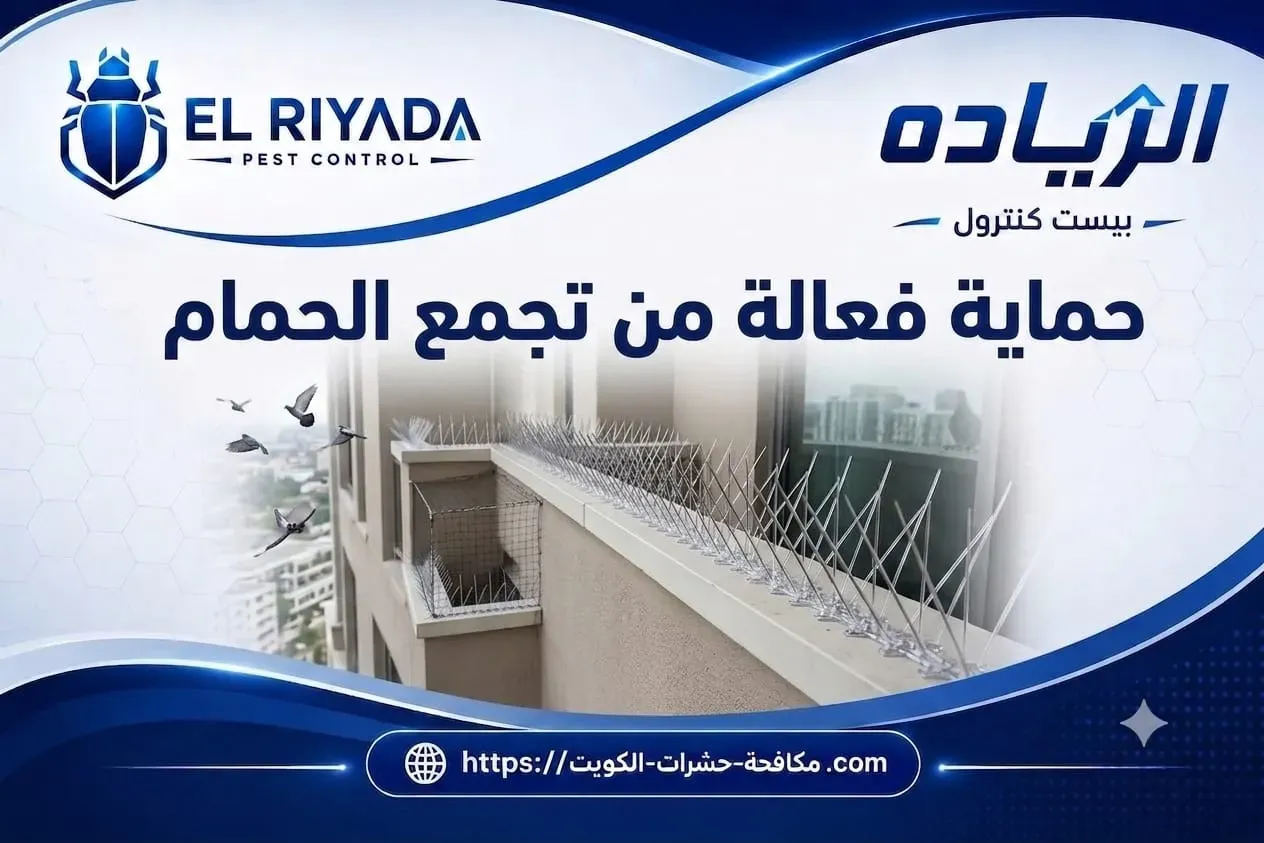
When pigeon droppings repeatedly accumulate on rooftops or building ledges, purchasing a container of gel may appear to be a quick solution. However, understanding why birds gather and whether the substance is suitable and safe is more important.
Some locations require preventing perching on a particular ledge, while others need entry-point protection or appropriate management of nesting areas.
What Criteria Help You Choose a Suitable Service?
-
Identifying the problem location: Determine whether pigeons perch on a wall or cornice or enter through an opening.
-
Evaluating safety: Avoid substances that may stick to birds' feathers or expose people to risks.
-
Choosing an appropriate method: Compare gel with strips, wires, and netting according to the location's characteristics.
-
Considering Kuwait's conditions: Evaluate exposure to sunlight, dust, and heat before choosing outdoor materials.
-
Protecting finishes: Ensure that stone, paint, and waterproofing are not damaged during installation or removal.
-
Preserving normal use: Do not obstruct window opening, air conditioning maintenance, or access to water tanks.
-
Clear costs: Understand the materials, included work, maintenance requirements, and any warranty conditions that are actually available.
Can Gel Be Described as the Best Pigeon Repellent Solution?
No.
No single solution is suitable for every location, and gel should not be described as the best without identifying the product, the problem, and the evidence supporting its effectiveness and safety.
When Is It Appropriate to Contact a Pigeon Control Service?
When pigeons continue perching or nesting despite cleaning, or when ledges are elevated and difficult to access safely.
A site assessment is also important if you are uncertain about the difference between protecting ledges and preventing birds from entering building cavities.
Why Should Maintenance Be Considered From the Beginning?
Every outdoor protection method may require monitoring, whether it involves a gel-like substance, bird deterrent strips, or netting.
A good choice takes into account the ability to inspect, repair, or remove the protection without unnecessary risks.
To inquire about solutions for protecting your home or business from pigeon gatherings in Kuwait, call Al Reyada Pest Control
Conclusion: Is Pigeon Repellent Gel Suitable for Your Rooftop in Kuwait?
Pigeon repellent gel is not a comprehensive solution for every ledge and rooftop, and it should not be used without verifying its formulation and safety for birds and people. Some products may cause feathers to stick or dirt to accumulate, while the effectiveness of other formulations varies according to how they work and the conditions of use.
The correct choice begins by identifying where pigeons gather. Are they perching on a rooftop cornice, courtyard wall, or window ledge, or are they entering a balcony or nesting behind equipment? Purpose-designed perching deterrents or exclusion netting may be more suitable for some of these situations.
Kuwait's heat, dust, surface finishes, and maintenance requirements must also be considered, while unidentified products and improvised adhesive substances should be avoided.
If you are considering purchasing pigeon repellent gel and want to know whether it is suitable for your property or whether you need a safer alternative, contact Al Reyada Pest Control to inquire about pigeon control solutions in Kuwait.
Frequently Asked Questions About Pigeon Repellent Gel in Kuwait
1. Is Pigeon Repellent Gel Effective at Preventing Birds From Perching?
Effectiveness depends on the product type, operating mechanism, and location. Continuous pigeon prevention cannot be guaranteed. Products that may stick to birds' feathers and cause harm should be avoided.
2. Can Pigeon Repellent Gel Withstand Kuwait's Heat?
Resistance to heat, sunlight, and dust varies according to the product's formulation and specifications. The manufacturer's instructions should therefore be reviewed rather than assuming that every type is suitable for exposed rooftops.
3. How Long Does Pigeon Repellent Gel Remain Effective?
There is no fixed duration for every product. Its useful life depends on the gel type, site conditions, and maintenance. It is also important to distinguish between the substance remaining on a surface and its claimed deterrent effect continuing.
4. Can Pigeon Repellent Gel Be Used on Residential Boundary Walls and Balconies?
The likelihood of people or pets reaching the substance and the nature of the surface must be assessed. Purpose-designed perching deterrents or netting may be more appropriate and safer in certain locations.
5. How Much Does Pigeon Repellent Gel Cost in Kuwait?
Prices vary according to product type, container size, and seller, while the actual cost also includes any necessary preparation, maintenance, or removal. To inquire about protecting your property from pigeons, call Al Reyada Pest Control