
The timing of soil treatment before concrete pouring is not a minor detail that should be left until the final hour of the construction schedule. Preventive termite treatment depends on accessing the soil at the appropriate stage before it is covered while also making sure that work likely to disturb the treated area has already been completed whenever possible. For this reason, homeowners and contractors need to understand the stages of pre-construction termite treatment and connect them to the actual construction program instead of randomly scheduling a pest control visit. This guide explains when termite treatment should be performed before construction, how the correct soil treatment date is determined, how treatment before foundations differs from later stages, and which timing mistakes can reduce the practical value of preventive treatment.
Stages of Pre-Construction Termite Treatment

Understanding the stages of pre-construction termite treatment begins with a simple but extremely important rule: there is no single treatment date that automatically works for every project simply because the service is called soil treatment. The correct timing depends on the sequence of construction activities and which areas are actually ready. A large project may therefore require several treatment stages rather than one visit followed by the assumption that everything has been completed. The practical approach is to connect the termite control company to the construction schedule from the beginning so the contractor knows when to request treatment for each area.
The first step is identifying the parts of the project included within the preventive treatment scope according to the service requirements, plans, and construction method. Knowing the total land area is not always sufficient because the built area, treatment zones, and concrete stages may differ from the boundaries of the plot itself. Having plans or accurate measurements before determining quantities and scheduling treatment can therefore improve planning considerably.
Once the targeted area has been prepared, another important consideration is making sure that major work likely to disturb the soil has been completed before treatment whenever possible. If the area is treated and another team later excavates, levels the surface, moves the fill, or installs utilities that require reopening the soil, part of the treated area may be affected. In that situation, the problem is not necessarily the quality of the termite product. The construction sequence itself was wrong from the beginning.
Treatment should then be coordinated before the targeted area is closed by the next construction stage. Contractors should not wait until concrete pouring is literally about to begin and suddenly remember that termite treatment is still required. Providing a reasonable scheduling window allows the treatment area to be reviewed, the required material to be prepared, and the application to be completed without racing against the concrete trucks.
On projects completed in multiple stages, each section should be treated as an independent implementation unit for monitoring purposes. If one area is ready today and another will not be ready until the following week, the first section can be treated and documented before the company returns for the second. This is better than treating an unfinished area too early or leaving it untreated entirely.
In practical project coordination, one recurring problem is not always the choice of termite product but poor communication between the contractor and the pest control company. An early call saying, "This section should be ready on Tuesday," is far more useful than a Tuesday call saying, "The concrete pour starts in an hour. Can you get here immediately?" We are controlling termites here, not filming the final scene of an action movie.
• Pre-construction treatment stages begin by identifying the areas actually included within the treatment scope and connecting them to plans or measurements instead of automatically calculating treatment based on the entire plot area.
• Major work that will significantly disturb the targeted soil should be completed before treatment whenever possible so parts of the treated area are not removed or altered after application.
• Treatment should be coordinated before the area is closed by concrete or the next construction stage while allowing enough time for organized implementation rather than calling the treatment team at the last possible moment.
• Multi-stage projects require each area and its treatment date to be documented independently so a section that was not ready is not mistakenly counted among completed treatment areas.
• Early communication between the contractor and pest control company reduces timing mistakes and makes termite treatment a planned part of the construction schedule instead of an emergency procedure immediately before concrete work.
Soil Treatment Before Concrete Pouring
Soil treatment before concrete pouring is one of the most sensitive points in a preventive termite program because there is a specific window between the area becoming ready for treatment and the concrete covering it. The principle is not that treatment must always occur exactly five minutes or five hours before concrete is poured. Instead, the area should be in a suitable condition for application and should not be closed before the required preventive treatment has been completed according to the treatment plan.
Before scheduling the treatment, the contractor needs to confirm that the fill and targeted areas are ready. If excavation, level adjustments, or utility installations will require the soil to be reopened, these activities should be coordinated first whenever possible. Treating an area and then completely disturbing it only a few hours later is not an achievement. It is rather like washing a car and immediately deciding to drive it through a muddy construction site.
The condition of the site should also be reviewed on the treatment day. Any circumstances that affect whether the selected product can be applied as required should be considered according to the product instructions and the company's treatment plan. The objective is not to spray under any circumstances simply so someone can record that the stage was completed. The treatment should be performed when conditions are suitable for the intended application.
Coordination with the concrete schedule is essential, but unnecessary rushing should be avoided. When the pest control team knows the expected schedule in advance, it can prepare the required quantities, equipment, and number of technicians for the treatment area. A last-minute call can create unnecessary pressure or result in the required team simply not being available at the requested time.
After treatment has been completed, the site supervisor should know that the area has been treated so subsequent work can be controlled appropriately. If the construction team later needs to remove part of the fill or excavate a specific section, that change should be recorded and communicated to the pest control company so the affected area can be evaluated for possible retreatment.
On larger projects, concrete pouring may take place in several stages. There is nothing inherently wrong with completing soil treatment in stages as well, provided there is a clear record connecting each treatment area with its application date and corresponding construction stage. This prevents the team from standing around two months later asking each other, "Did we treat this side, or was it that other side?"
Good timing therefore does not simply mean applying treatment as close to the concrete pour as possible. It means choosing a point when the area is ready, major disturbing work has been completed, the preventive treatment can be applied properly, and construction can then move forward without unnecessarily disrupting what has already been completed.
• Soil treatment before concrete pouring should be performed after the targeted area becomes ready and before it is covered by concrete while taking the product instructions and project treatment plan into consideration.
• Excavation, leveling, and utility work that may reopen or significantly disturb the area should be coordinated before treatment whenever possible so part of the preventive application is not wasted afterward.
• Informing the pest control company about the expected concrete schedule in advance allows the correct quantities, equipment, and workforce to be prepared while reducing pressure caused by last-minute requests.
• If excavation or soil removal occurs in an area that has already been treated, the affected section should be documented and assessed for possible retreatment instead of automatically assuming that the original protection remains unchanged.
• When concrete is poured in multiple stages, soil treatment can also be divided into stages as long as every area and treatment date is properly documented for accurate project monitoring.
Timing of Soil Treatment Against Termites
Determining the timing of soil treatment against termites does not begin by opening a calendar and choosing a day that happens to be convenient for the contractor. The more important question is whether the targeted area has reached a condition where treatment can be completed and then reasonably preserved until the next construction stage. This is what separates an administratively convenient appointment from a technically appropriate one. Thursday might work beautifully for everyone's schedule, but if an excavator arrives on Friday and turns the entire area upside down, then what we created was a nice meeting calendar rather than an effective termite treatment program.
The first factor is the construction stage. The treatment team needs to know what has already been completed and what will happen immediately after application. If the area still requires major work that will alter the soil surface or level, the order of these activities should be coordinated before the final treatment appointment is confirmed.
The second factor is area readiness. A project can contain several sections, with some ready for treatment while others remain under construction. There is no technical reason to treat the entire project as one unit when the construction schedule itself is divided into separate stages. The ready section can be treated and documented before another visit is scheduled when the remaining area becomes available.
The third factor is knowing the timing of the next construction stage with reasonable accuracy. A contractor who tells the pest control company in advance that concrete work is expected within two or three days provides a much better opportunity for organized treatment than one who calls after the construction equipment is already heading toward the site.
The fourth factor is the actual condition of the area on treatment day. If the site has changed significantly from the information provided during booking, the technician should review those changes before beginning the application. Blindly proceeding simply because an appointment was booked is not professional when the physical conditions on which the original plan was based have changed.
The fifth factor concerns activities taking place after treatment. The site supervisor should know that the area has been treated and understand that significant excavation or modification afterward should be recorded. This is particularly important on projects where several teams are working simultaneously and one crew may not know what another team completed earlier.
The sixth factor is documentation. The treatment date, area, and construction stage should all be included in the service record because the question several months later will not simply be, "When did we treat the project?" It will also be, "Which section was actually ready and treated on that date?"
The ideal treatment date is therefore not one fixed date that works for every building. It is the point where soil readiness, completion of potentially disruptive work, and sufficient time before the area is closed all come together. That is when termite treatment stops being just another technician appointment and becomes a properly coordinated part of construction management.
• The technically appropriate treatment date begins with area readiness rather than simply selecting a convenient day because soil condition and construction sequence determine whether preventive treatment can be performed properly.
• A project can be divided into several treatment visits when different sections become ready at different times instead of waiting for the entire site or treating areas before they are prepared.
• Knowing the expected concrete date or next construction stage in advance allows the pest control company to organize its resources and complete treatment without unnecessary last-minute pressure.
• Significant changes in site conditions between booking and treatment day should be reviewed because the original treatment plan may have been based on circumstances that no longer exist.
• Recording the treatment date together with the specific area and construction stage provides a more useful reference than the date alone because it identifies exactly which part of the project was treated.
Treating the Ground Before Foundations
Treating the ground before foundations is one of the stages that requires accurate coordination between the termite control company and the team responsible for construction work because the phrase "before foundations" is broad and can be interpreted differently from one project to another. The objective is not to spray the ground simply because construction equipment has arrived at the site. Instead, the areas included in the preventive treatment program should be identified, and the current stage of excavation, preparation, and foundation work should be understood before determining the appropriate treatment point.
During the early stages of a project, excavation, leveling, backfilling, utility installation, and other preparation activities may significantly alter the soil. Applying treatment before work that affects the targeted area has been completed may result in treated soil being removed, relocated, or mixed with other layers. In this situation, applying treatment too early can create a problem just as delaying treatment for too long can.
The technician or site supervisor therefore needs to understand what will happen after treatment. If the area will be excavated again a few hours later to install utilities or adjust levels, it is better to coordinate those activities before treatment whenever possible. The objective is to apply the preventive treatment when the targeted area has reached the required stage and can then remain relatively stable until the next construction activity.
Different parts of the project should also be considered separately. One foundation-related area may become ready while another section remains under preparation. On larger projects, there is nothing wrong with dividing the treatment into several stages when the plan is clear and every completed section is documented independently.
The phrase "ground treatment before foundations" should not become a general promise suggesting that any application performed early in the project automatically covers every later construction stage. Some projects may require treatment of more than one area or stage depending on the design and agreed service scope. Construction plans and the project schedule therefore help determine the actual requirements more accurately.
A homeowner personally following the construction project can ask the contractor one very useful question: what work will happen in this area after termite treatment? The answer quickly reveals whether the proposed timing makes sense or whether excavators, workers, and utility teams will return afterward and change everything the treatment team has just completed.
• Ground treatment before foundations should be connected to a specific preparation stage rather than simply the beginning of construction because excavation and backfilling may continue to alter the area during early project stages.
• Treatment performed too early can be affected when soil is later removed or relocated so the remaining construction activities should be understood before the final treatment appointment is confirmed.
• Foundation areas can be treated in separate stages when their readiness differs as long as each completed section is recorded and one visit is not automatically considered treatment for the entire project.
• Construction plans and schedules help identify the required treatment areas and appropriate timing instead of using the phrase foundation treatment generally without defining the actual scope.
• Asking the contractor what work will happen in the area after treatment helps homeowners identify timing mistakes before the service is performed rather than discovering them after treated soil has already been disturbed.
Soil Treatment Schedule for Contractors

Creating a soil treatment schedule for contractors turns termite prevention from an emergency request immediately before concrete work into a recognized part of the construction program. The schedule does not need to become an administrative monster with forty columns that makes the contractor himself need emergency maintenance. The practical requirement is much simpler: connect each area or construction stage to three pieces of information — when it will become ready, when termite treatment should take place, and when the area will be closed or move into the next construction stage.
At the beginning of the project, the expected stages requiring intervention from the pest control company can be identified. These dates will naturally be approximate because construction schedules change, but they provide the treatment company with an early understanding of the project size and the potential number of visits instead of discovering every new treatment stage only a few hours before it is required.
Before each expected treatment date, site readiness should be confirmed with the person responsible for the project. If backfilling work is delayed or the concrete schedule changes, the treatment appointment should be adjusted instead of sending the team simply because a date appears on the schedule. The schedule is an organizational tool, not a sacred command that must be followed regardless of what is actually happening at the site.
It is useful for the contractor's record to include the name or reference code of the area, its approximate size, the date it became ready, the treatment date, and the date of the following construction stage. This makes it much easier to identify the status of every section, particularly in large villas or projects containing more than one building.
There should also be one clearly identified person responsible for communication. When five people from the same construction site call with five different dates for the same concrete pour, the service turns into a forecasting competition. Assigning one engineer or site supervisor to confirm treatment appointments reduces conflicting information and makes decisions easier.
After each treatment stage has been completed, the schedule should be updated instead of waiting until the end of the project. Recording the work on the same day or as soon as possible reduces the likelihood of details being forgotten, particularly when treatment visits are repeated over several weeks or months.
The same schedule can also be used to record any treated area that was modified afterward. If a section is reopened for utilities or structural changes, a clear note should be added so the affected area can be evaluated before it is closed again.
• A contractor's soil treatment schedule should connect each area with its readiness date, treatment date, and next construction stage so termite control becomes part of the project's actual working program.
• Initial dates can remain approximate and then be confirmed according to construction progress because the purpose of the schedule is organization rather than forcing the site to follow a treatment date that is no longer appropriate.
• Recording the area reference, approximate size, and treatment date makes multi-stage projects easier to monitor and reduces dependence on memory or scattered conversations between different teams.
• Assigning one responsible person to confirm appointments with the pest control company reduces conflicting information and prevents the treatment team from being sent according to several different versions of the construction schedule.
• Excavation or modifications carried out in an area after treatment should be added to the project record so the affected section can be evaluated before construction continues.
Timing of Termite Pesticide Application
The timing of termite pesticide application depends on more than simply choosing the day when the technician will arrive because application timing is connected to area readiness, the requirements of the selected product, and the work that will happen before and after treatment. A timing rule taken from one previous project should therefore not be transferred automatically to a new construction project without reviewing the actual site conditions.
The first piece of information the pest control team needs is the current construction stage. Has the backfilling been completed? Are there utility installations still unfinished? Will the ground level be adjusted? Is the concrete date confirmed or still provisional? These questions help prevent the selection of an appointment that looks suitable on a calendar but makes little practical sense on the construction site.
The second consideration is the condition of the targeted area. The treatment product should be applied according to its instructions and under conditions that allow the intended application method to be followed. The technician should therefore review the site on arrival instead of treating the previous booking as automatic authorization to apply the product regardless of changes that may have occurred.
The third consideration is the amount of time available before the next construction activity. There should be enough time to complete the entire treatment, verify the work scope, and document the treated area without rushing. There is little value in sending a large team if everyone is working under pressure because concrete placement has already started on the other side of the site.
Treatment timing should also take the safety of workers at the site into consideration. The application needs to be coordinated so it does not overlap in an uncontrolled way with the movement of other teams in the same area, while the relevant safety instructions for the product and service are followed.
The concentration or application quantity should never be changed simply because the construction schedule is tight. Unfortunately, termite treatment does not look at the contractor and say, "No problem, engineer, I'll work a double shift today." Application rates and methods remain connected to the appropriate technical instructions regardless of how quickly the construction schedule is moving.
After application, the responsible site representative should be informed that treatment has been completed and any instructions related to the following construction stage should be recorded. This turns pesticide application timing into one part of an organized sequence that begins with site preparation and ends when the treated area is handed back for the next stage of construction.
• The timing of termite pesticide application should be determined after reviewing the construction stage and remaining work because a convenient calendar date may be unsuitable if the soil will be disturbed afterward.
• The technician should review the actual condition of the treatment area on the day of application because site circumstances may have changed since the appointment was originally scheduled.
• Enough time should be provided to complete and document treatment before the next construction stage instead of placing the pest control team in a direct race against concrete operations.
• Coordinating worker movement during treatment forms part of correct timing because the application should follow relevant safety requirements without uncontrolled overlap between different site teams.
• A tight construction schedule does not justify changing application rates or the method of using the selected product because technical implementation should remain consistent with the appropriate instructions.
Soil Treatment Before Tiling
The phrase soil treatment before tiling requires an important clarification because the tiling stage comes after several construction activities, by which point some of the original opportunities for preventive soil treatment may already have passed. A homeowner should therefore not wait until the tiling contractor arrives and only then ask about termite prevention while assuming that any treatment performed before finishing work automatically provides the same result as soil treatment carried out during the earlier construction stage.
If an area still contains accessible soil or targeted layers that can form part of a preventive treatment plan, it should be evaluated according to its actual condition. Areas already closed by concrete and other structural layers cannot simply be considered equivalent to exposed soil that could have been treated earlier in the project.
This is why the treatment history of the project matters. Was pre-construction soil treatment completed during an earlier stage? Which areas were included? Did excavation, utility work, or construction modifications take place afterward? Answers to these questions provide much more useful information than making a new treatment decision based only on the phrase "before tiling."
There may also be additional areas or sections that were reopened during construction and require separate assessment. In this situation, the technician should determine whether the area requires further treatment and what method is appropriate rather than automatically applying a general pesticide treatment simply because finishing work is about to begin.
Another common mistake is confusing preventive soil treatment with a surface pesticide application inside the property before flooring installation. The objective, application method, and targeted location are not necessarily the same, so the exact service required should be clearly identified.
If the objective is to build a comprehensive preventive termite program, planning should begin during the earlier construction stages rather than at the tiling stage. As the project progresses, fewer areas remain accessible in their original condition and treatment options increasingly depend on what parts of the construction site are still available.
At this point, a homeowner often needs an accurate treatment record more than another random application. Understanding what was completed during earlier stages makes it possible to identify genuine gaps rather than repeating services that may not address what is actually required.
• The stage before tiling is not an automatic replacement for early soil treatment because many of the original soil areas may already have been closed beneath concrete and other structural layers.
• Previous treatment records should be reviewed to identify which areas were treated before deciding whether an additional service is actually required during the finishing stage.
• Areas reopened or modified after earlier treatment should be evaluated separately instead of assuming that every part of the property remains in the same preventive condition.
• A surface pesticide application before flooring installation should not be confused with preventive soil treatment because the objective, treatment location, and application method can be fundamentally different.
• Early termite prevention planning provides more treatment options than waiting until the finishing stages because direct access to targeted areas gradually decreases as construction progresses.
Best Stage for Soil Treatment

Determining the best stage for soil treatment does not depend on one construction-stage label as much as it depends on whether the area requiring treatment is actually ready. The practical rule is that the targeted soil should have reached a suitable condition for application, major work likely to disturb it should have been completed whenever possible, and the area should still be open before concrete or structural elements make direct access difficult. This time window between "the area is ready" and "the area is about to be closed" is the most important point in the treatment program.
For this reason, the best stage can differ from one part of the same construction project to another. An area prepared and scheduled for concrete work early in the project may require treatment at a different time from another section where backfilling or utility installation is still underway. Trying to combine every part of the project into one visit merely to reduce the number of visits may not be appropriate when the readiness of the areas is different.
It is also important to distinguish between the technically best time and the administratively easiest time. From the contractor's perspective, it may be convenient to schedule several activities on the same day, but if this results in treating an area and then sending equipment back to disturb the soil afterward, administrative convenience has come at the expense of proper implementation.
Treatment should be reasonably close to the construction stage that will close the area, but not so close that the work becomes rushed. The treatment team needs enough time to review the area, complete the application according to the plan, document the section, and then hand it back to the site supervisor.
On projects where schedules change frequently, the more practical approach is to establish an approximate treatment window and then confirm the appointment once site readiness becomes clear. This is more useful than booking a date weeks in advance and insisting on it even when construction has been delayed or accelerated.
The best stage also cannot always be determined accurately over the phone when site conditions are unclear. Contractor information, photographs, and plans can help, but a site assessment may sometimes be necessary to prevent treatment from being scheduled according to assumptions that do not match actual conditions.
In practical terms, the best stage is the final suitable point after the targeted area has been prepared and before it is closed, with the lowest possible likelihood of excavation or major soil disturbance afterward. The goal is not to see who can spray first. The goal is to apply the treatment at the right moment instead of simply showing up, signing attendance, and disappearing.
• The best stage for soil treatment is after the targeted area has become suitable for application and before the following construction stage closes it while minimizing work that may disturb treated soil afterward.
• Different progress rates across the same project mean that the correct treatment date may vary between sections so all areas should not be forced into one visit when they are not ready together.
• The most convenient appointment for the contractor is not necessarily the technically best one when machinery or later work will return and significantly alter the treated area.
• A reasonable time window should be provided for review, implementation, and documentation instead of placing termite treatment into the final minutes before concrete work begins.
• When project schedules change, an approximate treatment window can be confirmed according to actual readiness instead of keeping an appointment that no longer matches site conditions.
Common Soil Treatment Timing Mistakes
Common soil treatment timing mistakes usually appear when termite prevention is treated as an isolated service rather than part of the construction program. The first mistake is applying treatment too early before work that changes the soil has been completed. An area may be treated and then excavated for utilities, adjusted for levels, or partially removed. In such situations, the problem lies in the sequence of work rather than necessarily in the product or technician.
The second mistake is waiting until the last possible moment. When concrete is scheduled only a few hours away, someone suddenly begins searching for a pest control company that can arrive immediately. This pressure reduces planning time and may result in the required team simply not being available. Including the treatment stage in the schedule in advance is far more reliable than treating it as an emergency.
The third mistake is treating areas that are not ready simply because the team has already arrived at the site. The presence of technicians and equipment does not mean that every meter of the project should be treated during the same visit. A section that is not ready should be recorded and revisited when it reaches the correct stage.
The fourth mistake is failing to record what happens after treatment. A utility crew may reopen a small section two days later and close it again without anyone realizing that the area had already been treated. Site supervision therefore needs a clear record of treatment boundaries.
The fifth mistake is believing that applying more pesticide can compensate for poor timing. If treated soil is later removed, using a larger quantity before excavation does not solve the problem. Correct sequencing is more important than attempting to correct a scheduling mistake with excessive product.
The sixth mistake is failing to reassess the plan when the construction schedule changes. If concrete is delayed for several days and new work begins in the treated area, the impact of those changes should be reviewed rather than automatically relying on the original plan.
The seventh mistake is unclear responsibility. The contractor assumes the site engineer booked the treatment, the engineer assumes the homeowner did it, and the homeowner somehow believes the concrete company might arrive with pesticide in the truck. Assigning one responsible person for coordination closes the door on this whole comedy before the project gets started.
• Treating soil before excavation or level adjustments are completed can result in the treated area being changed afterward so treatment timing should be connected to the completion of work that affects the soil.
• Waiting until the final hours before concrete turns the service into an emergency request and reduces the time available for assessment, organization, and resource preparation.
• Treating areas that are not ready simply because the team is already present is not an advantage because organized staged visits are better than treating sections that will later be disturbed.
• Failing to record excavation or modifications after treatment can leave affected areas without reassessment because the pest control company will not automatically know what happened after leaving the site.
• Increasing pesticide concentration or quantity cannot compensate for incorrect sequencing because treated soil that is removed afterward does not benefit from having received a larger quantity before removal.
When Should Termites Be Treated Before Construction?
The practical answer to when termites should be treated before construction is that treatment timing should follow area readiness and project sequencing rather than one fixed date that applies to every building. The targeted area should reach a stage where preventive treatment can be completed correctly and the following construction work can proceed without significantly disturbing it again.
At the beginning of the project, termite control should be included as part of the construction program rather than remembered only when the concrete truck becomes visible at the gate. A contractor who plans for preventive treatment from the start can position it between soil preparation and concrete work at the appropriate time.
As the area approaches readiness, the pest control company should be contacted and provided with information about the treatment area, current stage, and expected timing of the next construction activity. These details help determine the required resources and reduce surprises on the treatment day.
Immediately before application, the team should confirm that there is no major work remaining that will reopen or significantly alter the treated area. If necessary utility installations are still incomplete, the sequence should be coordinated instead of treating the soil and then returning to excavation.
After treatment, monitoring responsibility shifts partly to the site supervisor. The boundaries of the treated area should be known, and any later modification should be treated as information that needs to be recorded and assessed.
On multi-stage projects, the same cycle can simply be repeated for every section: preparation, readiness confirmation, treatment, documentation, and then closure by the next construction stage. This is simpler and more accurate than trying to find one single "treatment day" for an entire project whose different areas are progressing at different speeds.
The best stage for soil treatment is therefore not one memorized construction phrase that should be repeated to every customer. It is an implementation window identified within the construction sequence. Once this idea is understood, the question changes from "When should the technician come?" to "When will the area be ready and unlikely to be disturbed again?" That is the question that actually saves everyone a headache.
• Termite treatment should be performed when the targeted area becomes suitable for application and before it is closed while confirming as far as practical that major soil-disturbing activities have been completed.
• Including termite control in the project schedule from the beginning prevents it from being forgotten until the final hours and gives the contractor more room for proper coordination.
• Providing the pest control company with the treatment area, construction stage, and expected concrete timing allows the service to be prepared according to the project instead of being treated as a generic visit.
• After application, the site supervisor should know the boundaries of the treated section so excavation or modifications can be recorded before construction continues.
• Multi-stage projects can follow the same independent cycle for each area rather than searching for one appointment that covers the entire site despite different readiness dates.
Why Choose Al Reyada Pest Control for Soil Treatment?
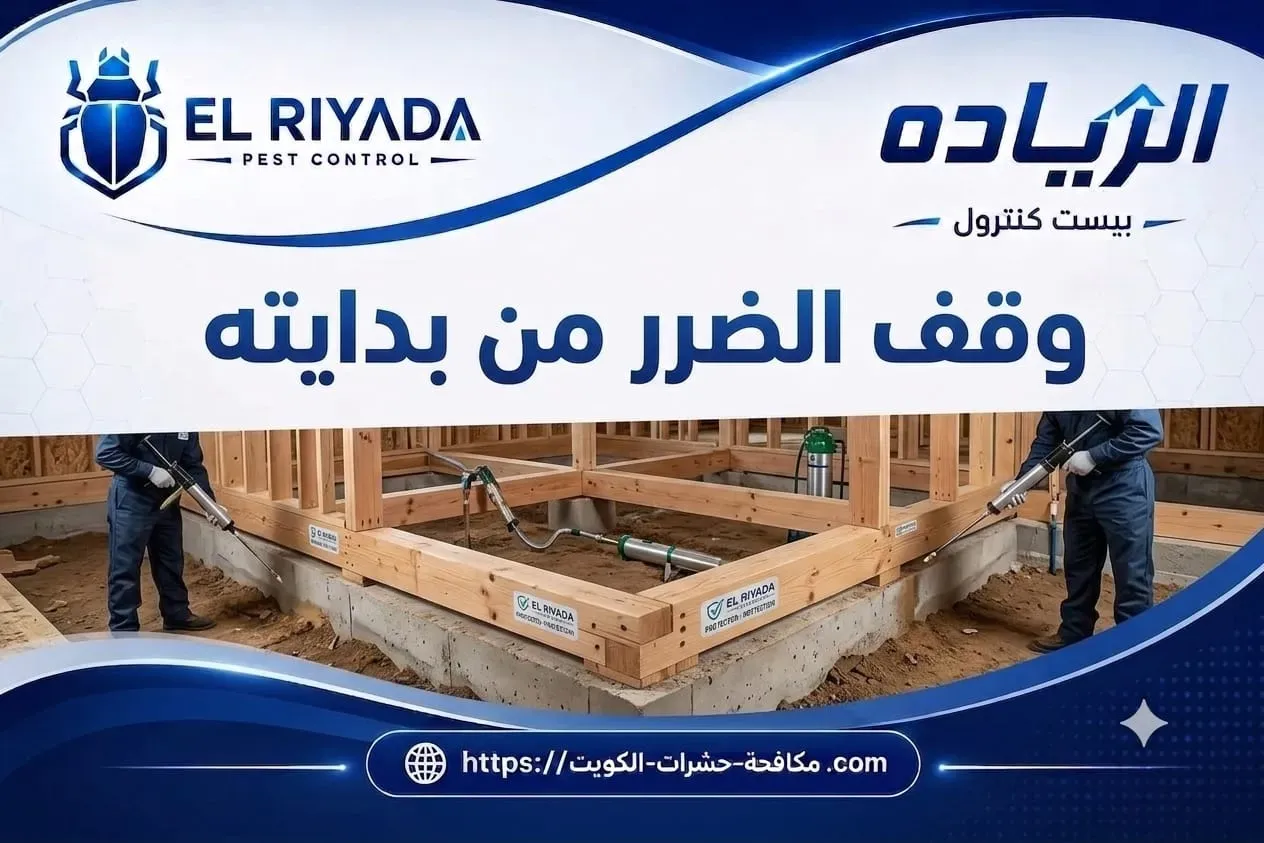
The value of Al Reyada Pest Control in pre-construction soil treatment appears when the service is treated as part of the construction program rather than a separate spraying appointment. In this type of work, arriving at the correct time and understanding what is ready and what is not can be just as important as the application itself because even a properly selected treatment performed at the wrong time may later be disturbed by construction activity.
Good organization begins with collecting clear information from the contractor or property owner. Treatment area, construction stage, expected concrete schedule, and remaining work all help determine the appropriate appointment. This reduces reliance on guesswork and connects the service to actual site conditions.
It is also important not to treat the presence of the team on site as a reason to spray sections that have not yet become ready. Dividing a project into stages when necessary is more professional than trying to finish everything in one visit and later discovering that part of the soil was significantly changed.
Another element of good service is following the instructions for the selected product rather than using pesticide quantity as a marketing tool. Customers need organized application at the appropriate rates, not claims such as "we use double the quantity" as though the termites will see the container and immediately submit their resignation letters.
Documentation is especially useful for contractors. Recording the treatment area, application date, and construction stage creates a reference that can be used later and makes excavation or modifications after treatment easier to evaluate.
When the construction program changes, there should also be flexibility to reassess the treatment appointment. The objective is not to complete a booking on its original date regardless of site conditions. The objective is to treat the area when the conditions are suitable according to the plan.
These elements make a company such as Al Reyada Pest Control worth evaluating according to organization, timing, application, and follow-up rather than only the price per square meter. In a service linked to a construction stage that disappears after concrete work, knowing when termite treatment should be performed before construction is just as important as knowing what product will be used.
• Connecting the service date to the construction program helps treatment take place at an appropriate stage instead of arriving too early or after the targeted area has already been closed.
• Assessing the readiness of each section prevents treatment of areas that will later be excavated or altered and allows the project to be divided into stages when necessary.
• Applying the selected product according to appropriate instructions and rates is more important than using excessive quantity as a marketing claim that cannot correct poor timing.
• Recording treatment areas and dates gives contractors a project reference that can be reviewed during later stages or after modifications to previously treated sections.
• Flexibility in reassessing the appointment when site conditions change keeps the decision connected to actual readiness rather than simply following a date that was booked earlier.
Conclusion
Understanding when soil should be treated during construction begins with recognizing that correct timing is not one fixed date and not a specific number of hours before concrete placement. The decision depends on soil condition, construction sequence, and whether the targeted area is ready for treatment before it is closed.
The stages of pre-construction termite treatment begin by identifying the required areas, monitoring their preparation, and coordinating with the contractor so every section is treated at the appropriate stage. Large projects can be divided into several treatment visits instead of forcing areas with different readiness dates into one appointment.
Soil treatment before concrete pouring requires advance planning. Waiting until the last moment creates unnecessary pressure, while treating too early before excavation and leveling are complete may expose the treated soil to significant disturbance.
The timing of soil treatment against termites should bring together site readiness, completion of activities that affect the soil, and enough time before the next construction stage. Communication between the site supervisor and pest control company is therefore part of successful treatment.
A soil treatment schedule for contractors provides a simple way to monitor areas, dates, and later modifications, particularly when construction is divided across multiple stages.
Contractors and homeowners should also avoid common soil treatment timing mistakes such as applying treatment before excavation, calling the company immediately before concrete work, or failing to record areas disturbed after application.
Ultimately, the answer to when termites should be treated before construction is not "on this date at this exact hour" for every project. A more accurate answer is: when the area is ready for treatment, before it is closed, and after coordinating work that may significantly disturb it. In other words, call the technician when the soil says, "I'm ready," not when the concrete truck says, "I'm already outside."
Frequently Asked Questions
When should termites be treated before construction?
Treatment should be scheduled when the targeted area has become ready and before it is closed by the next construction stage while coordinating any work that may significantly disturb the soil afterward.
Should soil treatment be done immediately before concrete pouring?
It does not need to happen in the final minutes before concrete work. The correct timing should allow the treatment to be completed and documented while preserving the treated area until the next stage according to the service plan and product instructions.
Can the soil be treated before utility work is completed?
If utility work will require excavation or significant disturbance after treatment, it is better to coordinate the sequence so that treated soil is not unnecessarily reopened.
What is the best stage for soil treatment?
The best stage is after the targeted area has become ready and major soil-disturbing work has been completed but before the area is covered or closed. The exact timing can differ between sections of the same project.
Can a project require more than one soil treatment visit?
Yes. Several visits may be appropriate when different project areas become ready at different times. The important point is to document every stage and keep track of sections that remain untreated.
What happens if excavation occurs after soil treatment?
The affected area should be documented and the pest control company informed so the impact can be assessed and the need for retreatment can be determined.
Can soil be treated before tiling instead of during early construction?
The stage before tiling is not automatically a substitute for early soil treatment because many of the original soil areas may already have been closed. Previous treatment records and the remaining accessible areas should be evaluated.
How should contractors prepare a soil treatment schedule?
The contractor should identify the areas requiring treatment, the readiness date of each section, the treatment date, and the following construction stage, then update the record after every visit or modification.
What are the most common soil treatment timing mistakes?
Common mistakes include treating before soil-disturbing work is complete, waiting until the final moment before concrete, treating areas that are not ready, and failing to record excavation or modifications after treatment.
Can extra pesticide compensate for poor timing?
No. Product quantity and application method should follow the appropriate instructions. Increasing the amount cannot compensate for treated soil being removed or significantly altered afterward.
Who should coordinate soil treatment on a construction project?
The responsible person can be the contractor, site engineer, or project representative. The important point is to assign one clear contact who communicates with the pest control company and confirms area readiness.
Why choose Al Reyada Pest Control for soil treatment?
The value of a soil treatment service comes from connecting treatment to the construction stage, assessing area readiness, applying the selected product according to its instructions, documenting completed sections, and reviewing any modifications that may occur afterward. These elements support a structured preventive program instead of treating soil treatment as an isolated visit unrelated to the construction schedule.